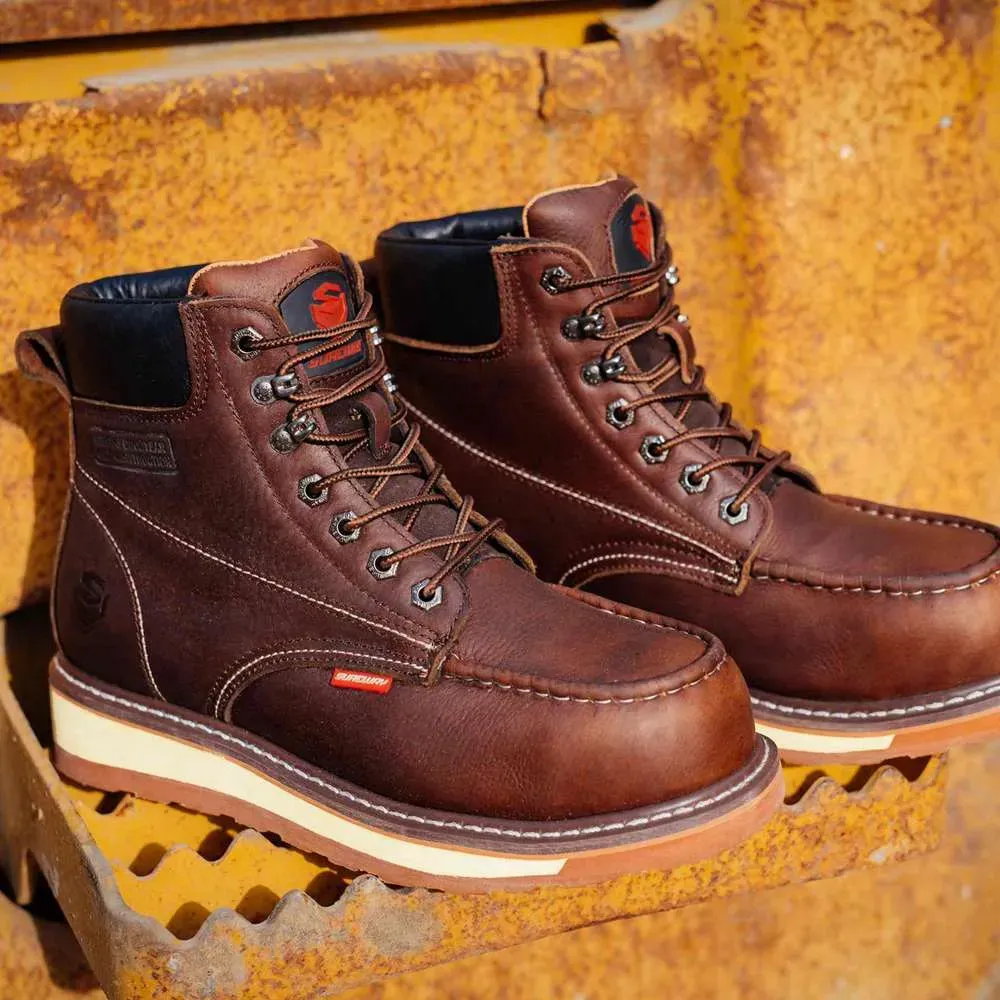
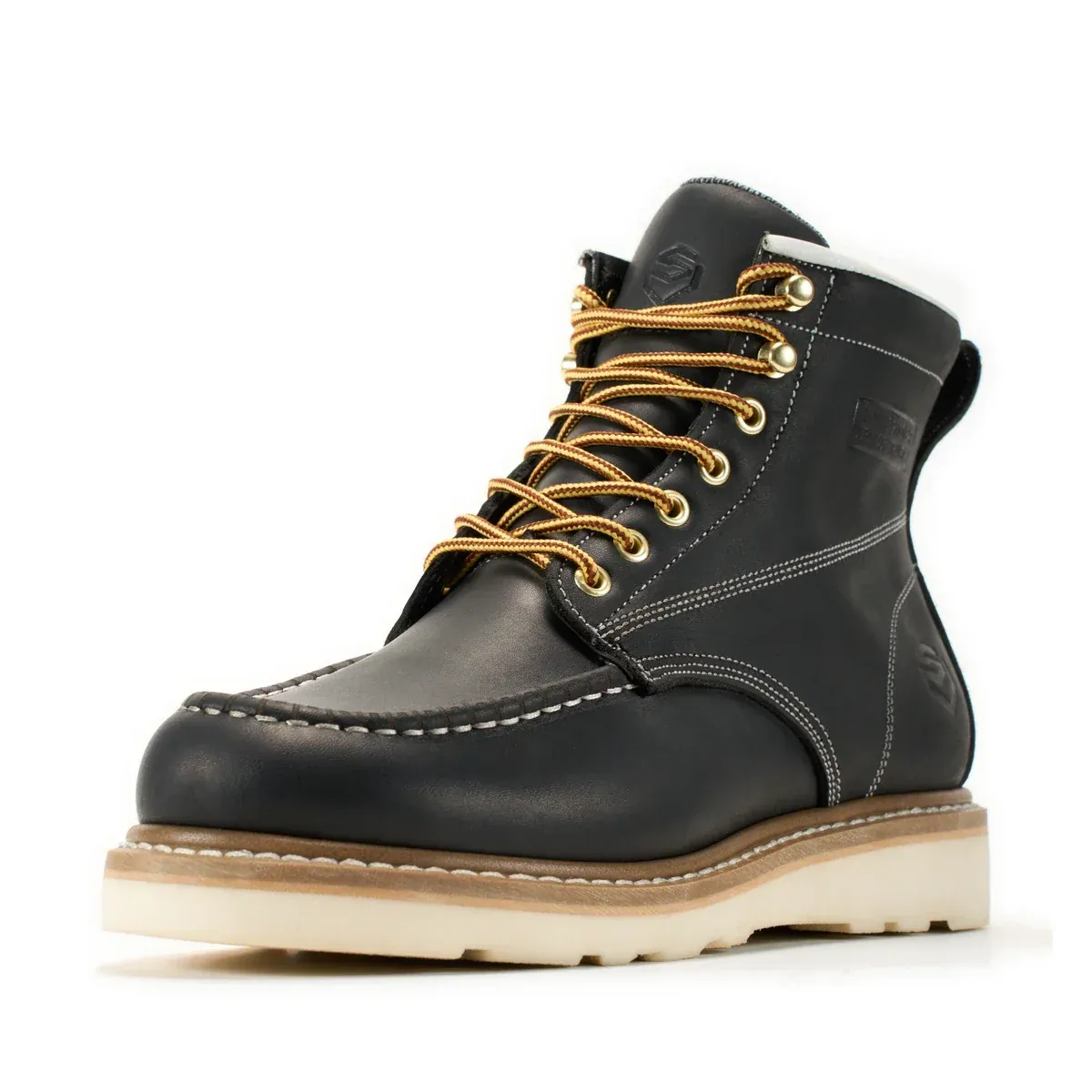
A Guide to Best Railroad Work Boots
Nov 16,2026 | Nancy Sureway
Railroad workers face a combination of hazards that most other trades never encounter in a single shift. Sharp ballast rocks grind against boot leather with every step. Steel railcar ladders demand a secure foothold when climbing on and off cars. Oil-slicked yard surfaces and icy rail beds create constant slip risks. And near third rails or signal equipment, stray electrical current can travel through the ground beneath your feet.
Proper footwear is not optional — it is a baseline requirement. Choosing the right railroad work boots means understanding which features address each of these specific hazards, and why a standard work boot simply is not built for the job.
What Makes a Railroad Work Boot Different
Heel for Railcar Ladder Climbing
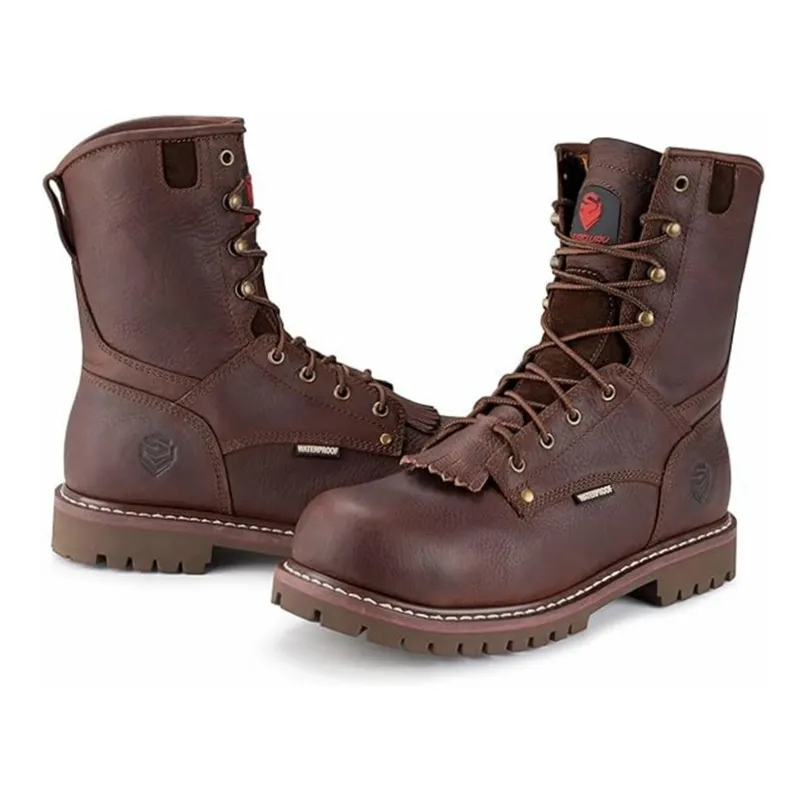
The most recognizable feature of railroad worker boots is the raised, 90-degree defined heel — typically around 1.5 inches tall. This heel geometry locks securely onto the rung of a railcar ladder, holding your foot in place as you climb. Without it, a flat or wedge sole can roll off the rung under load. Track crews that climb railcar ladders all day get the defined heel and protection they need from safety toe logger boots.
EH (Electrical Hazard) Rating for Third-Rail Protection
Working near third rails or signal equipment exposes workers to step voltage — electrical current traveling through the ground. EH rated work boots are tested under ASTM F2413 to insulate against up to 18,000 volts in dry conditions, providing a critical last line of defense when other controls fail.
Waterproofing and Oil/Slip-Resistant Lug Outsoles
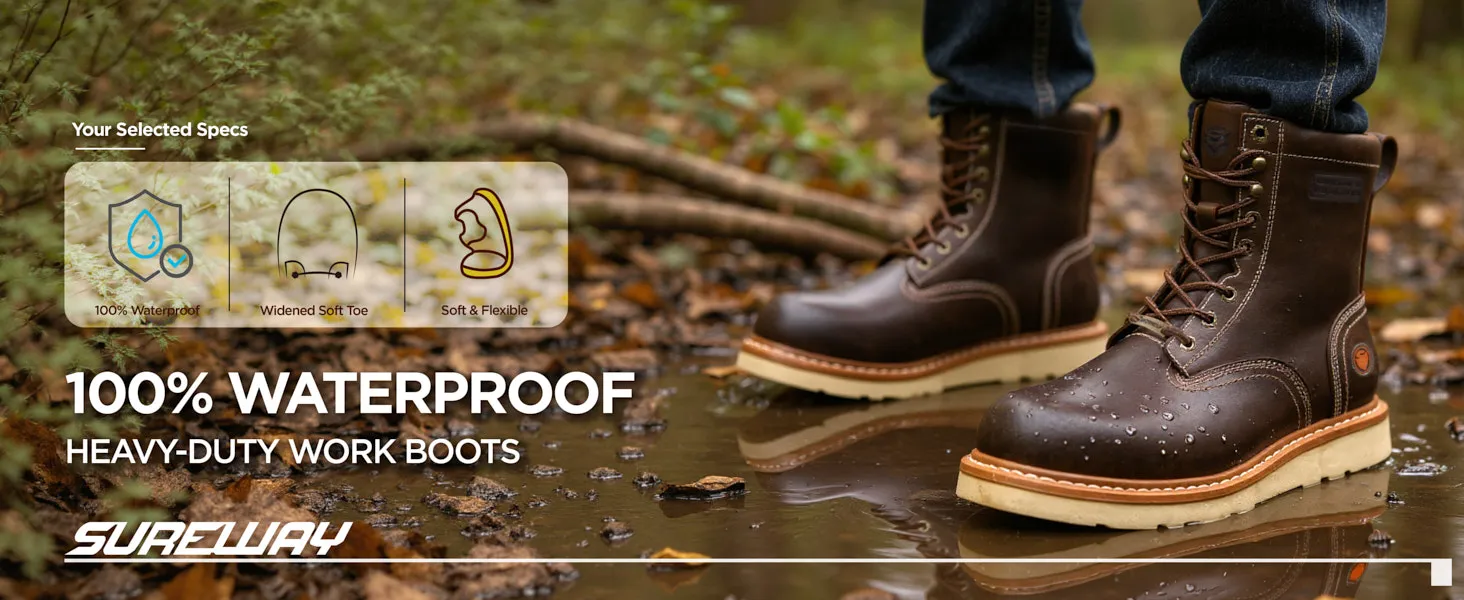
Wet rail yards, rain-soaked ballast, and icy switching areas demand waterproof membranes and sealed seams. A deep lug outsole adds the grip needed on oily or uneven ground. Wet rights-of-way call for sealed seams — browse our full range of waterproof work boots built for exposed conditions.
Full-Grain Leather Durability Against Ballast Rocks
Ballast rocks are angular and abrasive. Full-grain leather upper construction resists cutting and scuffing far better than synthetic materials, while still allowing the boot to flex and conform over long shifts.
Technical Specification Comparison: Railroad Work Boot Styles Compared
8-Inch Logger vs. Lace-Up vs. Wellington Pull-On
Toe Protection, Heel Type, and Waterproofing
|
Style |
Toe |
Heel |
Waterproof |
EH Rated |
Best For |
|
8" Logger |
Steel / Composite |
Defined ~1.5" |
Yes |
Yes |
Track & ballast, ladder work |
|
8" Lace-Up |
Steel / Composite |
Low defined |
Yes |
Yes |
Yard switching, all-season |
|
Wellington Pull-On |
Steel |
Flat / low |
Yes |
Optional |
Quick on/off, wet yards |
|
Moc-Toe Wedge |
Soft |
Wedge |
No |
No |
Flat indoor / warehouse |
Our flagship steel toe logger boots combine a tall defined heel with a waterproof membrane for hard track work. For all-season yard switching, waterproof safety toe boots with an 8-inch shaft keep feet dry and protected.
Choosing the Right Boot for Rail Work
Track Inspection and Walking on Sharp Ballast
For track inspectors and maintenance crews walking miles of ballast daily, an 8-inch logger-style boot with a safety toe and aggressive lug outsole is the strongest choice. The tall shaft protects the ankle from rock impact, while the defined heel prevents fatigue-related heel slippage on uneven terrain.
Railcar Ladder Climbing, Yard Switching, and Electrical Zones
Switchmen, brakemen, and yard workers need a boot that handles multiple hazards. For ladder climbing, the defined heel is non-negotiable. For electrical zones near signal equipment or third rails, an EH rating is essential. Where dropped tools and shifting ballast are a daily risk, steel toe work boots deliver maximum impact protection.
How to Choose the Right Pair of Railroad Boots
Meeting ASTM F2413 Safety and Slip Resistance Standards
Any serious railroad boot should carry ASTM F2413 certification. This standard covers impact resistance (I/75), compression resistance (C/75), electrical hazard (EH), and slip resistance (SR) ratings. Look for all applicable markings stamped on the boot's internal label before purchasing.
Safety Toe Trade-offs: Steel vs. Composite vs. Soft Toe
Both steel and composite toes meet ASTM impact and compression standards. Steel toes offer maximum crush resistance — important where heavy track components shift unpredictably. Composite toes are lighter and fully non-conductive, making them the preferred choice in active electrical zones. Soft-toe builds work only in lower-risk roles where long-shift comfort outweighs impact protection.
Shaft Fit, Heel Lock, and Leather Break-In Guidelines
An 8-inch shaft wraps the ankle and lower leg, blocking ballast debris from entering the boot. The heel pocket should feel snug — not tight — to lock the foot in place on ladder rungs without restricting circulation. Full-grain leather requires a break-in period of one to two weeks; wearing new boots on shorter shifts first and applying leather conditioner early will speed the process and significantly extend boot life.
Frequently Asked Questions
- Do railroad workers need EH-rated boots?Yes, especially when working near third rails or electrical signal equipment. Boots rated for electrical hazard (EH) are tested under ASTM F2413 to insulate against up to 18,000 volts of step voltage.
- Why do railroad boots have a defined heel?The raised, 90-degree defined heel locks securely onto railcar ladder rungs, preventing slips while climbing on and off train cars.
- Steel toe or composite toe for track work?Both meet ASTM impact and compression standards. Composite toes are lighter and non-conductive around electrical lines, while steel toes offer maximum crush resistance against heavy shifting track components.
- Are railroad boots waterproof?Not all models are waterproof. Workers navigating wet rail yards, exposed tracks, rain, or snow should ensure their boots feature an integrated waterproof membrane and sealed seams.
- How long do railroad work boots last?Railroad boots typically last 6 to 18 months, depending on the severity of ballast exposure and daily wear. Rotating pairs and applying leather conditioner regularly can significantly extend their lifespan.
Comment