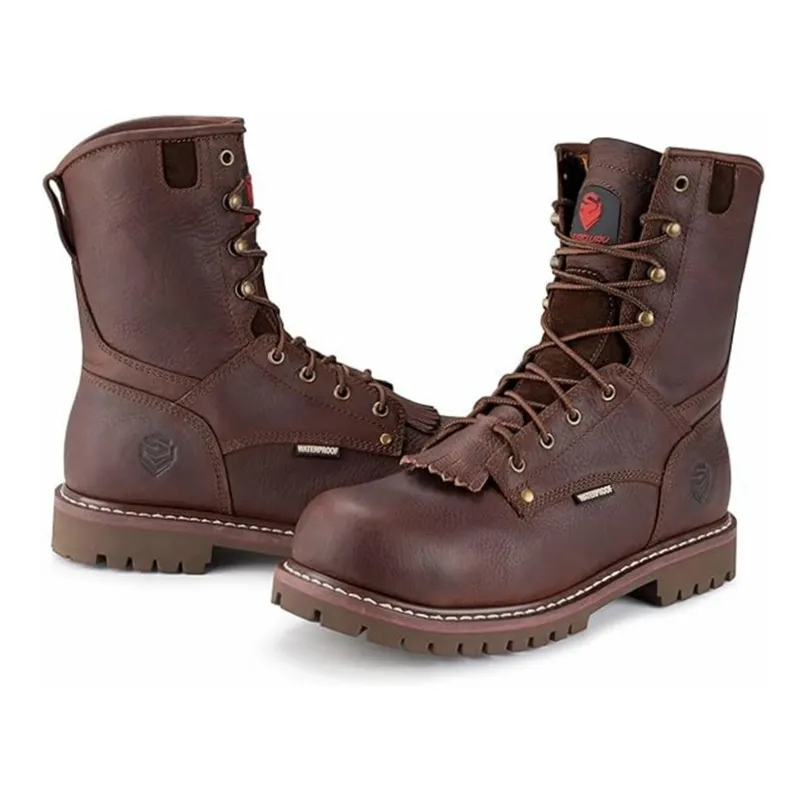
Oil Resistant Work Boots Buying Guide
Nov 16,2026 | Nancy Sureway
Oily job sites are more dangerous than they look. A thin film of motor oil, cutting fluid, or grease can send a worker to the floor in an instant. Beyond the slip hazard, oil silently attacks ordinary rubber outsoles — softening them, causing them to swell, and eventually cracking them apart. The right oil resistant work boots protect you on both fronts.
Before you buy, however, you need to understand one common misconception: oil resistance describes the outsole compound, not the upper material. It tells you the sole will not degrade when soaked in mineral oils or petroleum-based lubricants. It says nothing about whether the boot keeps your feet dry. With that cleared up, let's walk through everything you need to make the right choice.
The Real Hazards of Oily Job Sites
Slippery floors are the obvious risk. What workers often overlook is the chemical degradation risk. Standard rubber and EVA outsoles swell when exposed to motor oil or hydraulic fluid. A swollen sole loses its shape, its tread pattern flattens, and grip disappears — usually without warning. Over weeks, the compound cracks and separates from the midsole. That's not just a boot replacement cost; it's a safety failure mid-shift.
What Oil Resistant Actually Means: Sole Materials & Standards
Outsole Materials Compared: Nitrile Rubber vs. PU vs. TPU
Oil resistance is a property of the outsole compound. Here is how the main materials compare:
- Nitrile rubber— The industry benchmark for oil-exposed environments. Its low swell rate makes it the top choice for mechanics, kitchen workers, and oilfield crews
- PU (polyurethane)— Lightweight and oil-resistant, but susceptible to hydrolysis in wet or high-humidity conditions over time.
- TPU (thermoplastic polyurethane)— Excellent abrasion and oil resistance, though slightly heavier and stiffer than PU.
- Standard rubber / EVA— Adequate for dry environments but degrades quickly on oily floors. Not recommended for sustained oil exposure.
Oil Resistant vs. Chemical Resistant vs. Fuel Resistant
These three ratings are not interchangeable:
|
Rating |
What It Protects Against |
|
Oil resistant |
Mineral oils, lubricants, grease |
|
Chemical resistant |
Acids, alkalis, solvents |
|
Fuel resistant |
Gasoline, diesel, kerosene |
If your workplace uses industrial solvents or acid-based cleaners, oil resistance alone is not enough. Check for chemical-resistant ratings separately.
Oil Resistant vs. Slip Resistant vs. Chemical Resistant: Key Differences
Decoding the Three-Way Protection Confusion
Many buyers assume these ratings overlap. They do not. Here is a simple breakdown:
- Oil resistant= the outsole material will not break down in oil.
- Slip resistant= the tread pattern creates friction on slick or oily surfaces.
- Chemical resistant= the outsole withstands acids, alkalis, and solvents without degrading.
You can have a boot that is oil resistant but has a smooth tread that offers no grip on a wet floor. Conversely, a highly textured slip-resistant sole made from standard rubber will degrade quickly in an oily environment.
Why Oil and Slip Resistant Combined Is the Industry Benchmark
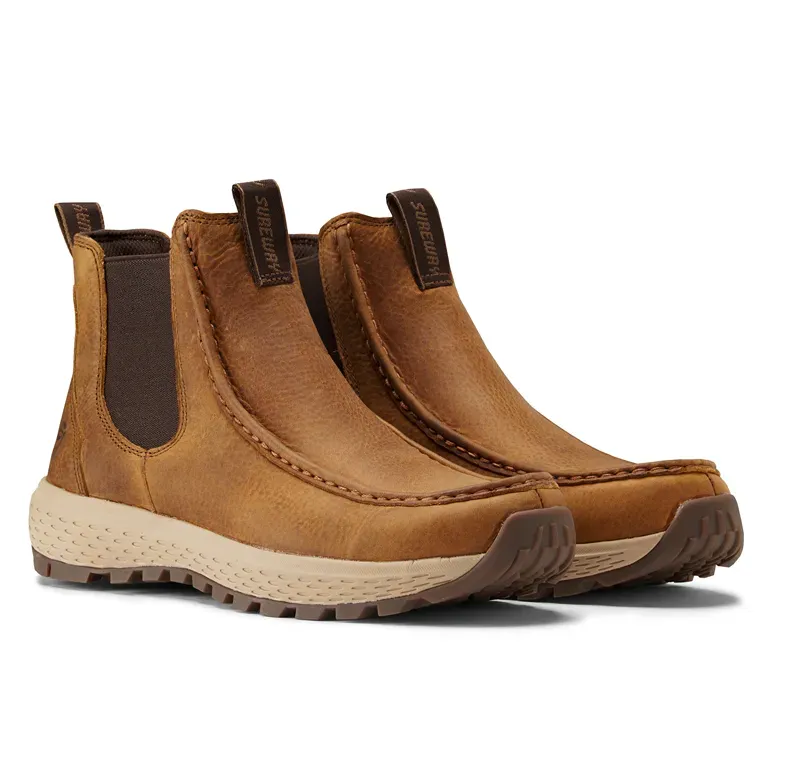
For oily job sites, oil and slip resistant is the minimum standard. The outsole compound must resist swelling, and the tread pattern must maintain friction on oil-contaminated floors. These two features work together. Neither is sufficient alone. For shop floors with quick transitions, slip-on work boots with a nitrile outsole deliver both fast on-and-off access and reliable grip.
Technical Specification Comparison: Outsole Material
Swell Resistance, Grip, Lifespan, and Weight Comparisons
|
Property |
Nitrile Rubber |
PU |
TPU |
Standard Rubber/EVA |
|
Oil resistance |
Excellent |
Excellent |
Good–Excellent |
Poor |
|
Wet/oily grip |
Good–Excellent |
Good |
Good |
Moderate |
|
Abrasion lifespan |
Excellent |
Moderate |
Excellent |
Moderate |
|
Weight |
Medium |
Light |
Medium–Heavy |
Light–Medium |
|
Best for |
Mechanics, kitchens, oilfields |
Warehouses, light industry |
Heavy industry, outdoors |
Dry indoor use |

Choosing Boots by Workplace Contaminants
Automotive Shops, Oilfields, Commercial Kitchens, and Logistics
Automotive / Mechanics: Motor oil, grease, and cutting fluid are constant hazards. You need oil and slip resistant outsoles plus impact protection. Pair a nitrile outsole with steel toe work boots for full coverage. Our slip-on steel toe boots combine a steel cap with an easy-clean upper — practical for busy shop environments.
Oilfields / Heavy Equipment: Raw crude, drilling fluid, and diesel demand oil and fuel resistant outsoles with high-impact toe protection. Browse heavy equipment operator boots built for exactly that exposure. For high-abrasion industrial floors, heavy duty work boots with a thick rubber outsole are the right call.
Commercial Kitchens: Cooking oil and soapy water create some of the slickest surfaces in any workplace. Oil and slip resistant boots with a low-profile, self-cleaning tread are essential here.
Pipefitters / Chemical Trades: Solvents, acids, and lubricants often appear together. You need boots rated for both oil and chemical contact. Pipefitter work boots in our collection meet that combined standard.
Warehouses / Logistics: Oil exposure is minimal but slip resistance still matters on smooth concrete. A lighter-weight composite or soft-toe boot is usually sufficient.
How to Choose & Care for Oil Resistant Soles
Step-by-Step Buying Decision Framework
- Identify your contaminants— mineral oil, fuel, solvent, or a combination?
- Assess your floor surface— dry, wet, or oil-filmed?
- Choose your toe type— steel for maximum crush resistance, composite for non-conductive lightweight comfort.
- Select entry style— lace-up for adjustable fit, slip-on for quick removal in oily conditions.
- Confirm both ratings— verify SATRA TM144 (oil resistance) and Mark II (slip resistance) independently.
Maintenance Protocol: Daily Cleaning, Rotation, and Tread Wear Checks
Proper care extends outsole life significantly. Follow these steps:
- After every shift:Wipe outsoles with warm water and mild detergent. Oil left on the sole traps abrasive grit and accelerates compound breakdown.
- Rotate two pairs:Alternating between two pairs allows the compound to recover its shape overnight.
- Avoid harsh solvents:Cleaning with acetone or mineral spirits strips the outsole's protective surface.
- Check tread depth weekly:Once the tread pattern wears flat, grip is gone. Replace boots promptly.
Frequently Asked Questions
- What are oil resistant work boots?They are safety boots engineered with low-swell outsole compounds — such as nitrile rubber, PU, or TPU — that resist degradation, softening, and cracking from mineral oils, lubricants, and petroleum-based fluids. The rating refers specifically to the sole rather than upper waterproofness.
- Are oil resistant and slip resistant the same? Oil resistance means the outsole material will not break down when exposed to oil. Slip resistance refers to the tread pattern and friction coefficient that provide physical grip on slick surfaces. Oily floors require both features combined.
- Are oil resistant boots waterproof?Not necessarily. Oil resistance focuses on outsole swell resistance, whereas waterproofing requires internal waterproof membranes and sealed upper construction. Each specification must be verified independently.
- How do I clean and protect oil resistant soles?Wipe down outsoles at the end of every shift using warm water and mild detergent. Rotate two pairs across shifts, avoid soaking soles in harsh solvents, and retire boots once the tread pattern wears flat.
- Steel toe vs. composite toe for oily jobs?Both provide ASTM-certified impact protection. Steel toes offer maximum crush resistance against heavy fallen parts. Composite toes are non-conductive and lighter. In oily environments, the deciding factor is outsole oil and slip resistance — not the toe cap material.
Comment