Low Top Work Boots for Men | Sureway
Nov 16,2026 | Nancy Sureway
Every work boot purchase starts with one trade-off: ankle coverage versus freedom of movement. Tall boots protect more. Low top work boots move better. For workers on hard floors, behind a wheel, or under a vehicle, that lighter and more flexible feel wins every shift. This guide covers what ankle-height boots are, how they compare technically, and how to find the right pair.
What Is a Low Top Work Boot?
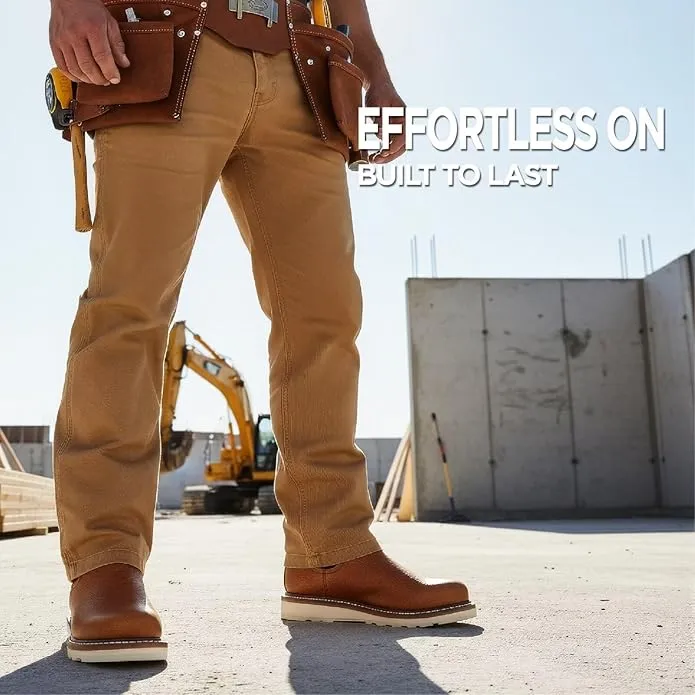
A low top work boot sits at or just above the ankle — typically 4 to 6 inches in shaft height. The 4-inch slip-on is the shortest common option; the 6-inch lace-up wedge sits at the upper edge of the category.
Low Top vs. Low Cut vs. Ankle Work Boots
These three terms are essentially interchangeable. All describe boots with a shaft of 4 to 6 inches that keep the ankle mobile. "Low cut work boots" carries slightly higher search volume, but buyers mean the same thing across all three phrases.
Differences from 8-Inch and 10-Inch Logger Boots
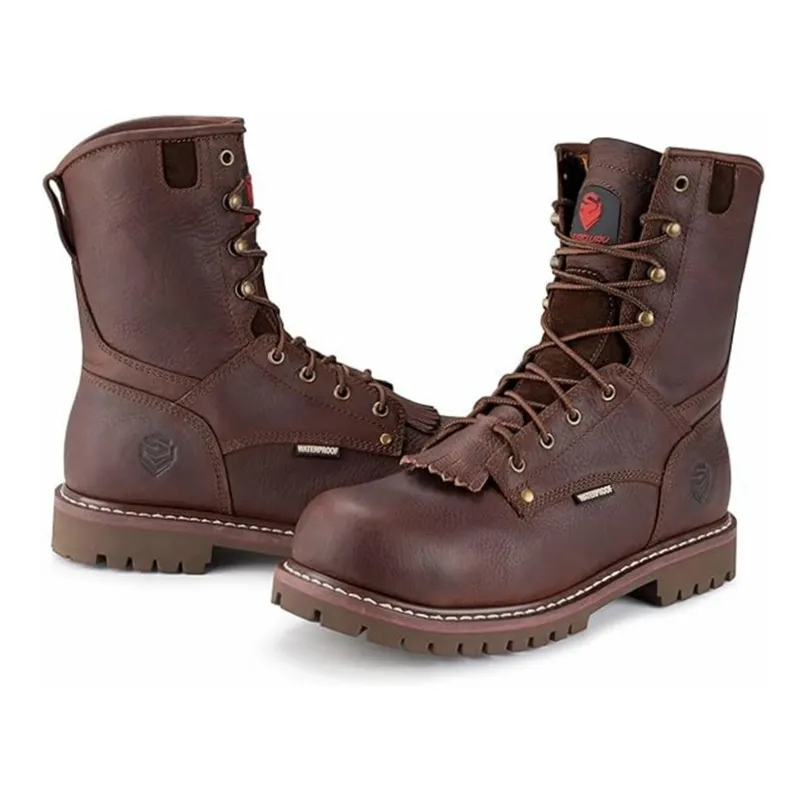
Taller boots wrap the lower leg, brace the ankle on rough terrain, and block debris. Low top boots trade that coverage for roughly 10–20% less weight, easier break-in, and a natural stride on flat surfaces. If you work in forestry or carry heavy loads over uneven ground, 8-inch boots remain the right choice.
Safety Without Compromise: ASTM and EH Compliance
Shorter shafts do not mean fewer safety options. Low top boots are available with steel toe, composite toe, or soft toe caps, and can carry full ASTM F2413 and EH (electrical hazard) ratings. The only difference is the absence of upper-calf coverage — not the foot protection itself.
Low Top Work Boots: Technical Specification Comparison
4-Inch Slip-On vs. 6-Inch Wedge vs. Work Sneakers
|
Feature |
4″ Slip-On |
6″ Wedge |
Sneaker Style |
|
Shaft height |
4 in |
6 in |
Ankle-height |
|
Relative weight |
Light |
Medium-light |
Lightest |
|
Closure |
Pull-on |
Lace-up |
Lace / slip |
|
Ankle support |
Low |
Medium |
Low |
|
Break-in time |
Very fast |
Fast |
Very fast |
|
Safety toe |
Soft / composite |
Steel / composite / soft |
Soft toe |
Browse our 4 inch slip-on work boots for the lightest warehouse and driving option, or explore the full slip-on work boots range for easy on-and-off low tops.
Cross-Category Benchmark: 8-Inch Logger Reference
|
Feature |
Low Top (4–6 in) |
8-Inch Logger |
|
Weight difference |
10–20% lighter |
Baseline |
|
Ankle support |
Low – medium |
High |
|
Break-in period |
Fast |
Slow |
|
Terrain suitability |
Hard floor, concrete |
Rough, uneven ground |
|
Safety toe options |
Steel / composite / soft |
Steel / composite |
Which Job Fits Low Top Boots?
Warehousing, Driving, Mechanics, and Concrete
Low top boots are the first choice in four core settings:
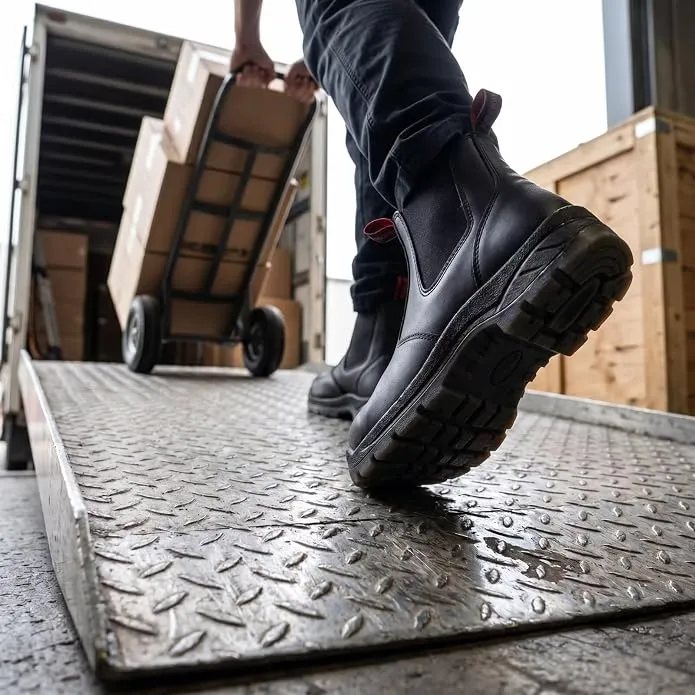
- Warehousing and order picking— lighter boots reduce leg fatigue during long walking shifts.
- Driving and delivery— a low shaft does not press against the ankle while operating pedals.
- Mechanics and shop work— a lower profile makes kneeling and crouching comfortable; soft toe ankle boots are a natural fit here.
- Concrete and hard floors— our wedge moc toe boots with cushioned wedge soles reduce all-day standing fatigue significantly.
How to Choose?
One rule covers most decisions: hard floors, crouching, or driving → low top; rough terrain, heavy loads, or debris risk → 8-inch. If your job includes both environments, keep one of each and rotate between them.
How to Choose the Right Low Top Work Boot
Matching Safety Toe Options: Steel, Composite, or Soft Toe
- Steel toe— maximum impact resistance; heavier but most affordable.
- Composite toe— lightweight, non-metallic, and metal-detector friendly.
- Soft toe— lightest option with no safety cap; suitable where regulations allow. Browse soft toe work boots if your site does not require a rated toe cap.
Wedge Soles vs. Oil-Resistant Treads
Wedge soles distribute pressure evenly — ideal for concrete and smooth warehouse floors. Deep-lug, oil-resistant outsoles grip better on greasy shop floors or light outdoor surfaces. Match the sole to your floor type first, then consider style.
Width, Sizing, and Rapid Break-In Considerations
Low top boots break in faster than tall boots because they use less upper material and create fewer friction points. Slip-on styles often need no break-in at all. Still, try boots with the work socks you normally wear and choose a wide fit if you have a broader foot. Low tops that work off-site as well can be found in our casual boots for men collection.
Frequently Asked Questions
- Are low top work boots as safe as 8-inch boots?They offer identical safety toe options and ASTM/EH certifications. The difference is less ankle coverage and lower leg barrier protection. They are fully suitable for indoor and light-duty work; heavy forestry or rough terrain demands 8-inch boots.
- What is the difference between low top and low cut work boots?The terms are virtually synonymous. Both describe ankle-height work boots with a 4- to 6-inch shaft. "Low cut" is simply a higher-search-volume alternative phrase for the same style.
- Do low top boots break in faster? Less upper leather and fewer friction points around the calf mean significantly faster break-in. Slip-on styles require virtually no break-in period at all.
- Are low top boots lighter than tall work boots?Yes — typically 10% to 20% lighter. Paired with a cushioned midsole, that difference noticeably reduces leg fatigue during long shifts of walking or standing.
- Can I wear low top work boots on a construction site?It depends on your trade. Ground-level workers on finished concrete can wear low top boots with cushioned wedge soles. Scaffolding, deep mud, or heavy material handling requires 8-inch boots for critical ankle stability.
Comment