Best Mining Work Boots: Steel Toe Waterproof Boots
Nov 19,2026 | Nancy Sureway
Miners face serious foot hazards every shift. Falling rock, sharp debris, standing water, energized equipment, and unstable ladders are constant threats underground and on the surface. That is why mining work boots are built to a different standard than ordinary safety footwear. MSHA safety culture treats certified footwear as a mandatory requirement, not an optional upgrade. ASTM F2413 and F2412 set the baseline tests every pair must pass. This guide covers toe selection, metatarsal guards, electrical hazard ratings, waterproofing, shaft height, and long-shift comfort so you can buy with confidence.
What Makes a Mining Work Boot Different
Steel vs. Composite Toe Protection Under ASTM F2413 Standards
ASTM F2413 defines impact and compression ratings for both steel and composite toe caps. Steel toe work boots deliver the highest crush resistance when heavy machinery or rolling ore cars are nearby. Composite toe work boots are significantly lighter and fully non-conductive, making them the smarter choice in energized haulage ways or areas with metal detectors. Both cap styles meet the same ASTM impact standard.
Metatarsal Guards for Instep Impact Defense
Falling rock does not always hit the toe. Underground, chunks of roof material can strike the instep and fracture the metatarsal bones. An internal or external metatarsal guard spreads that impact force across a wider area. Underground coal operations and hard-rock mines treat metatarsal guard boots as a standard requirement rather than an upgrade.
Puncture-Resistant Midsoles Against Sharp Rock and Debris
Rock shards, stray nails, and metal scrap litter mine floors. A steel puncture-resistant midsole blocks upward penetration before it reaches the foot. This layer works silently on every step and is one of the most important features to verify before purchase.
Electrical Hazard (EH) Ratings and Waterproof Outsoles
Step voltage from energized equipment is a hidden underground risk. EH rated work boots provide a secondary insulation barrier at the outsole. Additionally, wet drives and sumps demand a waterproof membrane with sealed seams. An oil- and slip-resistant lug outsole rounds out traction on muddy or greasy tunnel floors. Browse our full selection of waterproof work boots built for exposed conditions.
Tall Shafts and Defined Heels for Ladder and Uneven Ground Stability
An 8- to 10-inch shaft keeps rock chips, slurry, and grit out of the boot while supporting the ankle on rough terrain. A defined heel is equally important — it locks onto ladder rungs so miners can climb safely. Abrasion-resistant leather at the shaft resists the constant scraping against rock walls.
Mining Work Boot Styles Compared
8-Inch Steel Toe vs. Composite Toe vs. Logger vs. Wellington Pull-On
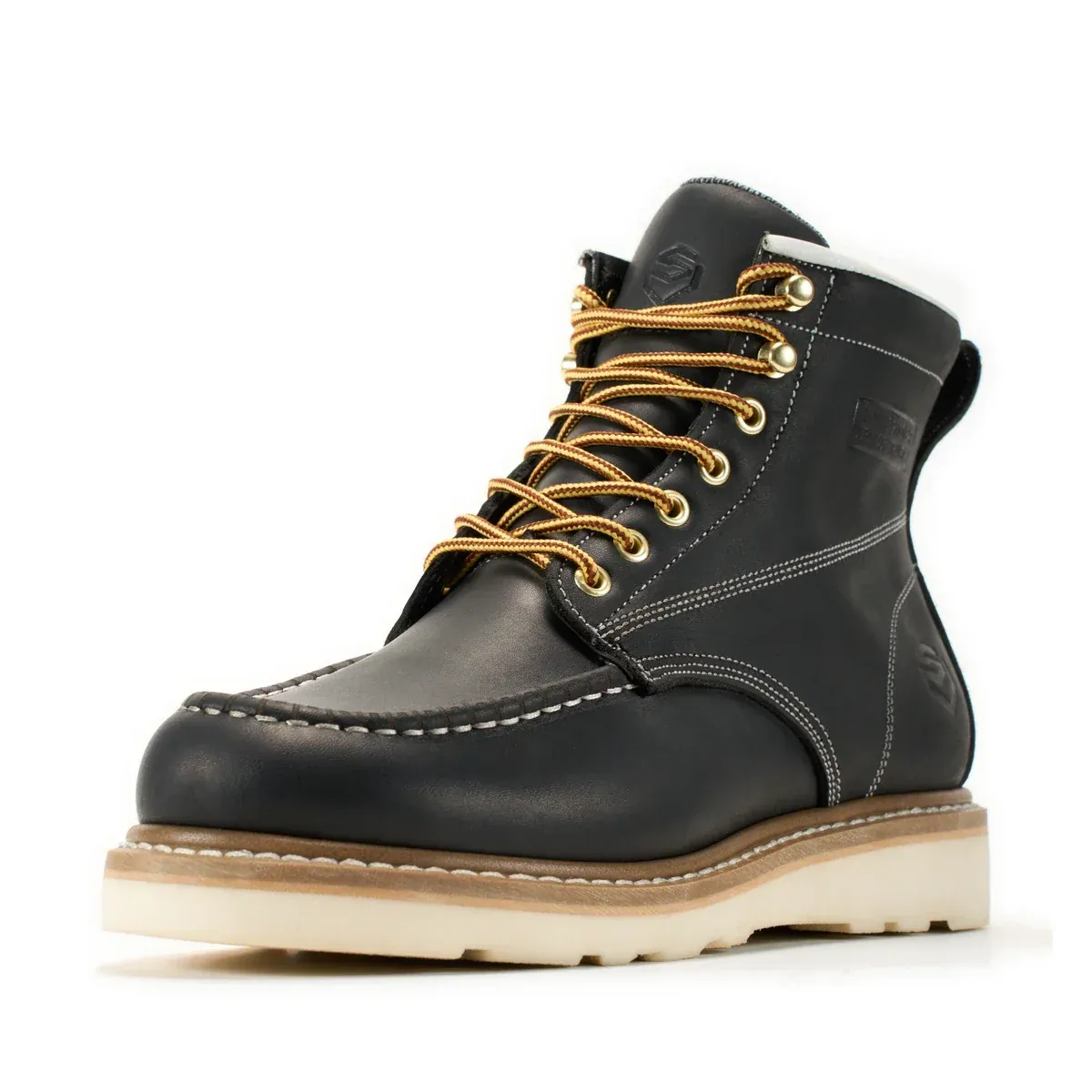
Safety toe logger boots pair a tall defined heel with strong ankle support, making them ideal for ladder work and uneven ground all shift. Our flagship steel toe logger boots add a waterproof membrane for rough underground and quarry environments. Wellington pull-ons suit fast boot changes in wet drives but offer less lateral ankle support than lace-up styles.
Choosing Boots by Mining Operations
Underground Coal Mines vs. Hard-Rock and Metal Mining
Underground coal miners need metatarsal guard boots with an EH rating and flame-resistant leather. The combination of step-voltage insulation and met guard coverage addresses the two most common foot injury sources in coal operations. Hard-rock and metal miners, by contrast, face heavy ore and sharp rock fragments daily. A steel toe with a puncture-resistant midsole and an aggressive oil-resistant outsole is the right starting point.
Surface Quarries and Extended Double Shifts
Surface quarry workers deal with ankle-turning ground, loose gravel, and constant abrasion. An 8-inch logger with a defined heel handles that terrain well. Miners pulling double shifts benefit from a composite toe — it weighs noticeably less than steel over a long day. A cushioned footbed with arch support reduces fatigue significantly by the end of a second shift.
How to Choose the Right Pair of Mining Boots
Internal vs. External Metatarsal Guard Selection
Internal met guards sit inside the boot and feel more natural underfoot. External met guards attach to the boot's exterior and are easier to inspect for damage. Both styles meet protective requirements. Choose internal for comfort over long shifts and external where visibility of damage matters for compliance checks.
Waterproofing Integrity and Shaft Height Considerations
A waterproof membrane is only as good as its sealed seams. Check that the manufacturer confirms full seam sealing, not just a treated upper. Shaft height should be at least 8 inches for underground work. Ten-inch shafts provide extra protection in deep slurry or during surface work in heavy rain.
Fit, Heel Lock, and Heavy-Duty Break-In Guidelines
The heel should sit firmly in the boot cup with no lift when walking. Thick leather uppers require a gradual break-in period. Wear new mining boots for shorter shifts first, then increase duration over one to two weeks. This prevents blisters and ensures the leather molds correctly to the foot.
Frequently Asked Questions
Q: How tall should mining work boots be? Shaft heights of 8 to 10 inches are recommended. They provide ample ankle stability, keep rock chips and slurry out, and allow a defined heel to lock firmly onto equipment access ladders.
Q: Are mining boots waterproof? Not all models are waterproof by default. Underground personnel navigating wet drives, sumps, or muddy surface quarries should verify that the boots feature an internal waterproof membrane with sealed seams.
Q: Steel toe or composite toe for mining? Both meet ASTM impact standards. Steel toes deliver maximum crush resistance against heavy rolling machinery. Composite toes are significantly lighter and non-conductive, making them better suited for energized haulage ways.
Comment