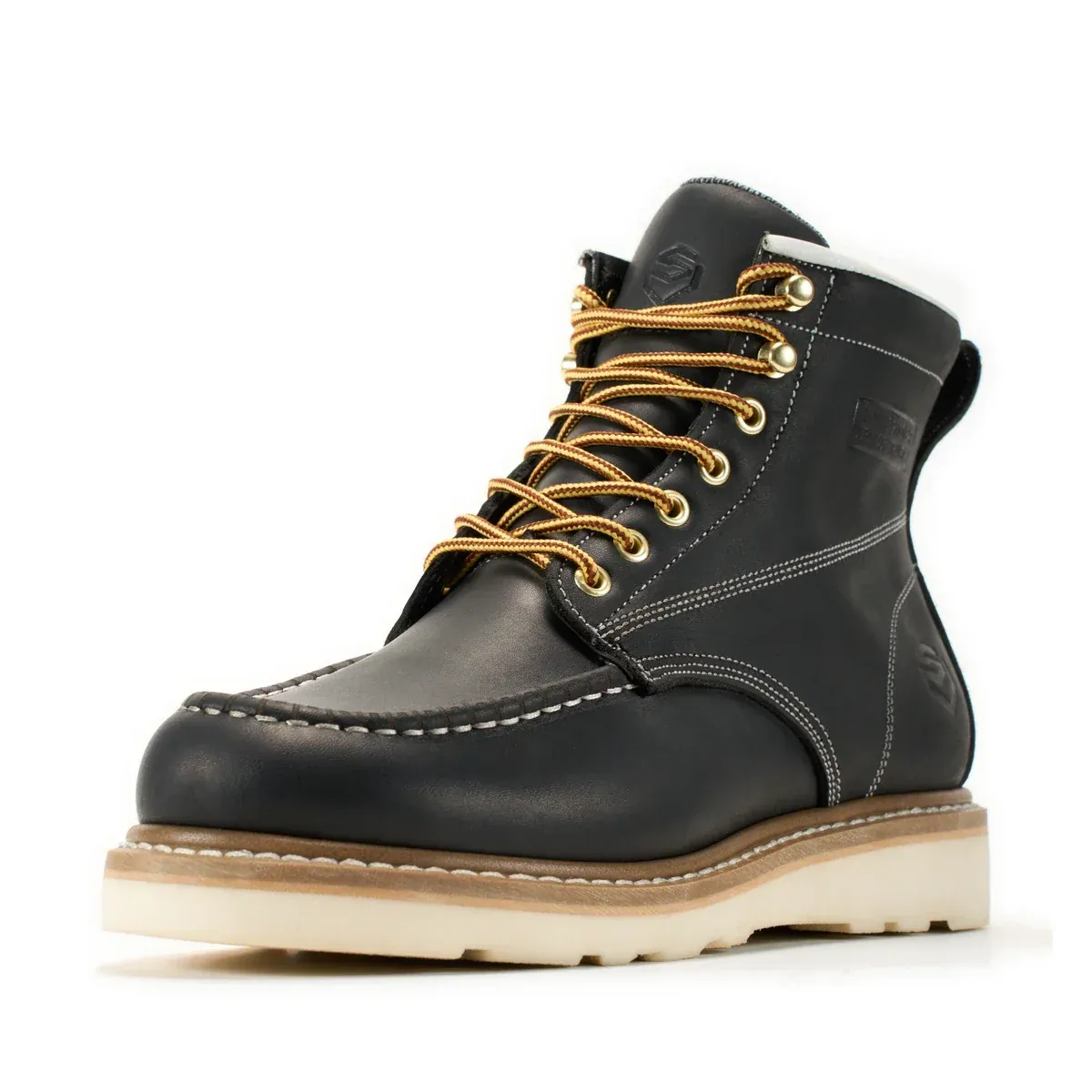
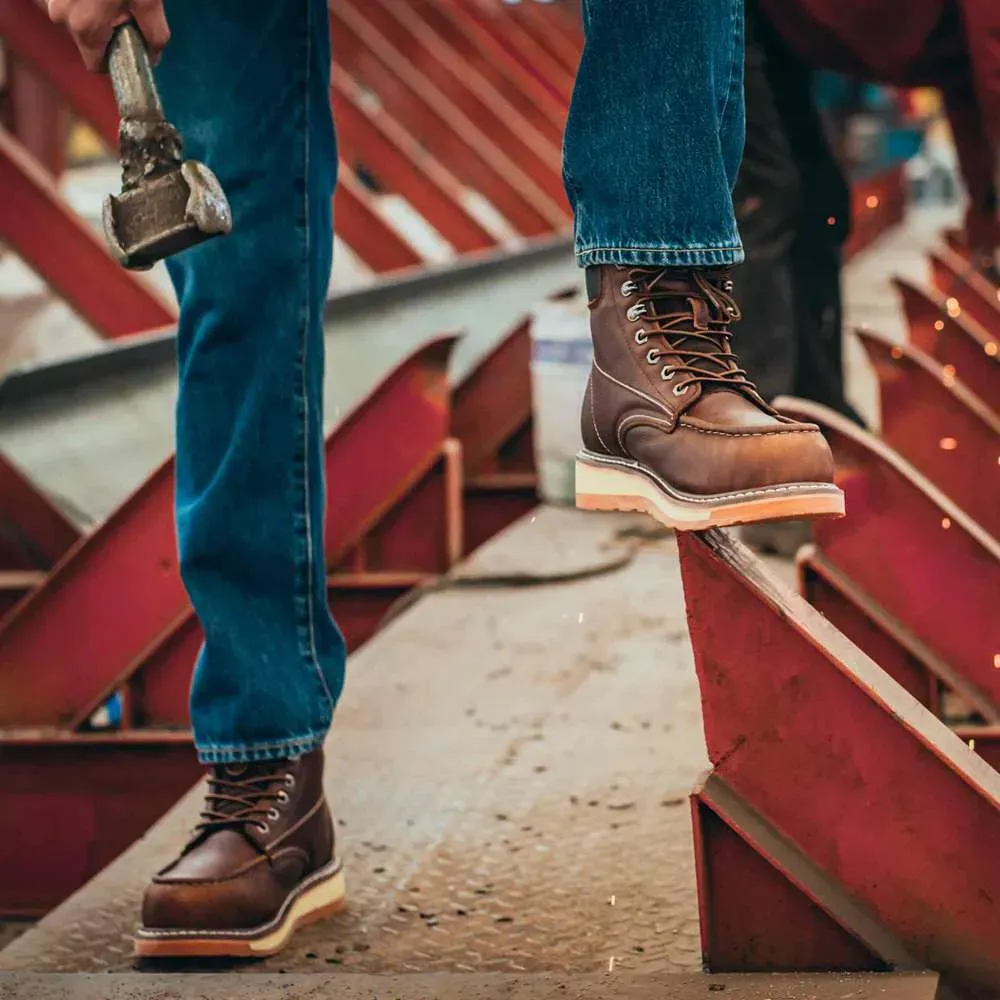
Reinforced Toe Work Boots: Safety Toe Guide
Nov 18,2026 | Nancy Sureway
Whether you call them reinforced toe work boots or safety toe work boots, you are describing the exact same thing — a boot with a built-in protective toe cap engineered to guard your feet from impact and crushing forces. The difference is simply geography: the UK and EU use "reinforced toe," while the US uses "safety toe" or names the material directly (steel, composite, alloy). This guide bridges both worlds. You will learn what a reinforced toe actually does, how the four main toe-cap materials compare, and how to pick the right boot for your trade.

Bridging the US and International Safety Footwear Terminology
US labels say "steel toe" or "composite toe." British and European product pages say "reinforced toe." Neither is wrong — they reflect the same protective feature, just in different regulatory and marketing languages. When you shop across borders or buy imported work boots, you will encounter both phrases. Knowing the overlap saves you from confusion and ensures you never accept a boot that falls short of your worksite's safety requirements.
What Is a Reinforced Toe?
Why "Reinforced" and "Safety" Toe Mean the Same Thing
A reinforced toe is the UK/EU term for what Americans call a safety toe: a rigid protective shell molded into the front of the boot to shield the toes from heavy falling objects and compressive loads. The cap material — steel, composite, alloy, or carbon-fiber — varies, but the protective purpose is identical. All safety toe work boots sold in the US must meet ASTM F2413; reinforced toe boots sold in Europe must meet EN ISO 20345.
What a Protective Toe Cap Actually Does: Impact vs. Compression
Every certified toe cap must pass two core tests. Impact (I) simulates a heavy object dropped onto the toes; Compression (C) simulates a vehicle wheel or heavy stock rolling over the foot. The most common US rating is I/75 and C/75, which correspond to roughly 200 joules of impact energy and 15 kN of compressive force. Additional ratings include EH (electrical hazard insulation), PR (puncture-resistant midsole), and Mt (metatarsal guard).
Reinforced Toe vs. Soft Toe: When Are Safety Caps Mandatory?
A soft toe work boots offers flexibility and lighter weight but provides zero protection against crush or drop injuries. Construction sites, warehouses, logistics hubs, and manufacturing floors typically mandate certified reinforced toe footwear by OSHA regulation or employer policy. If your role carries no crush or falling-object hazard — light delivery, office, or retail — a soft toe may be acceptable.
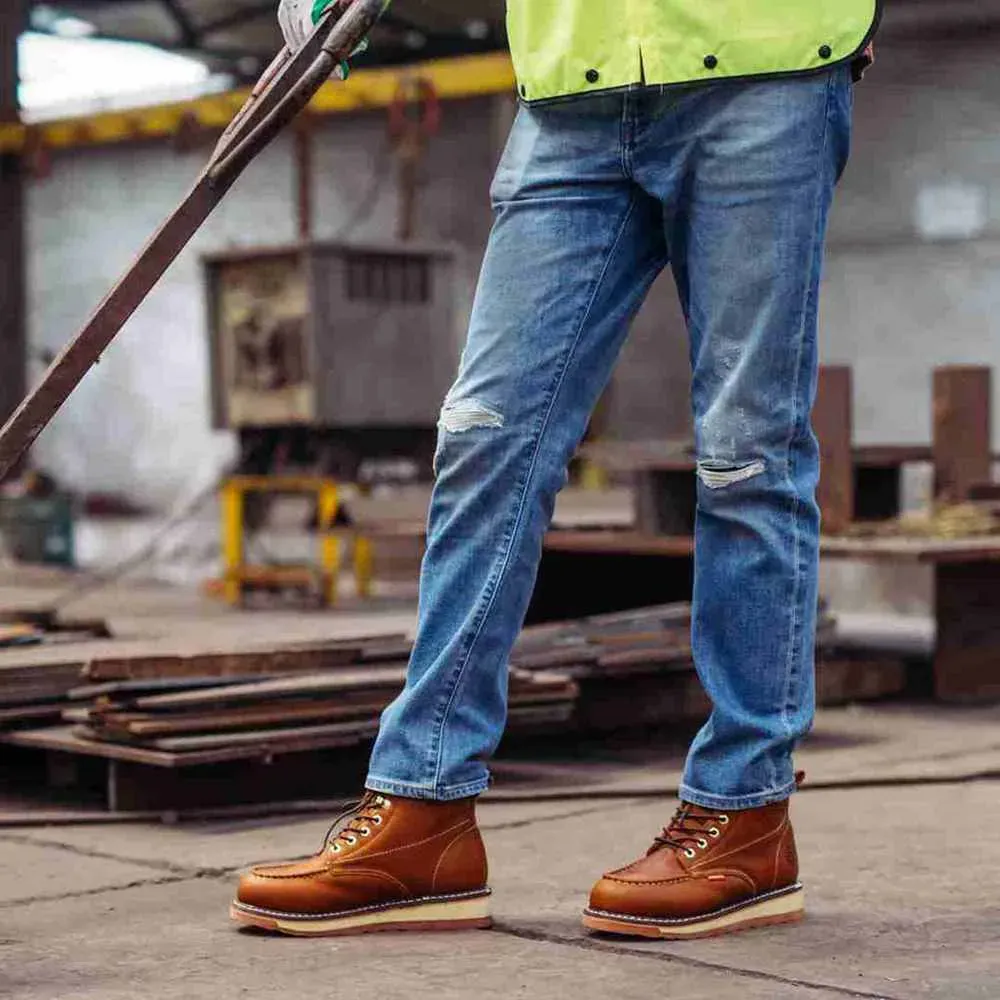
Toe-Cap Materials Compared: Steel, Composite, Alloy, and Carbon-Fiber
Steel Caps: Maximum Crush Protection and Affordability
Steel toe work boots deliver the highest crush resistance of any toe-cap material. They are the most affordable option, making them the go-to choice for heavy construction, demolition, and high-impact manufacturing. The trade-off: steel conducts cold and electricity, adds the most weight, and will trigger airport-style metal detectors.
Composite Caps: Lightweight, Non-Conductive, and Metal-Detector Friendly
Composite toe work boots are built from materials such as Kevlar, fiberglass, or carbon-reinforced plastics. They weigh roughly 30% less than steel, provide good thermal insulation, do not conduct electricity, and pass through metal detectors without an alarm. They meet the same ASTM impact and compression ratings as steel, making them an ideal choice for electricians, long-shift warehouse workers, and travelers passing through security checkpoints.
Alloy Caps: Slimmer Profiles with Metal Strength
Alloy caps — typically titanium or aluminum — offer a thinner profile and 30–50% weight reduction compared with steel while maintaining metal-level strength. Because they still contain metal, they will trigger metal detectors. They are priced in the mid-range and suit workers who need a slimmer toe box without sacrificing ASTM-rated protection.
Carbon-Fiber Caps: Premium Lightweight Strength and Thermal Insulation
Carbon-fiber caps are the lightest option available. They are non-conductive, metal-detector friendly, and provide excellent thermal insulation — an advantage in cold-storage environments. The premium material comes at the highest price point, making these boots a preferred choice for workers who face both light-to-moderate hazards and strict security or temperature requirements.
How to Choose Reinforced Toe Work Boots by Trade
Matching Workplace Hazards to the Right Toe Material
Start by identifying the dominant hazard on your site. Where dropped tools and heavy stock are a daily risk, steel toe work boots deliver the strongest ASTM-rated crush protection a reinforced toe can offer. For energized or metal-detector areas, lighter non-conductive protection comes from composite toe work boots that still meet the same impact and compression ratings. Workers in cold storage who need both insulation and minimal weight should consider carbon-fiber. If your job has no crush hazard and you just want flexible all-day comfort, see our range of soft toe work boots instead.
Verifying Testing Labels and Standards on the Tongue
Always check the label sewn into the boot's tongue or lining. US-compliant reinforced toe work boots carry the ASTM F2413 mark, with codes such as I/75, C/75, and EH printed clearly. Imported boots may display the EN ISO 20345 mark — look for SB, S1, S2, or S3 ratings, which correspond to the same 200 J impact and 15 kN compression benchmarks. Never rely solely on the words "steel toe" or "safety toe" in a product title — the standard code on the label is the only reliable proof of certification.
Adding Outsole Traction, Waterproofing, and Midsole Cushioning
Once you have confirmed the toe-cap standard, evaluate the rest of the boot. Crews facing wet outdoor sites plus falling-object risk can step straight into our waterproof steel toe boots for sealed, crush-rated protection. For a lighter boot that still carries an ASTM-rated toe, our composite toe service boot pairs non-conductive protection with all-day comfort. If you want a reliable all-rounder, our safety toe boots cover both steel and composite options in one trusted design. Oil-resistant outsoles, waterproof membranes, and cushioned midsoles extend the boot's lifespan and your comfort — but safety certification always comes first.
Frequently Asked Questions
Q1: What does "reinforced toe" mean on work boots? It is the UK/EU term for a safety toe: a built-in protective toe cap that shields the toes from heavy impact and compressive crush forces, matching the US definition of a "safety toe."
Q2: Are reinforced toe and steel toe the same thing? No. Steel is just one material option. A reinforced toe can also be constructed from composite materials, aluminum alloy, or carbon-fiber, all while meeting the same ASTM safety standards.
Q3: Which toe material is lightest? Carbon-fiber is the lightest, closely followed by aluminum alloy and composite materials. Steel is the heaviest but remains the most cost-effective and crush-resistant option.
Q4: Do reinforced toe boots set off metal detectors? Steel and alloy caps will trigger metal detectors. Composite and carbon-fiber caps contain no metal, making them security-friendly for airports and restricted facilities.
Comment