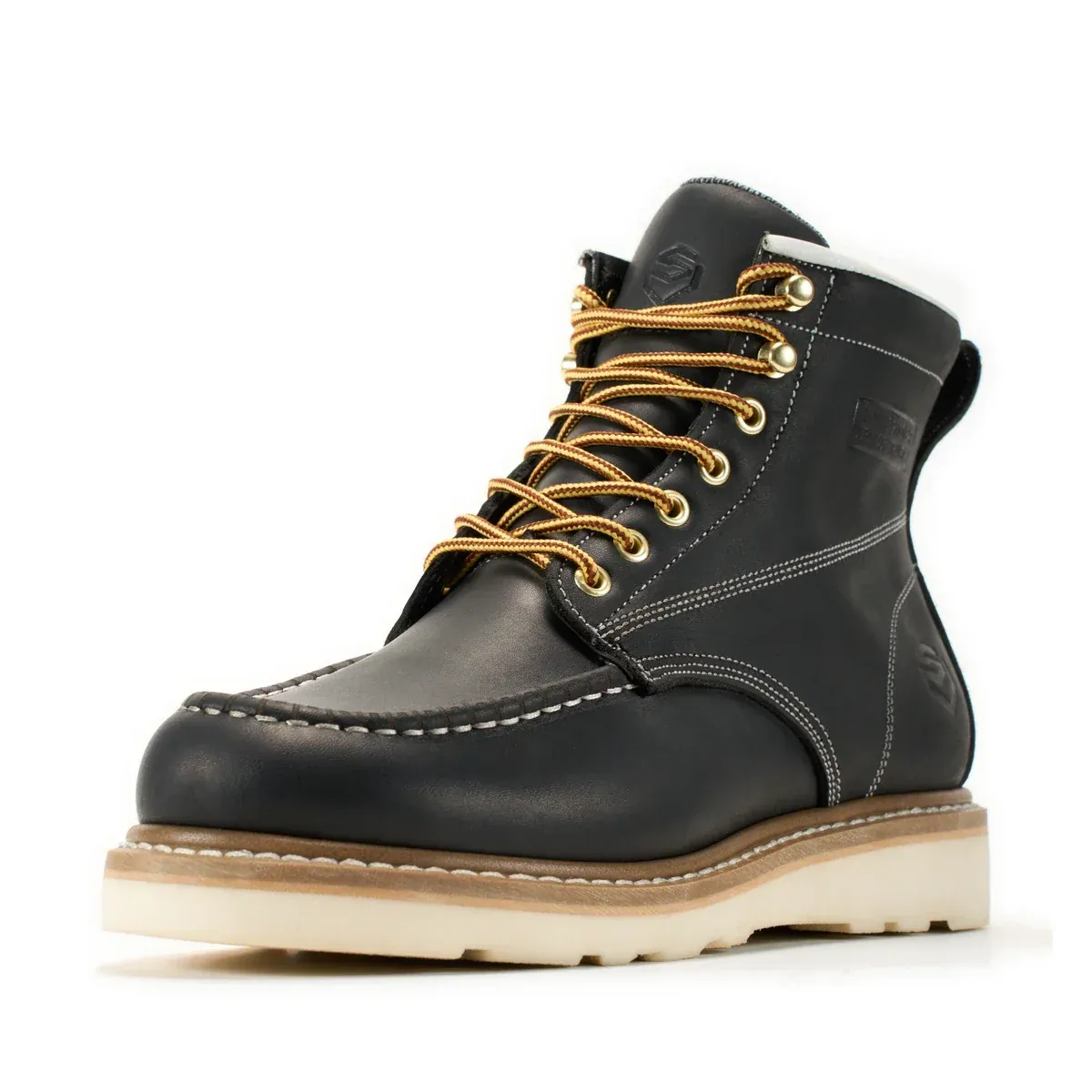
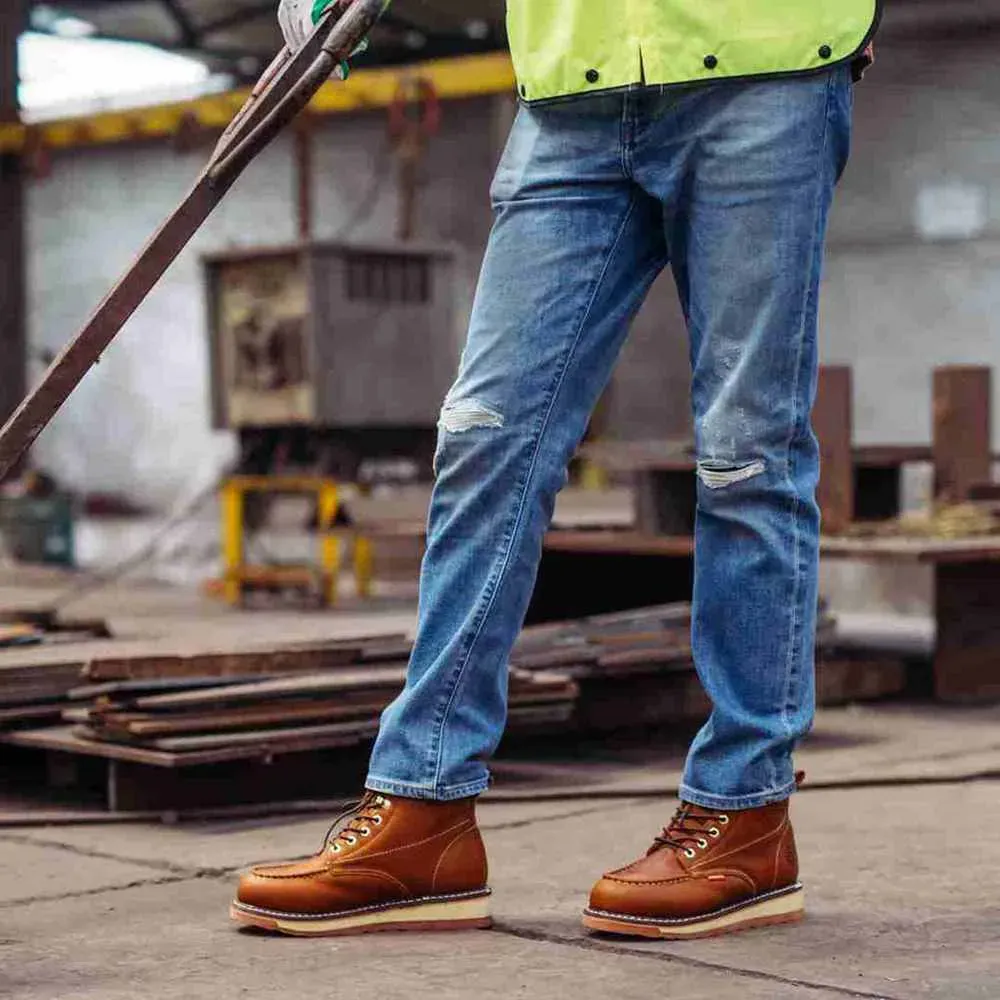
Welding Steel Toe Boots for Heavy Industry
Nov 20,2026 | Nancy Sureway
Heavy industry welding combines multiple life-threatening hazards at once. Flying sparks, molten metal spatter, radiant heat, and crushing steel components can all strike in the same shift. Standard work boots were never designed for this combination. Welding steel toe boots are engineered specifically to defend against each of these threats — and choosing the right pair can be the difference between a minor incident and a serious injury.
The Extreme Hazards in Heavy Industry Welding
Why Standard Work Boots Fail Against Heavy Steel Drops
In shipyards, structural fabrication shops, and heavy equipment plants, workers routinely handle steel beams, plates, and assemblies weighing hundreds of pounds. A standard work boot may carry a basic safety rating, but it is built for lighter construction tasks — not for the sustained impact risk of industrial steel. When a heavy section drops, only a boot with a true heavy-duty steel toe can absorb and redirect that crushing force away from your foot.
The Realities of Extreme Molten Metal Spatter
Welding arcs generate spatter temperatures exceeding 1,000 °C. Ordinary leather uppers and standard nylon stitching cannot withstand repeated contact with molten droplets. Over time, conventional boots develop char spots, compromised seams, and structural failures — leaving the foot exposed precisely where protection matters most.
Core Defenses of Welding Steel Toe Boots
Maximum Crush Resistance: The Steel Toe Advantage
The steel toe cap remains the gold standard for heavy industry. Composite alternatives can soften under sustained radiant heat, losing structural integrity before a drop even occurs. A certified steel cap maintains its shape at high ambient temperatures, providing reliable crush resistance throughout a full shift. Browse our complete range of steel toe work boots to find the right certified option for your worksite.
Heat-Resistant Outsoles and Extreme Temperature Thresholds
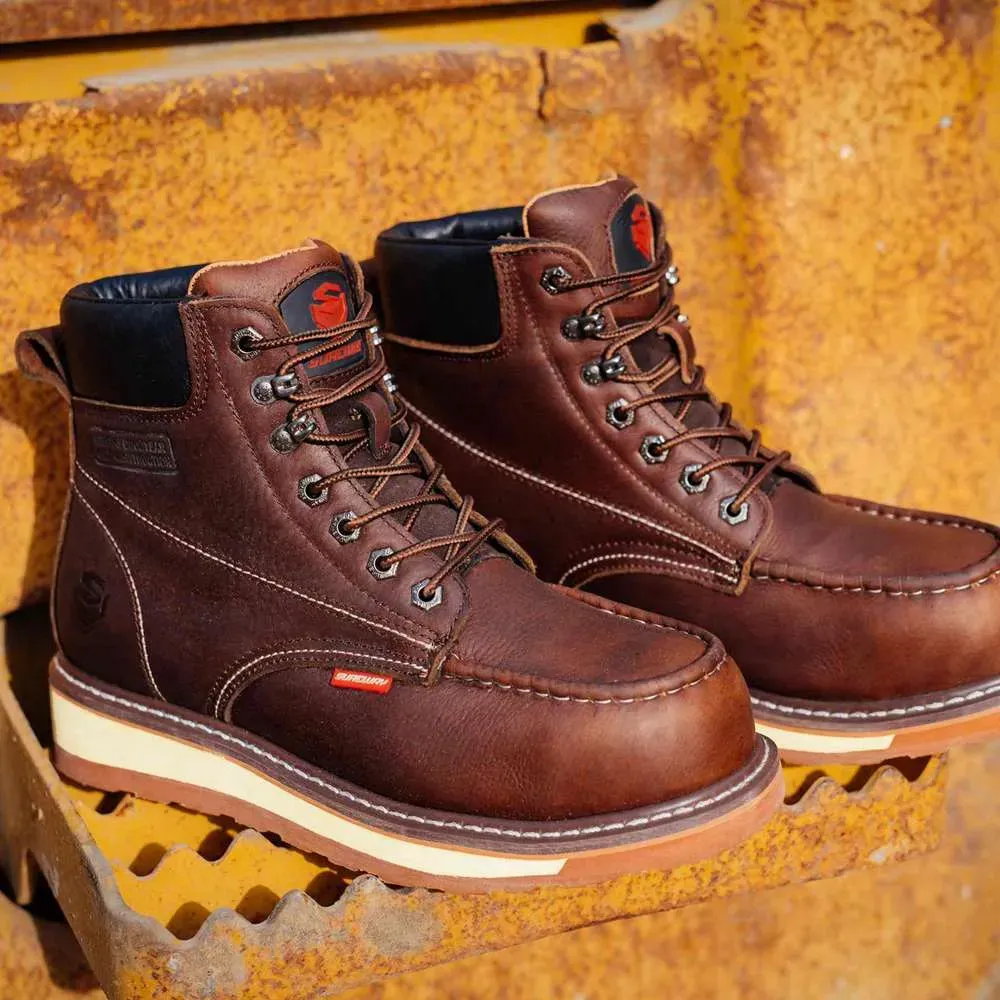
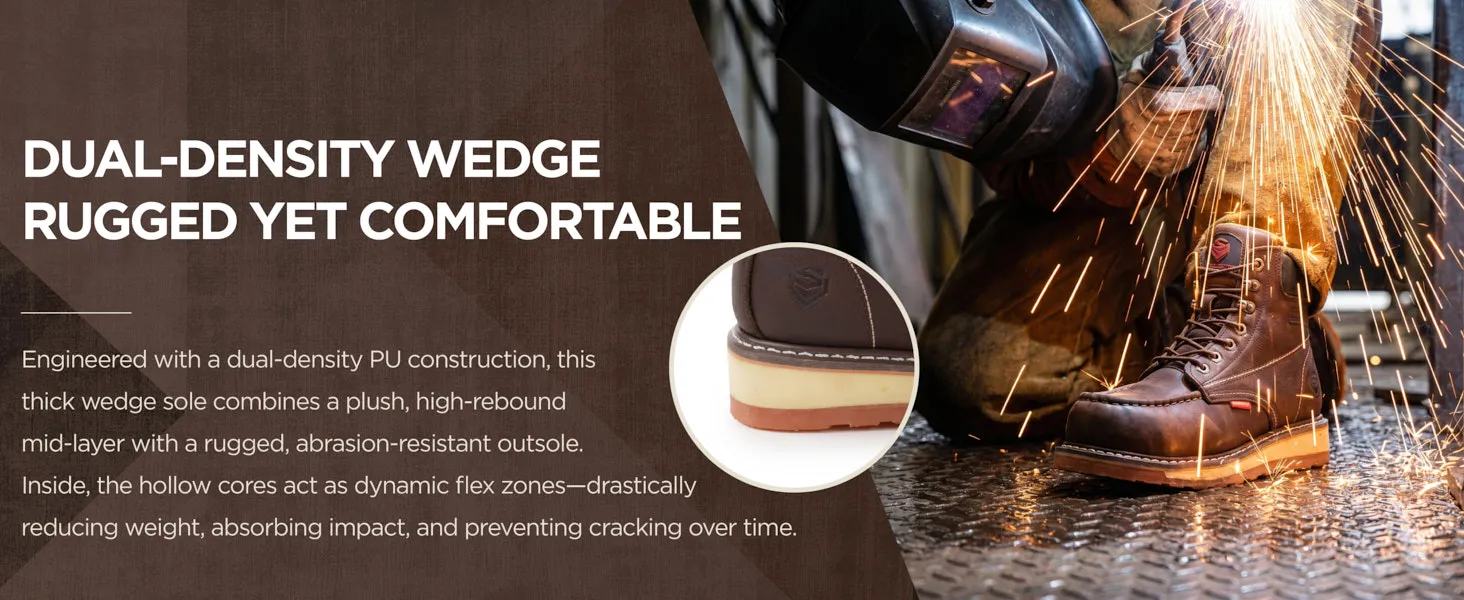
The outsole is the first surface to contact hot slag and superheated flooring. Heat-resistant rubber or TPU compounds resist surface contact heat and do not melt, blister, or delaminate under typical welding conditions. This keeps the sole structurally intact and prevents heat from migrating upward toward the foot. For maximum outsole durability, consider a heavy duty steel toe work boot built for the most demanding environments.
Heavy-Duty Leather and Flame-Resistant Kevlar Stitching
Purpose-built welding steel toe boots use full-grain leather uppers that resist spark penetration and slow charring. Equally important is the stitching. Standard cotton or nylon thread burns through quickly when exposed to spatter. Kevlar-reinforced stitching resists flame and maintains seam integrity even after repeated spark exposure, keeping the boot's upper and sole bonded under real welding conditions.
Essential Applications for Steel Toe Welding Boots
Shipyards and Heavy Equipment Manufacturing
Shipyard welders face a convergence of hazards: overhead welding that rains spatter downward, confined spaces with limited escape routes, and massive steel components moving on cranes and conveyors. In heavy equipment manufacturing, robotic and manual welding stations generate sustained heat and spatter across entire production floors. Both environments demand boots that protect against impact, heat, and flame simultaneously.
Structural Steel Welding and Large-Scale Fabrication
Structural steel welders often work at elevation, on scaffolding, or directly on steel decking — surfaces that conduct and retain heat. For lighter hot-work tasks at ground level, welding work shoes offer a lower-profile option without sacrificing steel toe protection. Workers who spend long periods kneeling or crouching may also benefit from a roomier fit — a moc toe welding boots profile reduces toe-box pressure in those positions.
How to Evaluate Heavy-Duty Welding Steel Toe Boots
ASTM F2413 Certification and Impact Ratings
Look for boots certified to ASTM F2413 with an impact rating of I/75 and a compression rating of C/75. This confirms the toe cap withstands a 75 foot-pound impact and 2,500 pounds of compressive load — the minimum threshold for heavy industry environments with overhead lifts and large machinery.
Internal Insulation: Preventing Heat Transfer to the Steel Cap
A steel cap that conducts heat directly to your toes defeats its own purpose. Quality welding steel toe boots include internal thermal insulation layers between the steel cap and the foot, preventing the cap from becoming a heat sink during prolonged radiant heat exposure. If a spark lands inside the boot, slip-on welding boots allow faster removal than lace-up designs — a meaningful safety advantage in that scenario.
5 Frequently Asked Questions
Q1: Does the steel toe cap get dangerously hot during prolonged welding? Quality welding steel toe boots feature internal thermal insulation layers to prevent the steel cap from conducting heat to your toes, even during prolonged exposure to sparks and radiant heat.
Q2: Are welding steel toe boots too heavy for all-day wear? While heavier than standard boots, modern designs use heat-resistant outsoles and ergonomic shanks to distribute weight evenly, minimizing fatigue during long heavy-industry shifts.
Q3: How much impact can a welding steel toe boot withstand? ASTM-certified steel toe boots are tested to withstand an impact of at least 75 foot-pounds and a compressive load of 2,500 pounds — essential for environments with heavy steel beams and machinery.
Q4: Can molten slag melt through the leather above the steel toe? Standard leather can char, but purpose-built welding boots use heavy-duty, specially treated leather and Kevlar stitching to resist burn-through, especially over the critical toe box area.
Q5: When must heavy-duty welding steel toe boots be replaced? Replace them immediately if the steel toe cap becomes visible, the leather cracks deeply from heat exposure, or the heat-resistant outsole shows signs of melting or severe wear.
Comment