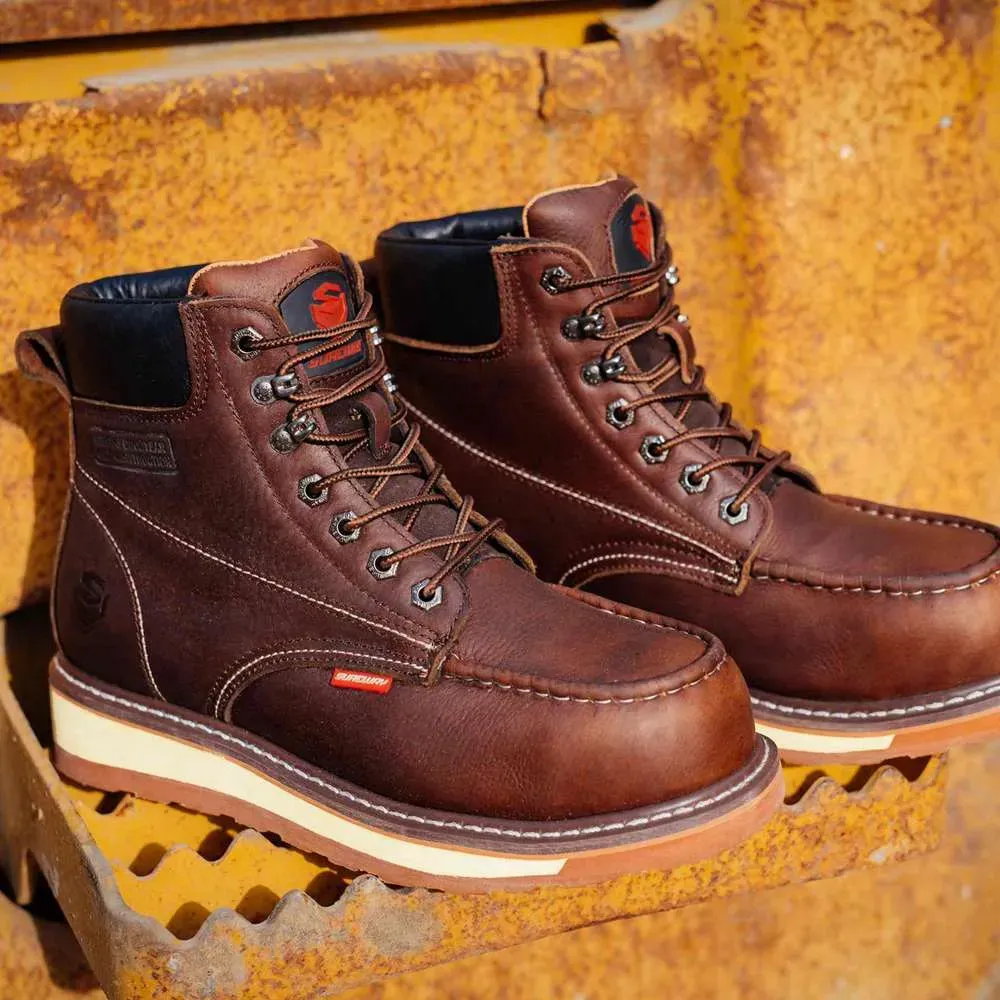
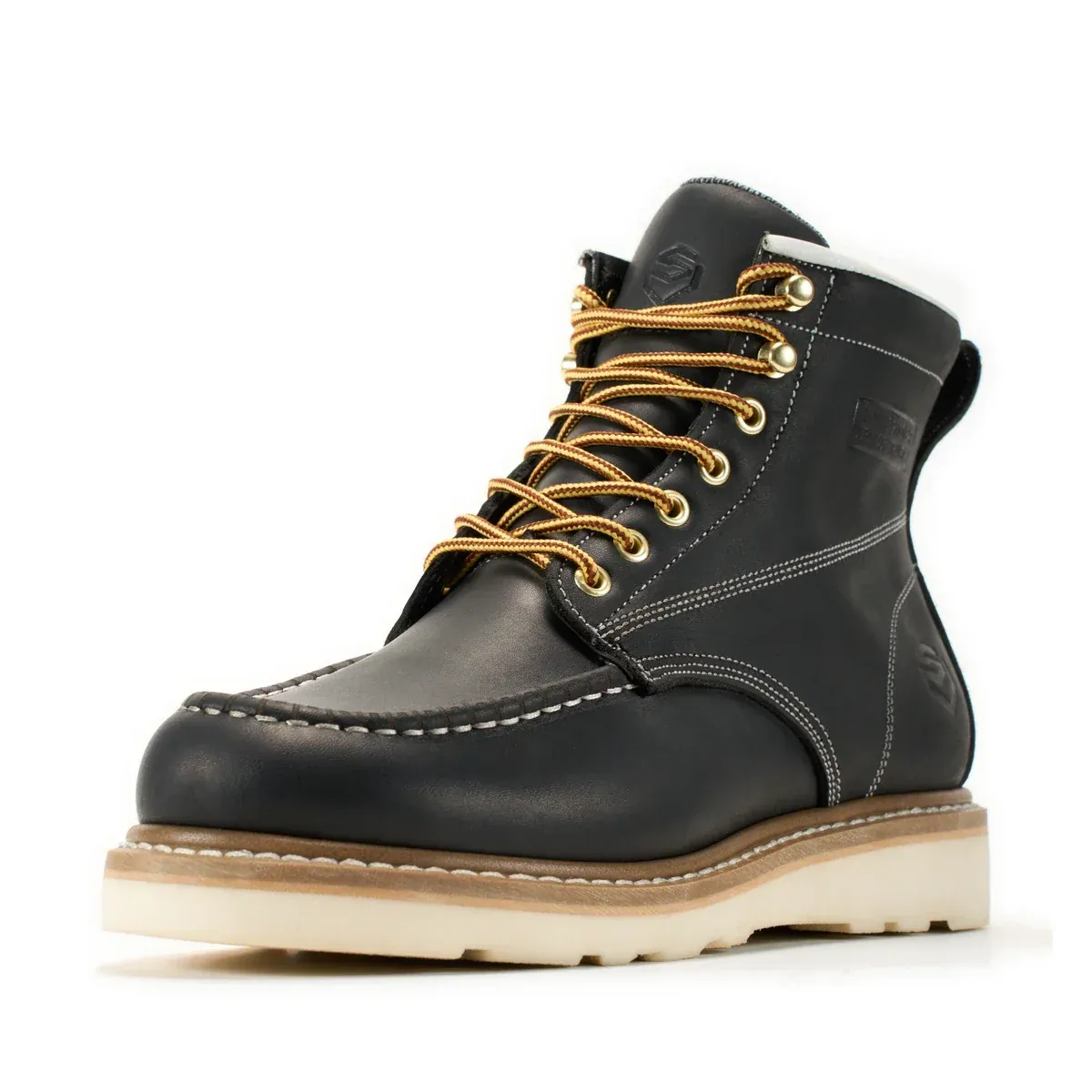
Waterproof Work Boots for Men
Nov 20,2026 | Nancy Sureway
Waterproof work boots for men combine a sealed internal membrane with full-grain leather uppers and seam-sealed construction to block standing water completely — not just repel light rain. Whether you work on a wet construction site, a muddy farm, or in a cold warehouse, keeping your feet dry is as critical as protecting them from impact and puncture hazards. This guide compares every major toe type, shaft height, and waterproofing technology so you can find the right boot for your job in one place.
The Dual Demands of Protection and Dryness
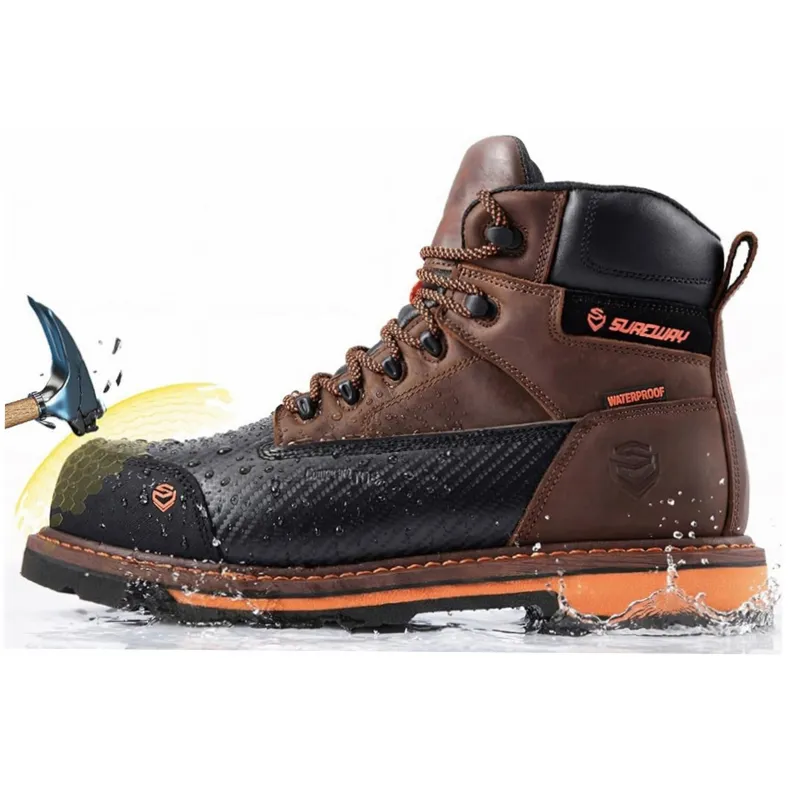
Outdoor and industrial workers face two simultaneous threats: physical hazards (falling objects, punctures, electrical contact) and wet conditions that cause cold feet, blisters, and slips. Standard safety boots may carry a toe cap but lack true waterproofing. Genuine waterproof work boots address both demands at once, combining ASTM-rated protection with a waterproof membrane that holds up through a full shift in standing water or slurry.
Waterproofing Technologies
Internal Breathable Waterproof Membranes
A synthetic waterproof membrane bonded to the boot's inner lining blocks liquid water while allowing sweat vapor to escape. This breathability is what separates a quality membrane from a simple rubber boot. Look for boots that specify a named or rated membrane rather than a generic "waterproof lining" claim.
Full-Grain Leather Treatments and DWR Coatings
Full-grain leather is naturally dense and moisture-resistant. When treated with a Durable Water Repellent (DWR) finish, the outer surface causes water to bead and run off instead of soaking in, reducing the load on the internal membrane and extending its effective lifespan.
Seam-Sealed Construction vs. Water-Resistant Sprays
Seam-sealed construction tapes every stitched joint inside the boot, eliminating the small needle holes that allow wicking. Water-resistant sprays applied externally only protect the surface and wear off within weeks of heavy use. For genuine waterproofing, both a membrane and sealed seams are required.
Specification of Waterproof Men's Boot Models
Shaft Heights, Safety Toe Types, and Outsole Traction Compared
|
Model |
Toe Type |
Shaft Height |
Waterproof Structure |
Outsole |
Best For |
|
Soft Toe |
8" |
Membrane + seam-sealed |
Lightweight, cushioned |
Warehouses, light outdoor work |
|
|
Soft Toe |
8" |
Membrane + seam-sealed |
Lightweight, cushioned |
All-day indoor/outdoor wear |
|
|
Composite Toe |
8" |
Membrane |
Lightweight, insulating |
Electrical environments, security checkpoints |
|
|
Steel Toe |
10" |
Full-grain leather + waterproof |
Tall shaft, mud-resistant |
Farms, deep water, slurry |
|
|
Steel Toe |
8" |
Waterproof membrane |
Anti-puncture, slip-resistant |
Construction, heavy industrial |
Weight and Lining Matrix for Wet-Duty Styles
Soft toe models are the lightest option and suit roles where falling-object risk is low. Composite toe boots weigh slightly more but remain metal-free, making them the right pick for electrical work or sites with security scanners. Steel toe boots offer the highest protection rating and are essential for heavy construction or forestry, where the added weight is a worthwhile trade-off.

Application Comparison
Wet Construction Sites, Warehouses, and Farming Grounds
|
Work Environment |
Recommended Toe |
Shaft Height |
Waterproofing Priority |
Recommended Style |
|
Wet construction / slippery sites |
Steel / Composite |
8" |
Mud-shedding, anti-puncture, slip-resistant |
Steel Toe Industrial 629 |
|
Warehouses / indoor-outdoor |
Soft / Composite |
8" |
Lightweight waterproof, all-day comfort |
Soft Toe 801 / 803 |
|
Farms / deep water / slurry |
Steel |
10" |
High-shaft flood protection, easy rinse |
10" Steel Toe Wellington |
Heavy Mud, Forestry Slopes, and Electrical Checkpoint Environments
|
Work Environment |
Recommended Toe |
Shaft Height |
Waterproofing Priority |
Recommended Style |
|
Forestry / outdoor terrain |
Steel |
8"–10" |
Abrasion-resistant, aggressive tread, membrane |
Steel Toe Logger style |
|
Electrical / security checkpoints |
Composite (non-metal) |
8" |
Insulated + waterproof |
8" Composite Toe |
How to Choose Men's Waterproof Work Boots
Steel vs. Composite vs. Soft Toe Selection
Steel toes provide the strongest crush resistance against heavy dropped loads. Composite toes are non-metallic, non-conductive, and lighter — the right choice for electrical environments or sites with security screening. Soft toes are the lightest and most flexible option for roles where ANSI impact protection is not required.
6-Inch vs. 8-Inch vs. 10-Inch Wellington
A 6-inch shaft offers agility for flat, dry-to-damp surfaces. An 8-inch shaft is the most common choice for mens waterproof work boots, covering the ankle well and handling most outdoor conditions. A 10-inch Wellington shaft prevents water ingress in deep puddles, farm slurry, and muddy livestock areas where an 8-inch boot would overflow.
Seasonal Insulation and Sizing for Thick Boot Socks
In cold or wet winters, choose a model with an insulated lining rated for the lowest temperatures you expect to encounter. Size up by half a size when you plan to wear heavy wool or thermal socks — a boot that is too tight compresses insulation and reduces warmth.
Care & Maintenance for Long-Lasting Waterproof Performance
Cleaning, Drying, and Conditioning Waterproof Leather
Rinse or brush off mud after every shift before it dries and abrades the leather surface. Air dry boots at room temperature — direct heat from radiators or dryers causes the membrane to delaminate and the leather to crack. Once the boot is dry, apply a DWR spray or wax conditioner to restore surface repellency. Reapply every four to six weeks under heavy use. Never machine-wash waterproof work boots, as agitation tears the seam tape from the inside.
Frequently Asked Questions
Q1: What is the difference between waterproof and water-resistant work boots? Waterproof work boots integrate an internal waterproof membrane paired with seam-sealed construction to completely block submerged or standing water, whereas water-resistant boots rely solely on surface coatings that only repel light moisture and minor splashes.
Q2: Are waterproof work boots for men hot in summer? Quality modern waterproof boots use breathable membranes that allow sweat vapor to escape while blocking liquid water. For hot weather, choose an uninsulated model with lightweight uppers to prevent excessive heat retention.
Q3: Which toe type is best for waterproof work boots? Steel toes offer maximum crush resistance against heavy hazards, composite toes deliver non-conductive and lightweight protection ideal for cold or wet electrical environments, and soft toes provide the greatest flexibility when crush hazards are absent.
Q4: How tall should waterproof work boots be? An 8-inch shaft provides optimal coverage and ankle stability for standard outdoor and construction tasks, whereas 10-inch pull-on Wellington boots are preferable for navigating deep standing water, slurry, or muddy livestock farms.
Q5: How do I keep waterproof work boots waterproof? Clean off mud after each shift, air dry them naturally at room temperature away from direct heat sources, and periodically treat the leather uppers with a DWR water-repellent spray or wax conditioner to protect the internal membrane.
Comment