Best Work Boots for Mechanics: Oil Resistance, Grip & Comfort
Sep 21,2026 | Nancy Sureway
If you work in an auto shop, you already know the risks. Waste oil, brake fluid, and coolant coat the floor every single day. Ordinary hiking shoes or cheap work boots simply cannot survive that environment. The best work boots for mechanics must deliver three things above all: oil-resistant outsoles, reliable toe protection against heavy drops, and durability that outlasts the typical 90-day failure mark. This guide breaks down exactly what to look for, and highlights two top mechanic work boots built for the job.
The Auto Shop Danger Zone: 3 Hazards EveryMechanic Faces
Auto shops are tougher on footwear than almost any other trade environment. Here are the three hazards that destroy ordinary boots fast.
Hazard 1: Chemical Oil Slippage & Sole Degradation
Petroleum-based fluids — engine oil, ATF, power steering fluid — dissolve cheap adhesives and foam midsoles quickly. Standard EVA foam swells and separates on contact with hydrocarbons. Professional mechanic work boots require vulcanized rubber or oil-resistant PU outsoles tested against continuous fluid exposure.
Hazard 2: Constant Kneeling & Toe Dragging
Working under a lift or crawling beneath a chassis means your toe box scrapes rough concrete repeatedly. This toe scuffing tears through thin leather fast, leaving exposed stitching and entry points for oil. Reinforced rubber toe bumpers are the only reliable defense.
Hazard 3: Heavy Tool Drops
Ratchets, brake rotors, and transmission housings can fall without warning. A steel toe cap rated to ASTM F2413 absorbs that impact before it reaches your foot.
When maintaining fleet trucks or heavy plant machinery, stepping into heavy equipment work boots raises your protection to match severe industrial shop demands. To know how specialized outsoles handle slick lubricants, review our guide on mechanic safety boots and slip-resistance ratings.

Anatomy of the Perfect Mechanic Boot: Key Features
Knowing what separates a great mechanic boot from a mediocre one helps you spend money wisely.
Oil-and-Acid Resistant Siped Outsole
Fine siping channels cut through oil films the same way tire treads cut through standing water. Combined with deep lug grooves, a quality oil resistant work boot outsole grips concrete even when fluids are present. Flat, unsiped soles offer none of this.
Steel vs. Composite Toe for Shops
Both meet ASTM F2413 standards for impact and compression. Steel toes deliver superior crush resistance in a slim profile — ideal for tight engine bays. Composite toes are non-conductive, making them the smarter choice for EV technicians near high-voltage battery systems. For a full breakdown of non-metallic safety caps, check our boots for mechanics guide.
Full-Grain Leather Upper
Oil-tanned, full-grain leather resists spark burnthrough from grinding and resists surface contamination. It also wipes clean faster than synthetic materials — a real advantage on a greasy shop floor.
Anti-Fatigue Insole
Quality PU insoles compress and rebound to absorb shock on hard concrete. After eight hours of standing, that difference is enormous.
Top Rated Picks: Best Mechanic Work Boots for 2026
Two builds cover the majority of auto shop work scenarios.
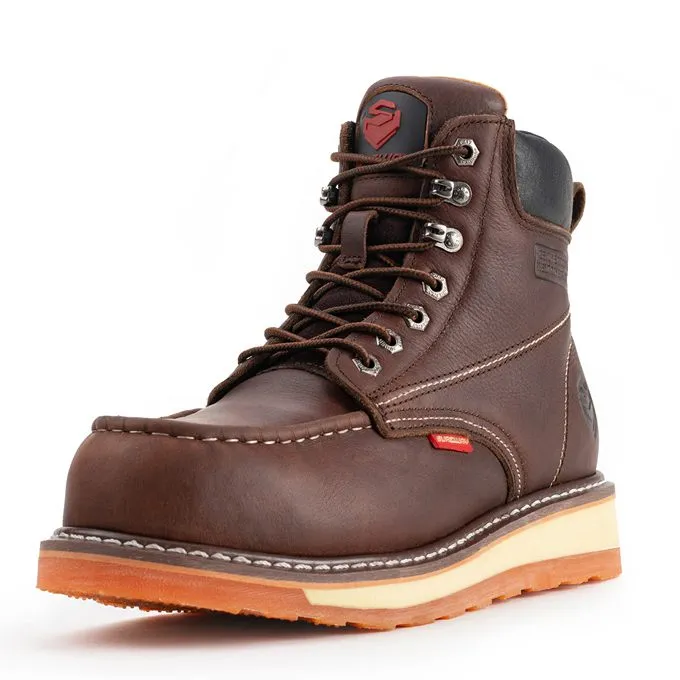
1. Sureway 603 Heavy-Duty Steel Toe: Best for General Technicians & Heavy Lifts
The Sureway 603 is built for mechanics who spend their day lifting engine blocks, wrestling brake assemblies, and torquing suspension components. Its ASTM-certified steel toe cap handles sudden drop impacts reliably. The oil-resistant grooved rubber outsole bites into greasy concrete without slipping.
Dark full-grain leather hides grime well and resists minor spark exposure from angle grinders. Full ankle wrap provides lateral support when you shift weight carrying heavy parts across the shop floor.
Automotive techs lifting engine blocks and heavy brake rotors need the structural defense of steel toe work shoes to guard against sudden drop impacts. The 603 delivers exactly that.
Best for: General repair technicians, diesel mechanics, and engine or transmission overhaul specialists.
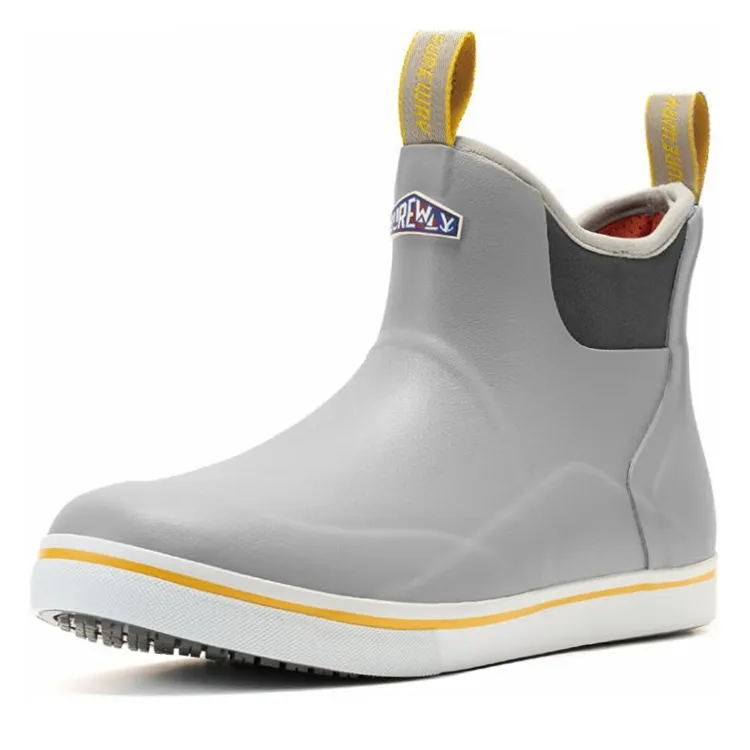
2. Sureway 612 Slip-On Steel Toe: Best for Crawling Under Cars & Quick In-and-Out
Laces are a real hazard in a busy auto bay. They snag on creeper wheels, brush against hot exhaust pipes, and drag through oil puddles. The Sureway 612 eliminates this problem entirely with elastic side-gore construction and dual pull tabs for fast entry and exit.
The steel toe guards against dropped hardware. The oil-resistant blown rubber outsole stays stable on slick floors. No laces means no snagging, no ignition risk, and no soaked shoelaces trailing waste oil across the shop.
Mechanics spending hours sliding beneath vehicles on creepers prefer the streamlined profile of a steel toe slip on that eliminates dangling laces entirely.
Best for: Quick-lube technicians, detail and prep staff, and any mechanic who spends significant time on a creeper under vehicles.
Cleaning Garage Grease & Extending Leather Lifespan
Never spray carburetor cleaner or brake cleaner directly on leather boots. These solvents strip the natural protein structure from leather permanently, causing cracking and accelerated breakdown.
Follow this routine instead:
- Mix warm water with a small amount of Dawn dish soap.
- Scrub the solution into greasy areas with a stiff nylon brush.
- Wipe away the emulsified oil with a clean rag.
- Air-dry the boots away from direct heat sources.
- Apply a leather conditioner or waterproofing wax while the leather is still slightly warm.
Repeat weekly in heavy-use environments. Consistent conditioning closes micro-cracks before oil can penetrate deep into the grain.
Frequently Asked Questions
Q1: Do mechanics need steel toe or composite toe boots?
Both satisfy ASTM F2413 safety standards against heavy falling parts. Steel toe offers superior slim-profile crush resistance, while composite toe boots are preferred by EV technicians working around high-voltage electric vehicle batteries.
Q2: Why do slip-on boots work well for automotive mechanics?
Slip-on boots eliminate laces that can snag on garage creepers, catch fire from grinding sparks, or untie and drag through greasy floor puddles, making them safer and cleaner in auto bays.
Q3: What sole material lasts longest against motor oil?
Dense, oil-resistant blown rubber outsoles compound-tested for hydrocarbon exposure hold up best. Cheap EVA foam soles swell, soften, and separate when continuously saturated with motor oil.
Q4: How do I stop the toes of my boots from wearing out when kneeling?
Look for work boots with reinforced rubber toe bumpers (scuff caps), or apply a layer of polyurethane protective boot guard (Tuff Toe) over the leather toe box before entering heavy bay use.
Q5: Can mechanics wear wedge sole boots?
Yes, wedge soles provide incredible anti-fatigue comfort on flat shop floors. However, ensure the wedge outsole specifies an oil-resistant compound with sipe grooves to prevent slipping on spilled antifreeze.
Comment