Best Work Boots for Concretes from Sureway
Sep 21,2026 | Nancy Sureway
Concrete is one of the most punishing surfaces you can work on. Cured slabs hammer every step back through your feet and joints, while wet cement slurry attacks leather with a caustic alkaline burn. Choosing the best work boots for concrete means solving both problems at once — or paying for it in worn-out feet and ruined boots. This guide breaks down exactly what to look for and recommends two proven Sureway picks for the job.
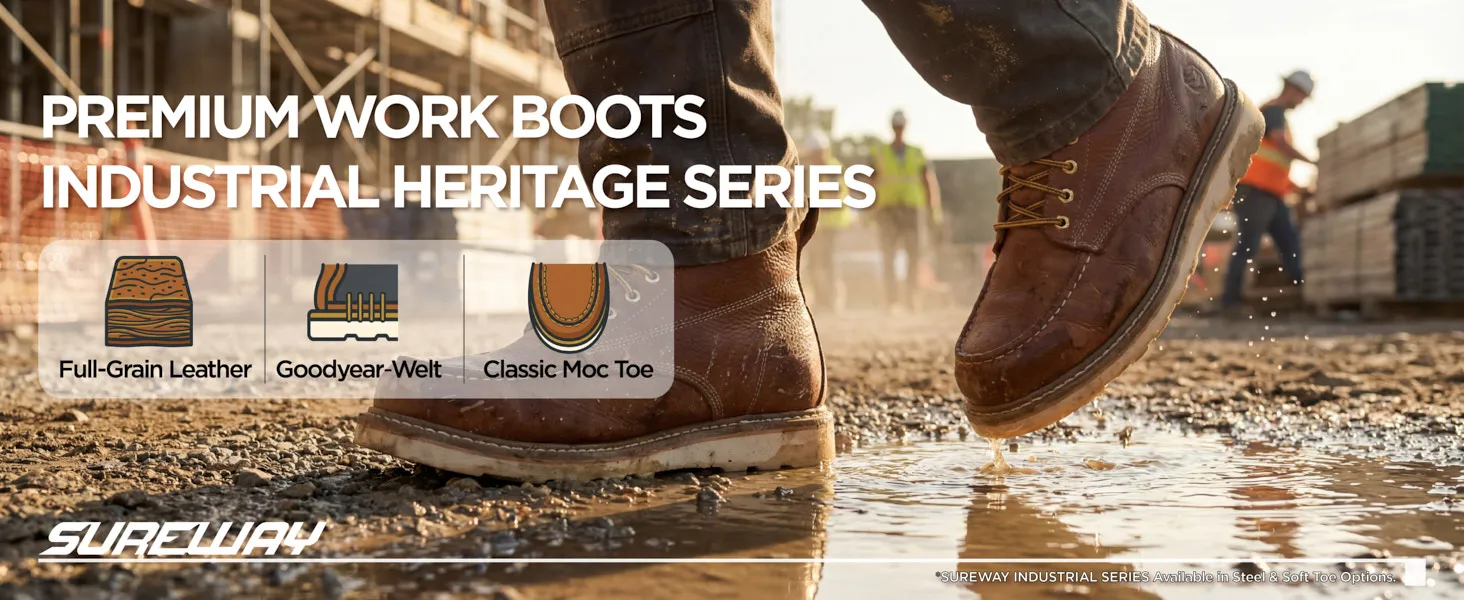
The Two Battles of Concrete Work: Hard Impact vs. Chemical Slurry
Concrete workers face two distinct hazards, and your boots need to handle both.
- Impact on Cured Concrete
Unlike softer surfaces, cured concrete absorbs zero shock. Every step sends 100% of the impact force straight up through your ankles, knees, and lower back. Workers who stand or walk on concrete for 10+ hours daily are at real risk of developing plantar fasciitis and chronic joint pain. Standard boots with a rigid heel and thin midsole make this significantly worse.
- Wet Cement Corrosiveness
Fresh Portland cement mixed with water reaches a pH of 12 to 13 — highly alkaline. That level of caustic exposure leaches natural oils from animal leather, leaving boots stiffened and cracked within weeks of regular splashing. Even a single overnight soaking can shorten a boot's lifespan dramatically.
When outfitting your crew with dedicated concrete masons work boots, balancing impact absorption with chemical resistance is the core requirement. To know how masonry job hazards dictate boot heights and leather treatments, see our guide on concrete masonry work boots across commercial sites.
Top Features Required for Concrete Work Footwear
Not every work boot is built for concrete. Here are the three features that actually matter.
Wedge Outsoles for Weight Distribution
A continuous flat polyurethane wedge sole eliminates heel pressure points entirely. It spreads body weight over roughly twice the surface area of a traditional heeled boot. This directly reduces compressive load on the arch and heel with every step. Wedge soles also leave no deep heel marks on freshly placed concrete surfaces.
Internal Waterproof Membrane
A bootie-style internal waterproof membrane seals out alkaline slurry before it reaches your skin — critical for preventing cement dermatitis, a painful chemical burn from prolonged alkaline contact. Look for a full internal seal rather than just a treated outer surface.
Oiled Full-Grain Leather Upper
Oil-tanned full-grain leather creates a natural barrier against moisture and mild chemical exposure. The heavy hide and oil treatment together resist alkaline slurry penetration far better than split-grain or synthetic alternatives.
To learn how high-rebound midsoles prevent chronic arch fatigue, review our tested picks for standing and walking boots during 12-hour shifts.
Top Rated Picks: Best Concrete Work Boots from Sureway
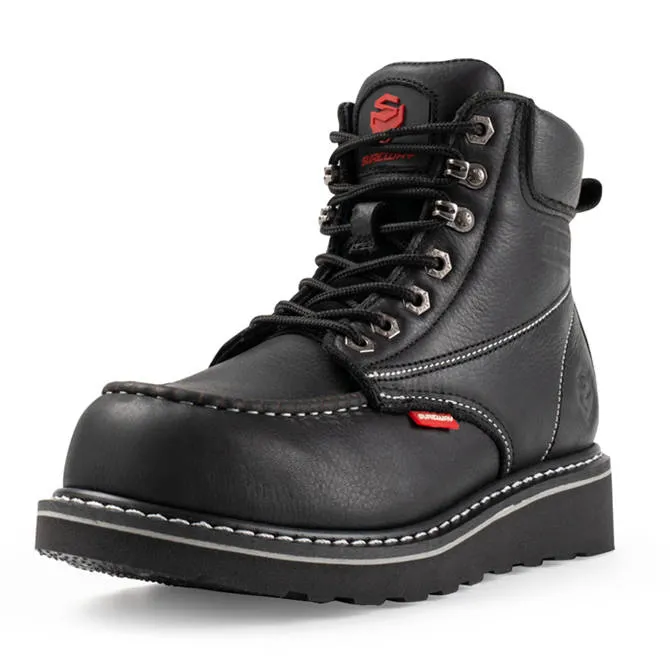
1. Sureway 6" Wedge Moc Toe: Best for Standing & Finishing on Cured Concrete
Best for: Concrete finishers, warehouse workers, precast assembly, and interior flat-floor work.
For trade workers pacing all day on hard slabs, stepping into a cushioned wedge sole moc toe eliminates heel strike pain and softens every step. The Sureway 6" Wedge Moc Toe delivers exactly that.
Key features:
- Extra-thick PU wedge outsole— high-density foam absorbs compressive shock without bottoming out across a full shift
- Spacious moc toe box— roomy design prevents toe compression during long standing periods
- Oiled full-grain leather upper— naturally resists moderate moisture and mild alkaline splashes
- Clean flat sole profile— no heel indentations to gouge or mark setting concrete surfaces
This is the go-to choice for the best work boots for walking on concrete all day when the surface is dry and cured.
2. Sureway 8-Inch Waterproof Boot: Best for Pouring Wet Cement & Rough Sites
Best for: Concrete pourers, foundation workers, and municipal pipeline backfill crews.
When wading into wet slurry or rough foundations, the heavy-duty waterproof work boots 8 inch shaft provides a watertight seal against harsh slurry splash. The extended collar creates a critical barrier between wet cement and your lower leg.
Key features:
- Full internal waterproof membrane— 100% sealed bootie prevents caustic slurry from reaching skin
- 8-inch shaft height— stops wet cement from spilling over the collar during active pours
- Oil- and corrosion-resistant outsole— grips rough, slick, and chemically contaminated ground
- Durable leather construction— holds up in aggressive wet and abrasive site conditions
For the best boots for concrete work on active pour sites, the 8-inch height is not optional — it is a practical safety requirement.
How to Protect Boots from Wet Cement
Good boots only last if you maintain them. The golden rule: never let wet cement dry on your boots overnight.
After every pour shift:
- Rinse off all visible cement slurry immediately using water and a soft brush.
- Air-dry boots away from direct heat, which cracks leather fast.
- Apply mink oil or heavy leather conditioner at least once per week to rebuild the protective barrier stripped by alkaline exposure.
This simple routine can double the working life of a quality pair of concrete boots.
Frequently Asked Questions
Q1: Why do concrete finishers prefer wedge sole boots?
Wedge soles have no heel indentations, meaning they distribute body weight evenly and won't leave deep gouges or heel marks when walking over freshly placed, setting concrete surfaces.
Q2: Does wet concrete ruin leather work boots?
Yes, the lime in wet concrete is highly alkaline. If left on leather, it leaches out natural oils, causing the leather to dry out, stiffen, and crack within weeks. Rinse off concrete splashes daily.
Q3: What boots are best for walking on concrete all day?
Look for work boots equipped with lightweight polyurethane wedge outsoles, dual-density EVA anti-fatigue midsoles, and anatomical arch support insoles that absorb relentless shock waves.
Q4: Should concrete boots be 6-inch or 8-inch tall?
For pouring wet concrete, 8-inch boots are strongly recommended to prevent slurry from spilling over the collar. For indoor dry finishing and flat floor work, 6-inch boots offer better ankle mobility.
Q5: Can I wear steel toe boots for concrete work in cold weather?
Yes, but composite toe boots are often preferable in freezing weather because non-metallic composite caps do not transfer outdoor freezing temperatures from wet slabs to your toes.
Comment