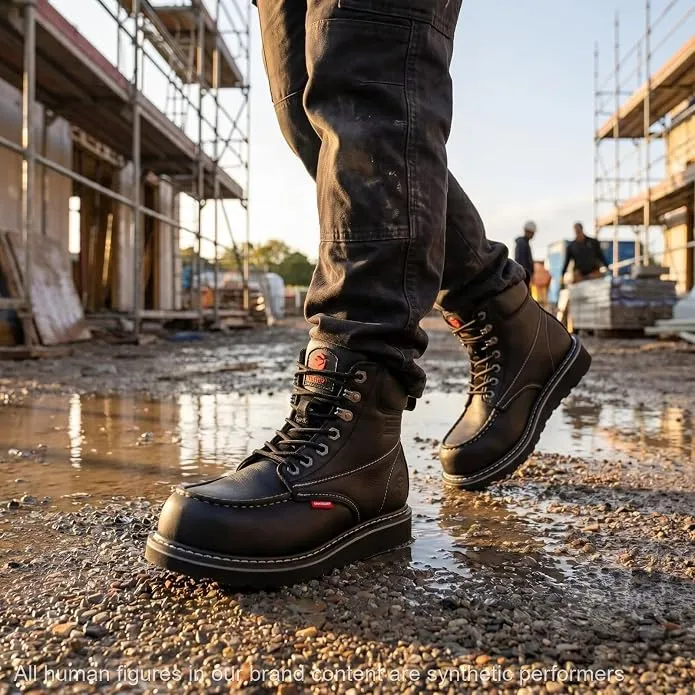
Wedge Sole vs. Heel Work Boots
Sep 20,2026 | Nancy Sureway
Most workers research leather quality, toe protection, and waterproofing before buying work boots. Yet the outsole shape often decides how your body feels by the end of a shift. The debate between wedge sole vs heel work boots comes down to a simple question: what surface do you work on most? A flat wedge sole and a 90-degree defined heel are tools built for different terrain. Here is what separates them.

Anatomy & Mechanics: How Flat Wedges Differ from Heels
The difference begins at ground level. Wedge sole work boots run a continuous, gradual slope from heel to toe. There is no hollow cavity beneath the arch. The entire base contacts the floor at once, spreading body weight evenly across the full footbed.
A defined-heel boot works differently. A separate heel block — typically one to two inches tall: lifts the rear of the foot. A clear arch cutout bridges the heel and the ball of the foot. Deep lug tread wraps the outsole for aggressive bite in loose material.
Both designs use durable compounds: polyurethane foam or rubber for wedge soles, and vulcanized hard rubber for heel constructions. The key insight from studying wedge sole boots in industrial settings is that uniform surface contact is what prevents joint fatigue over a full day on flat ground.
Neither sole is universally better. The right choice depends entirely on your terrain and trade.
The Ultimate Concrete & Pavement Comfort
If your shift happens on hard, flat surfaces, a wedge sole is the smarter pick. The seamless contact area distributes weight from heel to toe. That eliminates the sharp heel-strike impact that travels up through your knees and lower back on unforgiving concrete.
Ironworkers figured this out long ago. Walking steel I-beams in a defined heel means risking a snag with every step. A flat wedge glides smoothly across steel flanges without catching an edge.
The benefits of wedge sole work boots extend beyond shock absorption. The shallow tread pattern does not trap concrete slurry, wood shavings, or fine debris. You track far less mess when moving indoors. A quick tap and the boots clear themselves.
For long shifts on polished concrete, tile, or iron framing, wedge moc toe boots deliver that cushioned polyurethane base built to absorb continuous impact without compressing unevenly across the day.
Best for: ironworkers, carpenters, concrete finishers, warehouse workers, and indoor finish tradespeople.
Ladder Safety & Uneven Off-Road Traction
When the job site is anything but flat, a defined heel earns its place. The 90-degree heel breast is the most important safety feature for anyone who climbs ladders, scaffolding, or utility poles regularly. It hooks onto a round rung and locks your foot in place. A wedge sole simply cannot replicate that grip.
Knowing what is logger heel and how the curved breast channels your weight into the rung makes the physics clear. Without that defined ledge, forward slips become a real hazard during repeated climbing throughout the day.
Off-road terrain calls for the same approach. Deep lug tread bites into mud, wet grass, and loose gravel the way a tire tread bites soft soil. The elevated heel also provides leverage when driving a shovel into hard ground or when operating equipment where your boot needs to hook a foot pedal securely.
If your work takes you into timber, swampy ground, or rugged outdoor sites, logger boots 90 degree heels give you the braking power and ladder security that flat soles cannot match.
Best for: electricians climbing poles, loggers, pipeline workers, farmers, and municipal excavation crews.
The Durability & Resole Trade-Off
Neither sole is simply tougher. Durability depends on the surface underfoot.
Wedge soles use softer, more flexible PU compounds. That softness is exactly what gives them their all-day cushioning. On rough asphalt or coarse concrete, however, the same softness means faster wear. Most wedge soles need resoling after one to two years of heavy daily use.
Defined heel boots rely on hard vulcanized rubber lugs. That rubber resists abrasion well and holds up on rocky terrain for years. The trade-off is stiffness. On hard concrete, a rigid heel transfers impact directly to your body rather than absorbing it, which causes fatigue and soreness over long shifts.
The choice is clear once you know your surface: cushioning and easy cleaning on flat terrain, or long-wearing traction and ladder security outdoors.
Frequently Asked Questions
1. Are wedge sole boots safer on flat roofs?
Wedge soles offer maximum rubber-to-surface contact on smooth plywood and shingles, providing continuous friction without snagging on roofing nails or tearing tar paper.
2. Can I climb ladders with wedge sole boots?
While you can climb ladders occasionally, it is not recommended for frequent climbing. Wedge soles lack a defined 90-degree heel groove to lock onto round ladder rungs, increasing the risk of forward slips.
3. Do heel boots hurt your back on concrete?
Often yes. A defined heel forces the majority of your body weight onto the calcaneus (heel bone), sending shockwaves up through your knees and lumbar spine on unyielding concrete floors.
4. Why do ironworkers strictly wear wedge soles?
Ironworkers walking narrow I-beams cannot afford a defined heel getting snagged or tripping on metal edges. A flat wedge sole glides smoothly across steel flanges.
5. Which sole type is easier to clean after working in mud?
Wedge soles are far easier to clean because their shallow, wave-like tread pattern sheds dried mud with a quick tap, whereas deep lug heels pack heavy mud into the arch cavity.
Comment