How Long Should Work Boots Last?
Oct 22,2026 | Nancy Sureway
Work boots are a serious investment. Knowing how long they should last helps you plan smarter and stay safe on the job. This guide covers work boot lifespan, key durability factors, and how to get the most out of every pair.
The Average Lifespan of Work Boots
General Lifespan Range
How long should work boots last? Most quality work boots last between 1 to 3 years with daily use. However, this range varies widely. Light-duty workers may get 3 or more years from a single pair. Workers on concrete, logging sites, or in extreme conditions may need to replace boots every 6 to 12 months.
How long work boots last depends on more than just brand. It comes down to build quality, job demands, and how you care for them.
How Boot Construction Affects Longevity
Boot construction plays a huge role in durability. Boots with Goodyear Welt construction can be resoled multiple times, extending their life significantly. Cement-bonded soles tend to separate sooner, especially in wet or high-heat environments.
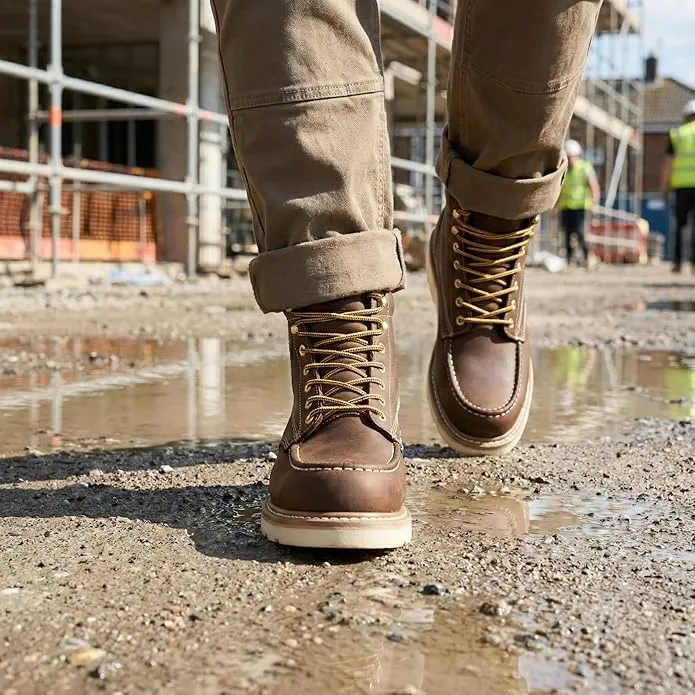
Full-grain leather uppers also outlast split-grain or synthetic materials. If you want boots that go the distance, look for quality construction from the start. Our durable moc toe boots are a solid example of long-lasting build quality.
Key Factors That Determine How Long Your Work Boots Last
Work Environment and Daily Wear Conditions
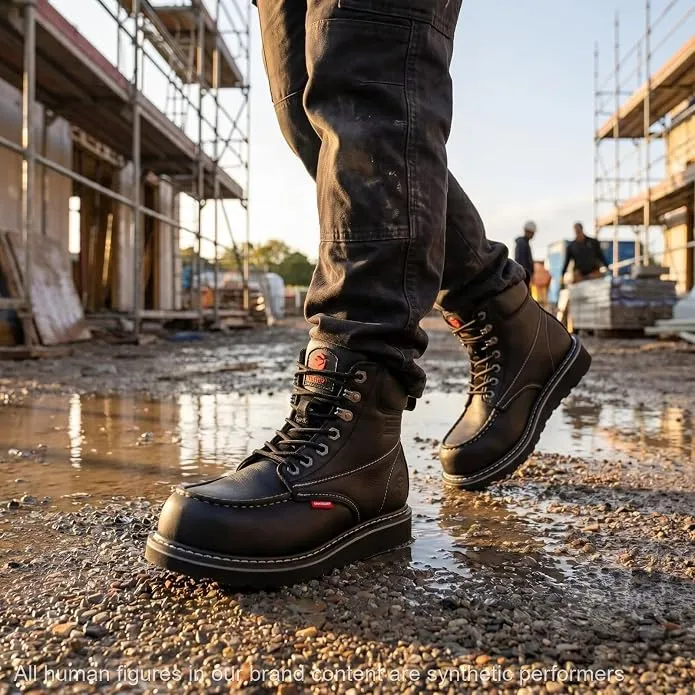
Your job site is the biggest factor in work boot durability. Concrete floors wear outsoles fast. Chemical exposure breaks down leather and soles. Constant moisture softens glue and rots stitching.
If you work outdoors or in wet conditions, consider waterproof work boots. Waterproofing protects the leather and adhesives, which directly extends boot life.
Boot Material Quality and Safety Rating
Higher-quality materials last longer — it's that simple. Boots with composite or steel safety toes, oil-resistant outsoles, and full-grain leather hold up better under stress.
A pair of composite toe waterproof boots or 8-inch composite work boots offers both protection and long-term durability for demanding environments.
Fit, Rotation, and Maintenance Habits
Poor fit causes uneven wear and breaks down structure faster. A boot that fits correctly distributes weight evenly and holds its shape longer.
Rotating between two pairs is one of the best things you can do. It allows each boot to dry out fully between shifts. Moisture causes breakdown from the inside out. Add daily cleaning and conditioning, and you can add months to your boots' lifespan.
5 Warning Signs It's Time to Replace Your Work Boots
Do not ignore these red flags:
- Outsole tread is worn flat — a serious slip hazard
- Midsole feels hard — no cushioning means no shock absorption
- Cracked leather or separated seams — the upper is failing
- Safety toe is exposed or deformed — your foot is no longer protected
- Foot, knee, or back pain after shifts — arch support has collapsed
Worn-out boots are a safety risk, not just a comfort issue. Browse our best-selling work boots to find your next pair.
How to Make Your Work Boots Last Longer
Daily and Weekly Maintenance Routines
Simple habits make a big difference. After every shift, wipe off dirt and debris. Once a week, apply a leather conditioner to keep the upper supple and crack-free. Reapply waterproofing spray regularly if you work in wet conditions.
Use quality replacement insoles. Factory insoles wear out faster than the boot itself. Swapping them out keeps comfort high and reduces stress on the boot structure. For more detailed steps, read our leather boot care tips.
Choosing the Right Boot for Your Job from the Start
Buying the right boot for your environment is the single best investment you can make. A boot designed for light warehouse work will not survive a logging site. Match the boot's rating, material, and sole type to your actual job demands.
FAQs
- How long should work boots last on average?
Quality work boots typically last 1 to 3 years with daily use. Demanding conditions can shorten this to 6 to 12 months. - How do I know when my work boots need replacing?
Watch for worn tread, hard midsoles, cracked leather, exposed safety toes, or new aches in your feet and knees after shifts.
3.Do more expensive boots last longer?
Generally, yes. Better materials and construction — like Goodyear Welt and full-grain leather — mean longer life and repairability.
4.Can I extend the life of my boots?
Yes. Rotate pairs, clean after every shift, condition leather weekly, and reapply waterproofing regularly.
5.Are waterproof boots more durable?
In wet environments, yes. Waterproofing slows moisture damage to leather and adhesives, extending overall boot life considerably.
Comment