Best Work Boots for Wide Feet
Oct 20,2026 | Nancy Sureway
If you have wide feet, finding the right work boots is a daily battle. Most standard boots are built for average widths, leaving wide-footed workers with sore toes, blisters, and fatigue by mid-shift. The good news? The best work boots for wide feet do exist, and knowing what to look for makes all the difference.
Why Wide Feet Struggle in Standard Work Boots
Common Problems Caused by Narrow Toe Boxes
Narrow toe boxes are the number one complaint among workers with wide feet. When your toes are squeezed together, problems pile up fast. These include:
- Toe numbnessafter just a few hours on your feet
- Blisters and callusesalong the sides and pinky toe
- Hot spotsfrom constant friction against the boot wall
- Reduced circulation, which leads to fatigue and pain
Over time, forcing wide feet into narrow boots can cause longer-term issues like bunions, hammertoes, and plantar fasciitis. No pair of boots is worth that kind of damage.
What Makes a Work Boot Truly Wide-Foot-Friendly
Not every boot labeled "wide" is actually built for wide feet. A truly wide-foot-friendly boot shares these key features:
- Wide toe box— enough horizontal room for toes to sit flat and spread naturally
- Available wide sizing (EE or EEE)— not just a roomier feel, but engineered width
- Flexible upper materials— full-grain leather or nubuck that molds to your foot shape
- Roomy insole bed— so your foot doesn't bulge over the edge
- Supportive midsole— to carry wide-foot load without collapse
When these elements work together, the result is a boot you can actually wear all day. That's what most comfortable safety boots are built around.
Best Work Boot Styles for Wide Feet
Moc Toe Work Boots — The #1 Wide Toe Box Choice
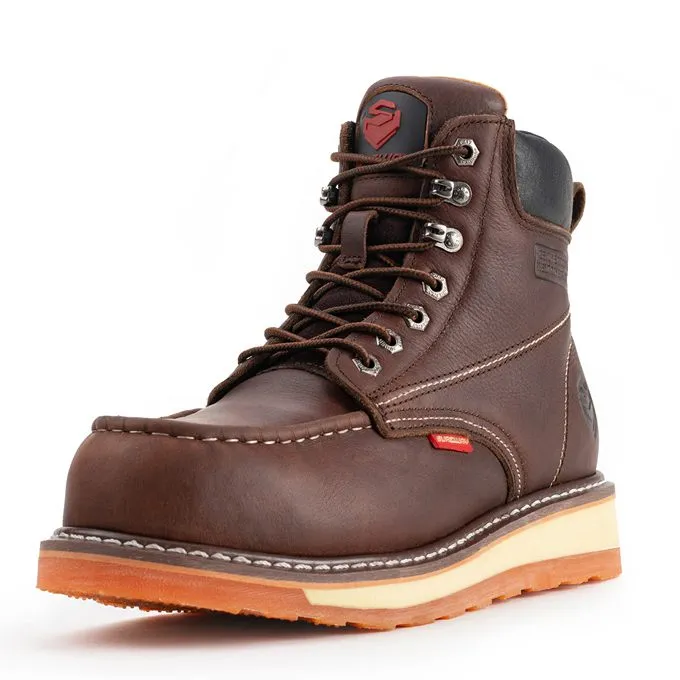
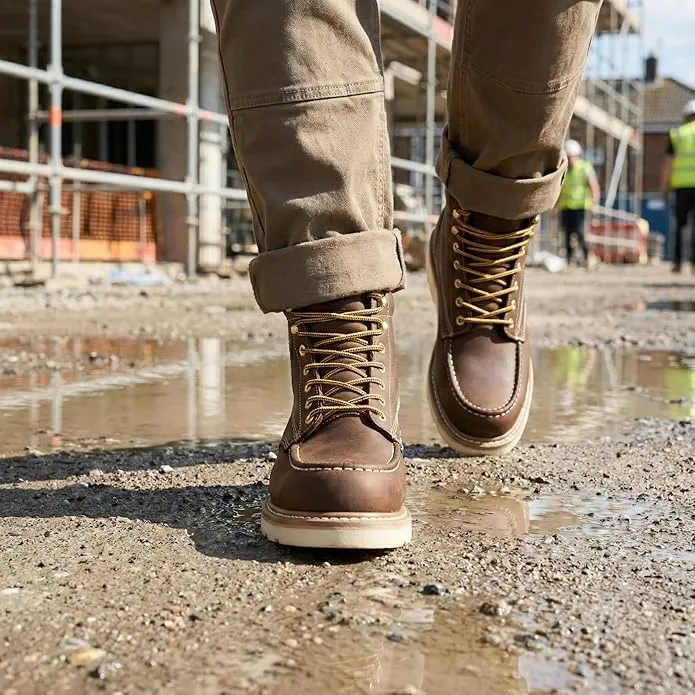
Moc toe work boots are the top recommendation for work boots for wide feet men — and for good reason. The moc toe design features a broad, rounded front that gives toes generous space without any pinching. Unlike standard boots with tapered tips, moc toes are built wide from the start.
Wide toe box boots in the moc toe style also sit lower to the ground in many cases, which means better ground contact and stability. If you want options, the 6" wedge moc toe is a great all-day choice for flat surfaces like concrete and warehouse floors. For jobs that need more ankle support, 8 inch moc toe boots offer extra height and protection without sacrificing toe room.
Browse the full range of moc toe work boots to find the right height and safety rating for your job.
Composite Toe Boots for Wide Feet
Steel toe caps are strong, but they often create a narrow, rigid toe box that squeezes wide feet. Composite toe boots for wide feet solve this problem. Composite caps are made from non-metal materials — like carbon fiber or Kevlar — that are molded in a more rounded shape. This gives you more interior room at the toe, especially for people with a wide forefoot or high instep.
Composite toe boots also pass ASTM safety standards, so you're not giving up protection. They're lighter than steel toe options too, which reduces foot fatigue during long shifts. If improving steel toe boot comfort has been a struggle for you, switching to composite toe is often the simplest fix.
Waterproof Wide Work Boots for Outdoor & Heavy-Duty Jobs
Outdoor workers — landscapers, construction crews, loggers — need comfortable work boots for wide feet that can also handle wet, muddy, and rugged conditions. Waterproof wide work boots combine a sealed membrane (like Gore-Tex or waterproof leather treatment) with a wide-fit construction.
Look for boots with:
- Full waterproof liningto keep feet dry in standing water
- Aggressive outsolesfor grip on uneven ground
- Wide platform basefor stability on slopes and loose terrain
- Padded collar and tongueto reduce ankle bite during heavy movement
Wide waterproof boots are harder to find, but they are worth the search. Your feet should stay dry and comfortable — not one or the other.
FAQs
1. What type of work boots are best for wide feet?
Moc toe and composite toe work boots offer the widest toe boxes, providing better comfort and reduced pressure for wide feet on job sites.
2. How do I know if my work boots are too narrow?
Signs include toe numbness, blisters on the sides of your feet, and soreness after a few hours. If your foot bulges over the insole edge, go wider.
3. Can I use insoles to make regular work boots fit wider feet?
Yes. Adding a quality work boot insole can improve arch support and redistribute pressure, helping wider feet feel more comfortable inside standard-width boots.
4. Are composite toe boots better than steel toe for wide feet?
Composite toe caps often have a more rounded, spacious toe box than steel toe, making them a more comfortable choice for people with wide or high-instep feet.
Comment