Best Waterproof Deck Boots for Fishing
Oct 20,2026 | Nancy Sureway
Choosing the right footwear can make or break a day on the water. If your boots slip, soak through, or fall apart after one saltwater trip, every cast becomes a risk. The best waterproof deck boots for fishing keep your feet dry, stable, and comfortable, no matter what the deck or the weather throws at you. This guide covers everything you need to know before you buy.
Why Waterproof Deck Boots Matter for Fishing
Wet Decks, Slippery Surfaces, and the Real Risks
A wet boat deck is one of the most dangerous surfaces an angler stands on. Water, fish slime, algae, and spray combine to create a near-frictionless floor. One wrong step can cause a serious fall. Ordinary footwear simply cannot handle these conditions safely. Purpose-built deck boots are designed specifically to grip these surfaces and protect you every step of the way.
What Sets Fishing Deck Boots Apart from Regular Boots
Standard work boots or hiking shoes wear down quickly in marine environments. They absorb saltwater, corrode, and lose traction fast. Deck boots for fishing, on the other hand, feature sealed waterproof construction, salt-resistant materials, and aggressive non-slip outsoles built for boat use. They also rinse clean easily, a practical must after a messy day of fishing.
Key Features to Look for in the Best Waterproof Deck Boots for Fishing
Waterproof Construction and Sealed Seams
True waterproofing goes beyond surface-level water resistance. Look for boots with fully sealed seams and waterproof membranes. These features prevent moisture from seeping in during wading, rain, or waves washing over the deck. Waterproof work boots built with these standards keep your feet genuinely dry throughout the day.
Slip-Resistant Outsoles for Wet Deck Grip
The outsole is the most critical feature for fishing use. Deep lug patterns and non-marking rubber compounds deliver reliable traction on slick, wet surfaces. Softer rubber compounds grip boat decks far better than hard-soled alternatives. Always check that the outsole is specifically rated for wet environments.
Ankle Support and Boot Height
Good ankle support prevents fatigue and reduces injury risk on uneven or moving surfaces. Mid-cut boots (4–6 inches) suit most fishing scenarios well. If you wade frequently or work on steep riverbanks, a taller 8–10 inch boot offers extra coverage and stability. Consider your typical fishing terrain before deciding on height.
Comfort for Long Fishing Sessions
Long days on the water demand cushioned insoles and breathable linings. A comfortable fit reduces foot fatigue significantly. Look for boots with removable insoles so you can swap in custom orthotics if needed. Lightweight construction also helps when you are standing and moving for hours at a time.
Best Waterproof Deck Boots for Fishing — Sureway Picks
1. Best Men's Deck Boots for Fishing (Non-Slip)
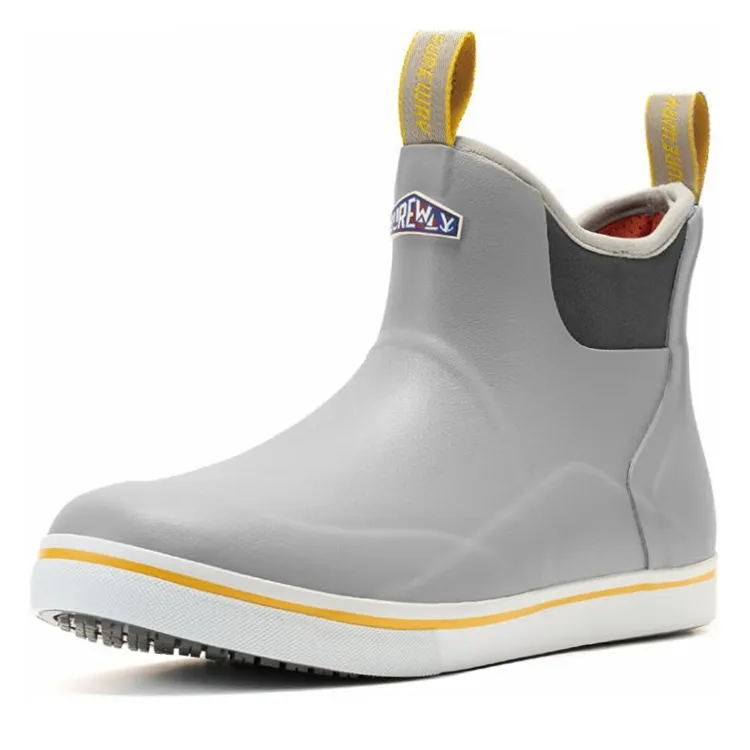
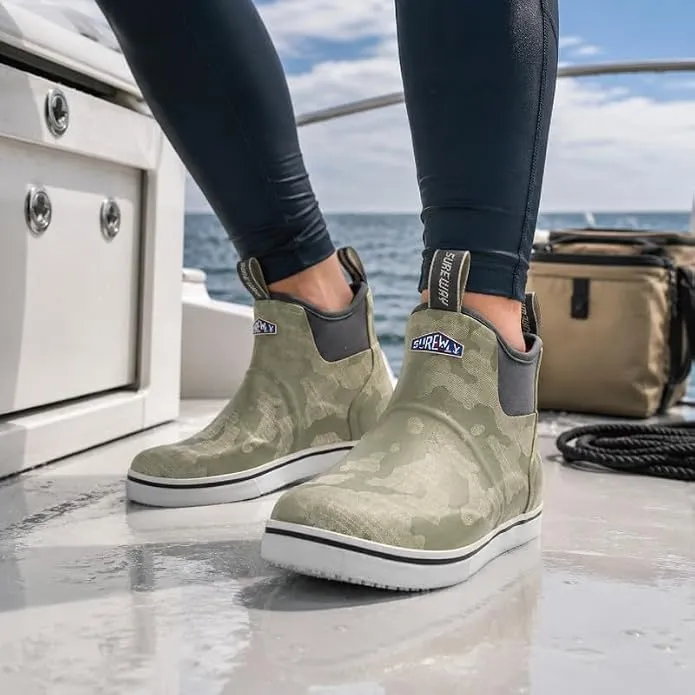
Sureway's men's line delivers exactly what anglers need: sealed waterproof uppers, aggressive non-slip outsoles, and durable rubber construction. These best deck boots perform reliably in both freshwater and saltwater environments. They are easy to hose down after a long day on the water.
2. Best Women's Waterproof Fishing Deck Boots
Sureway also offers women's waterproof deck boots built with a narrower last and lighter overall weight. They share the same waterproof membranes and non-slip outsoles as the men's range. Comfort and grip are never compromised. Women anglers get full performance without sacrificing fit.
3. Best Budget-Friendly Waterproof Deck Boots for Fishing
You do not need to overspend to get solid protection on the water. Sureway's entry-level deck boots still include waterproof construction and slip-resistant outsoles. They are an ideal starting point for occasional anglers or those new to boat fishing.
How to Choose the Right Waterproof Deck Boots for Your Fishing Style
1. Freshwater vs. Saltwater Fishing Considerations
Saltwater is highly corrosive. For offshore or coastal fishing, prioritize boots with rust-resistant hardware and salt-resistant rubber. Freshwater anglers have more flexibility, but waterproof construction and grip remain essential. Always rinse saltwater boots thoroughly after each use.
2. Deck Boots vs. Rain Boots for Fishing — What's the Difference?
Rain boots resist water from above. Deck boots go further, they add engineered non-slip outsoles and structured ankle support for unstable, wet surfaces. For boat fishing, deck boots for marine use are clearly the safer and smarter choice.
3. Rubber Deck Boots vs. Leather Deck Boots for Fishing
Rubber boots are fully waterproof, easy to clean, and resist fish oils naturally. Leather boots offer superior comfort on mixed terrain but require regular waterproofing treatments to maintain performance. For dedicated boat fishing, rubber wins consistently.
FAQs
- What makes deck boots better than regular work boots for fishing?
Deck boots are purpose-built for wet, slippery environments. They feature aggressive non-slip rubber outsoles designed specifically for boat decks, full waterproof construction to keep feet dry during wading or wet weather, and easy-clean materials that resist fish slime and saltwater corrosion. - Are rubber deck boots or leather deck boots better for fishing?
Rubber deck boots are generally preferred for fishing because they are fully waterproof, easy to rinse clean, and highly resistant to saltwater and fish oils. Leather deck boots can offer more comfort and ankle support for long sessions on land or mixed terrain, but require more maintenance to stay waterproof. For heavy-duty boat fishing, rubber is usually the smarter choice. - How high should waterproof deck boots be for fishing?
For most fishing activities,including boat fishing, shore fishing, and wading in shallow water, ankle-height or mid-cut deck boots (4–6 inches) provide adequate waterproofing and enough ankle stability. If you frequently wade in deeper water or work on slippery riverbanks, consider a taller 8–10 inch waterproof deck boot for extra protection and coverage. - How do I keep my waterproof deck boots from smelling after fishing?
After each fishing trip, rinse your deck boots thoroughly with clean fresh water,especially if used in saltwater. Allow them to air dry completely away from direct heat. Sprinkle baking soda inside or use a boot deodorizer spray to neutralize odors. Storing boots in a ventilated area (not a sealed bag) prevents mold and mildew that cause persistent smells. - Can I use waterproof deck boots for other outdoor activities besides fishing?
Absolutely. Waterproof deck boots are versatile and work well for kayaking, boating, hiking in wet conditions, yard work, farming, and other outdoor jobs where you need a non-slip, waterproof boot.
Comment