Best Deck Boots for Fishing
Sep 23,2026 | Nancy Sureway
When you step onto a wet, rolling boat deck, your choice of footwear can make or break your day on the water. Many anglers mistakenly rely on standard rain boots, only to struggle with stiff ankles, tangled lines, and angry boat owners dealing with stubborn black scuff marks. To stay safe, comfortable, and agile while fighting a heavy catch, you need gear engineered specifically for harsh marine environments. Finding the best deck boots for fishing is absolutely essential for any serious angler. Read on to discover why traditional footwear falls short, the critical features that define a premium marine boot, and how to properly maintain them.
Why Traditional Rain Boots Fail on Fishing Boats
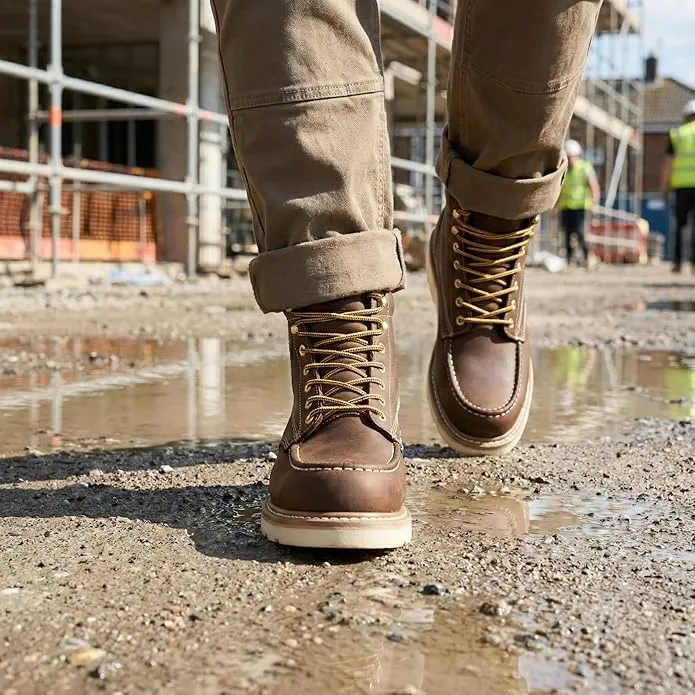
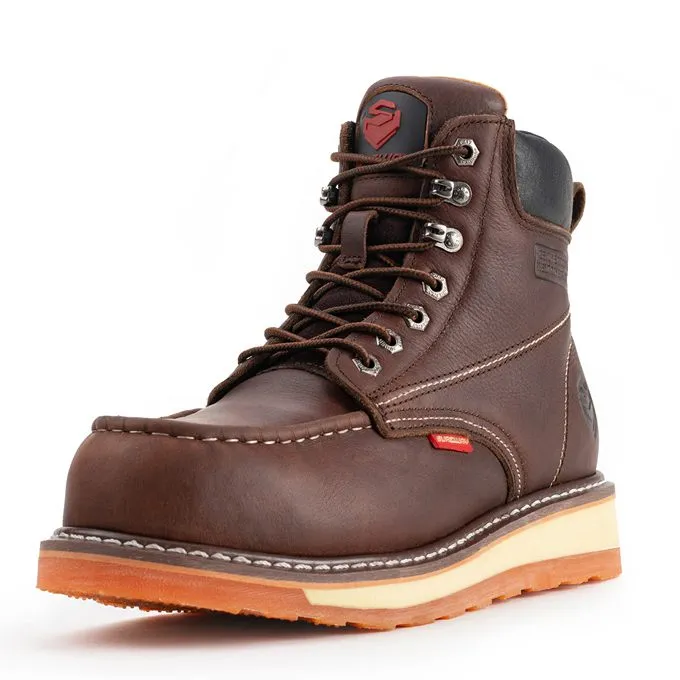
Most anglers reach for a pair of tall rubber rain boots and quickly regret it. Here is why they fall short on a working boat deck.
They are too tall and too stiff. High-shaft rain boots limit ankle flexion. When you need to crouch low to gaff a fish or brace against a rolling hull, stiff boot shafts fight your movement. After a few hours, your calves ache and your footing feels less secure — not more.
The tread pattern works against you. Deep lug soles designed for mud and trail hiking act like fish-line magnets on a boat. Monofilament and braided line catch in the grooves. You drag debris across a clean deck rather than shedding it.
The biggest problem: black rubber marks. Dark-soled rain boots leave scuff marks on white gelcoat and fiberglass surfaces. Those black streaks are stubborn and damage the boat's finish over time. Boat owners hate them — and rightly so.
Traditional rain boots were designed for farmyards and puddles. Fishing boats demand something built specifically for marine conditions.
The Features of Deck Boots
When choosing the best waterproof deck boots for fishing, three features separate a quality marine boot from everything else.
Chevron Siped Outsole
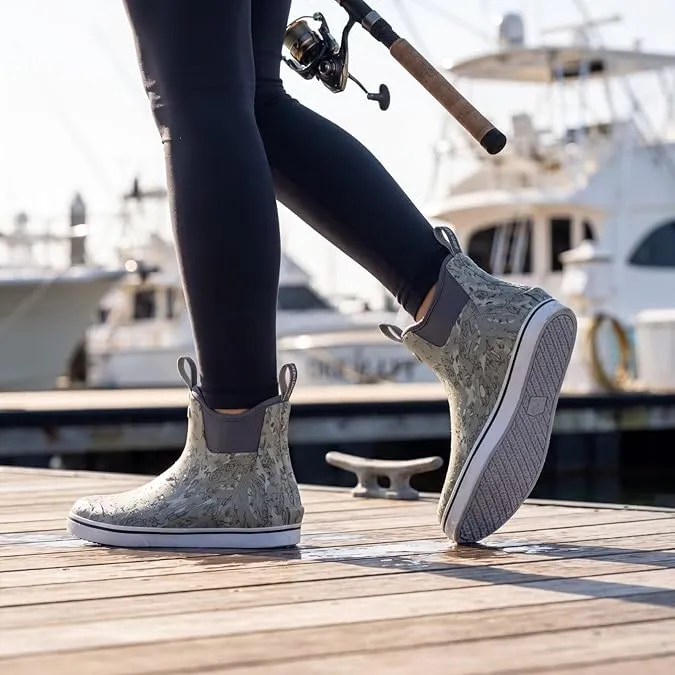
The chevron pattern is the defining sole design of a true deck boot. Rows of angled micro-cuts — called sipes — channel water away from the contact patch the instant your foot lands. Instead of riding on a film of water, the sole flexes slightly and grips the fiberglass surface beneath it.
Equally important: the compound is light-colored or translucent. Non-marking rubber deck boots for fishing leave zero scuff marks on gelcoat, composite decking, or painted hulls. If you want to see exactly how micro-siping grips slick surfaces under real offshore conditions, check out our deck boots tested review covering traction, comfort, and durability.
Quick Pull-On Ankle Height
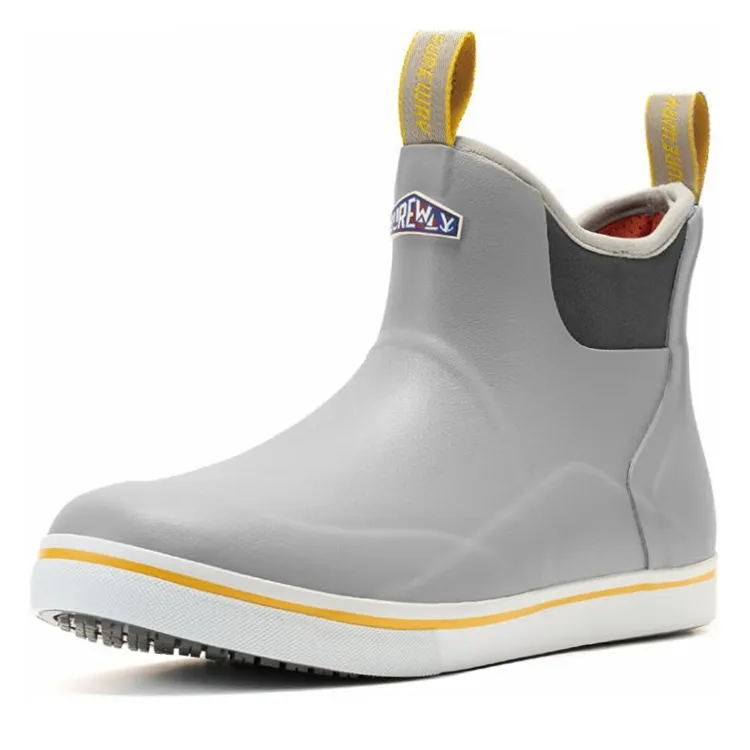
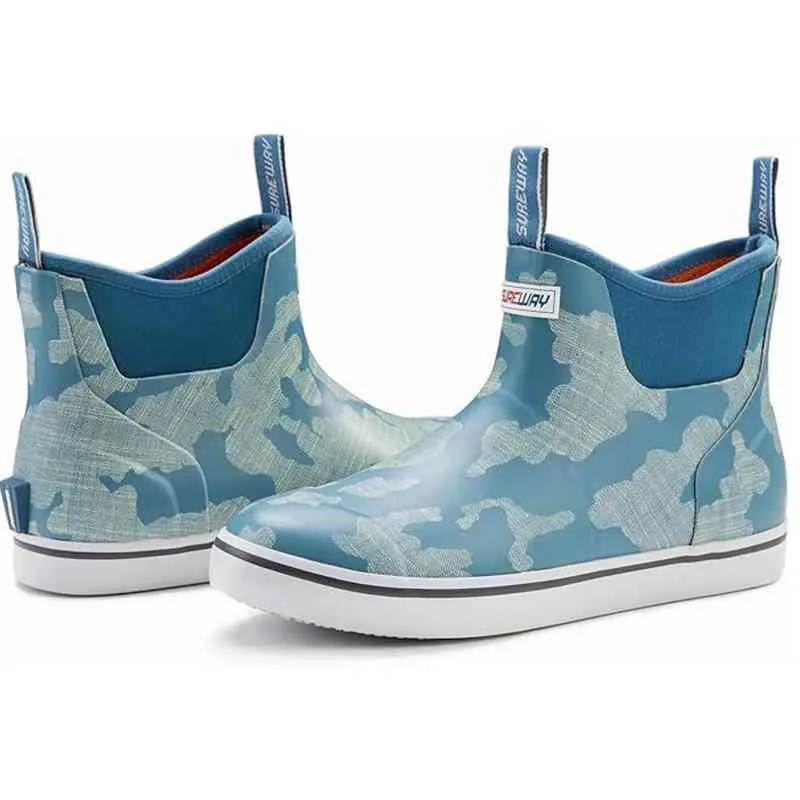
Six-inch ankle-height construction hits the sweet spot for boat fishing. It keeps splash and spray out. It stays low enough that you can move freely — squatting, stepping over gunnels, or balancing on a rocking hull without restriction. Dual pull tabs front and back mean you can slip the boots on in seconds, even with wet hands. No laces to fumble with. No buckles to break.
The Sureway Men's fishing deck boots combine this ankle-height design with a high-rebound footbed that reduces fatigue during long days offshore. For female anglers and boat crew, the womens deck boots offer the same marine-grade traction in a trimmer last that fits more precisely.
Saltwater Resistant Rubber
Saltwater is corrosive. It dries into crystals that accelerate rubber degradation over time, especially at flex points around the ankle. Quality rubber deck boots for fishing use vulcanized or neoprene-reinforced construction throughout the upper. This resists salt absorption and prevents cracking after repeated exposure to ocean spray and boat wash-downs. If you want a detailed breakdown of why construction quality matters across price points, read our sureway deck boots buying guide.
Frequently Asked Questions
Q: Why do fishing boots have non-marking soles?
Boat decks, especially on fiberglass and gelcoat yachts — scratch and stain easily. Dark rubber compounds leave black scuff marks that bond to the surface and are nearly impossible to remove. Non-marking soles use light-colored, softer compounds that grip without leaving any trace.
Q: Can I wear deck boots for surf fishing in deep sand?
The low ankle height makes deep sand a poor fit. Sand pours over the shaft and into the boot quickly. Deck boots perform best on boat decks, docks, piers, and hard shorelines. For surf fishing in soft sand, a taller boot is more practical.
Q: Are deck boots comfortable enough to wear all day without socks?
They can be, but a thin moisture-wicking sock is strongly recommended. Neoprene liners retain some heat and moisture. A light athletic sock prevents sweat buildup, reduces odor, and keeps the interior lining in better condition long-term.
Q: Do deck boots keep feet warm during cold winter fishing?
Yes. Neoprene-lined deck boots provide solid insulation for cool and cold conditions. For very cold days, below 40°F, pair them with a merino wool or thermal sock to maximize warmth without sacrificing fit.
Q: How do deck boots fit compared to normal sneaker sizes?
Most deck boots run true to standard US sizing. If you are between sizes or plan to wear thick socks, size up by a half size for the best comfort and fit.
Comment