Choose the Best Work Boots for Flat Feet
Oct 20,2026 | Nancy Sureway
Finding the best work boots for flat feet is not just about comfort — it is about protecting your body through every long shift. The right pair supports your arch, controls overpronation, and keeps pain from traveling up your knees and back.
Why Flat Feet Demand the Right Work Boots
Flat Feet and Fallen Arches
Flat feet, also called fallen arches, means the inner arch of your foot sits flush with the ground instead of curving upward. This shifts how your entire body bears weight. On a job site, where you stand or walk for eight to ten hours, that misalignment creates real stress on your joints.
Workers with flat feet often also deal with work boots for flat feet and plantar fasciitis issues, because the plantar fascia is constantly strained when the arch gets no support.
The Real Cost of Wearing the Wrong Work Boots
Wearing the wrong boots causes more than sore feet. It leads to heel pain, knee soreness, hip tension, and even lower back problems by the end of a shift. If you notice that boots hurt your feet every day, flat feet and poor arch support are likely the cause. The right safety boots for flat feet can prevent all of this.
Key Features to Look For in Work Boots for Flat Feet
Built-In Arch Support and Cushioning
Look for boots with a contoured midsole or wedge sole. A wedge sole distributes weight evenly across the foot. This reduces pressure points and delivers consistent arch support throughout the day. These are the foundations of solid arch support work boots for men.
Wide Toe Box for Natural Foot Spread
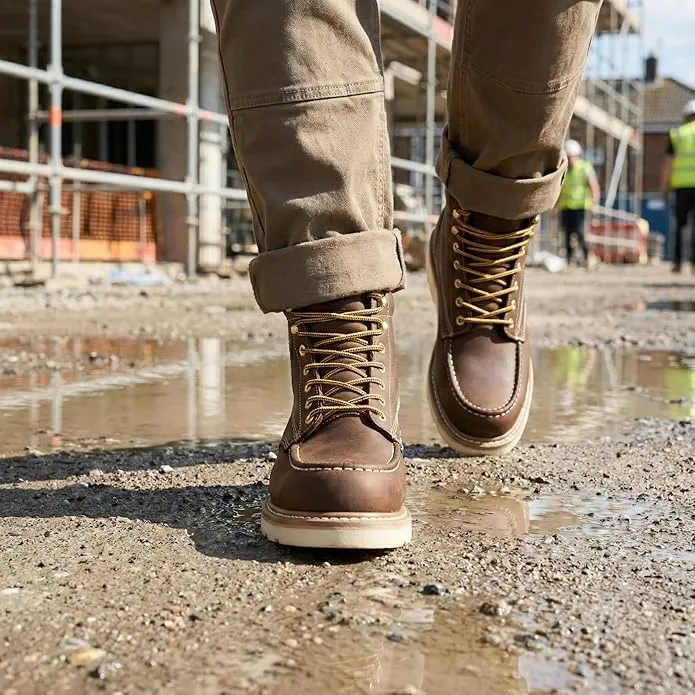
Flat feet tend to spread wider than average. A wide or moc toe box gives your toes room to splay naturally. This improves balance and cuts the risk of blisters, bunions, and hot spots during extended wear. Browse moc toe work boots if you need that extra width up front.
Stability, Motion Control, and Heel Counters
Work boots for overpronation must have a firm heel counter. This is the rigid cup that wraps around the back of your heel. It limits inward rolling, which is one of the most common problems for flat-footed workers. A stable shank in the midsole adds another layer of motion control.
Removable Insoles for Orthotics Compatibility
Choose boots with fully removable insoles. This lets you swap in a custom or over-the-counter orthotic shaped to your specific arch. Not every flat foot is the same, so having that flexibility matters. Check out comfortable safety work boots that are built with orthotic compatibility in mind.
Top Sureway Work Boot Picks for Flat Feet
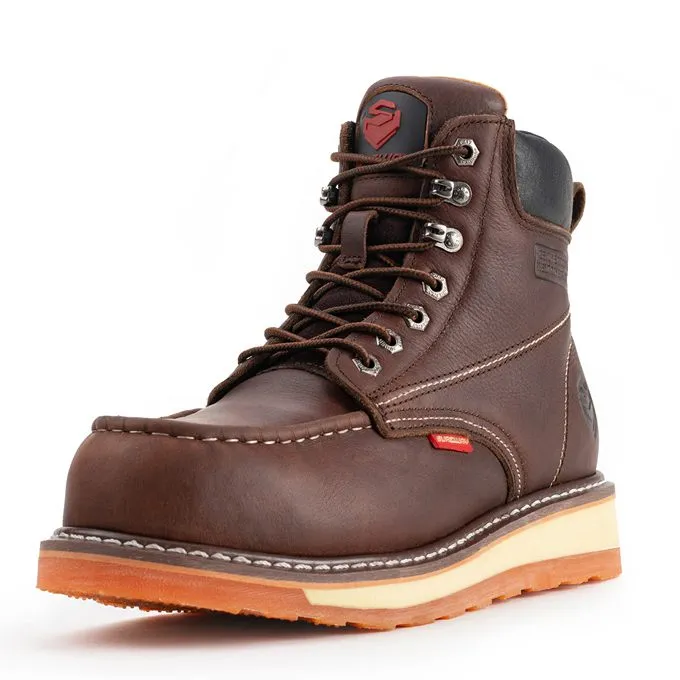
Best Moc Toe Work Boot for Flat Feet — Sureway 601 / 603
The Sureway 601 and 603 are comfortable moc toe boots built with a wide forefoot and a supportive wedge sole. The flat, ground-hugging sole reduces heel drop and keeps the foot in a neutral position. These are ideal for workers who are on their feet all day on hard or uneven surfaces. They are also available as wedge moc toe boots for even more underfoot support.
Best Lightweight Soft Toe Boot for Flat Feet — Sureway 803
The Sureway 803 is one of the best soft toe lightweight boots for workers who need less weight on their feet throughout the day. Its removable insole makes it fully compatible with aftermarket orthotics. Less boot weight means less fatigue, which is a major benefit for those managing flat foot pain on long shifts. It is also a strong pick for all-day standing work boots.
Best Composite Toe Boot for Flat Feet — Sureway 8" Composite
For workers who need protection without added weight, Sureway's composite toe work boots are the smart choice. Composite toe caps are lighter than steel, which keeps downward pressure off the forefoot. That directly reduces the aggravation of overpronation. The removable insole also supports custom orthotic use.
Tips to Get Maximum Comfort from Work Boots With Flat Feet
Choosing and Fitting Aftermarket Orthotics
Not all orthotics work in every boot. Choose a firm or semi-rigid orthotic that matches your arch height. Low-arch insoles work best for most flat-footed workers. Always remove the factory insole first to avoid overcrowding the footbed. An overcrowded fit creates new pressure points that cancel out the benefit.
Breaking In New Work Boots Properly
Never wear new boots for a full shift on day one. Start with two to three hours, then increase wear time gradually over one to two weeks. This allows the leather and midsole to conform to your foot shape. It also gives your muscles time to adjust to the new support level, reducing the risk of soreness.
FAQs
1. What type of work boot sole is best for flat feet?
A wedge sole or contoured EVA midsole is ideal. It distributes weight evenly and provides steady arch support all shift long.
2. Can I use custom orthotics in work boots for flat feet?
Yes. Choose boots with removable insoles and a deeper footbed, like the Sureway 803 or composite toe models.
3. Are steel toe or composite toe boots better for flat feet?
Composite toe boots are better. They are lighter, which reduces fatigue and lowers the risk of aggravating overpronation.
4. Do wide toe box work boots help with flat feet?
Yes. A wide or moc toe box lets the foot spread naturally, improving balance and reducing friction.
5. How do I know if my work boots are causing my flat foot pain?
Watch for foot fatigue within two to three hours, inner arch or heel pain, or lower back tension by end of shift. These are clear signs your boots lack the support flat feet need.
Comment