
Best Composite Toe Work Boots: Lightweight Safety & All-Day Comfort
Sep 20,2026 | Nancy Sureway
The old idea that serious foot protection means heavy steel boots is outdated. Carbon fiber and fiberglass composites have changed everything. Today's best composite toe work boots deliver the same ASTM-rated crush defense as steel — without freezing cold in winter, weight fatigue after a long shift, or airport security delays. If you need lightweight composite toe work boots that don't sacrifice protection, this guide covers exactly that.
Why Go Composite?
Composite toe work boots offer three core advantages that steel simply can't match.
Thermal comfort. Steel conducts both cold and heat. Composite materials don't. Your toes stay warmer in below-freezing temps and cooler on hot asphalt — a real difference across a 10-hour outdoor shift.
Metal-free convenience. Electricians, airport staff, and workers at secure facilities no longer need to remove boots at every checkpoint. A fully non-metallic boot walks through scanners without a beep.
Electrical hazard protection. Composite materials are natural insulators. That means significantly lower risk from secondary electrical circuits: one reason these are among the most comfortable composite toe work boots for trade workers dealing with live wiring.
Browse the full lineup of composite toe work boots to compare styles, heights, and fits across different work environments.
Top Rated Picks: Best Composite Toe Work Boots
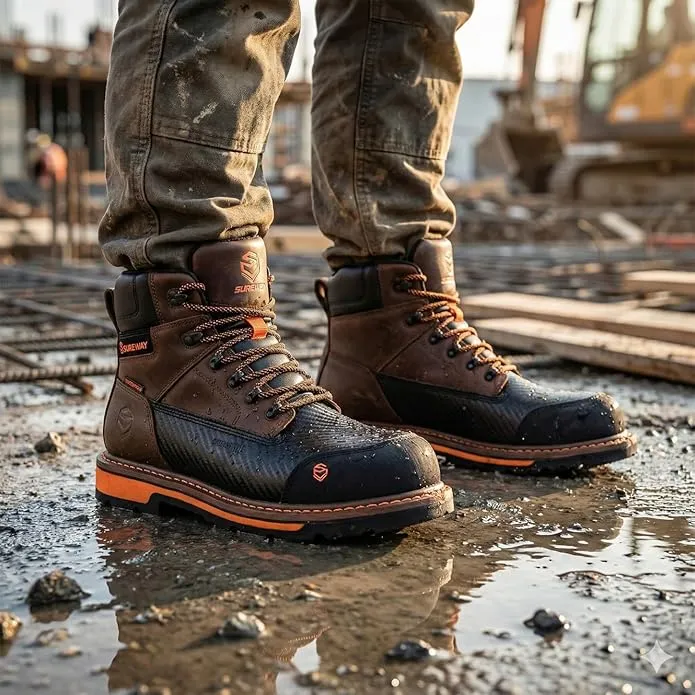
1. Sureway 8-Inch Waterproof Composite Boot
For construction crews, pipeline workers, and anyone working in snow, mud, or frozen ground, this is one of the best waterproof composite toe work boots available.
The 8-inch upper locks the ankle firmly and keeps debris out. A fully sealed waterproof membrane keeps feet dry from start to end of shift. The lightweight composite safety cap meets ASTM F2413 — no steel bulk, full crush defense. An aggressive outsole grips wet rock, loose soil, and oil-slicked surfaces equally well.
These waterproof composite toe boots are built specifically for workers who can't afford wet feet or a slow boot on rough terrain.
Best for: Construction, forestry, oil and gas, winter outdoor work.
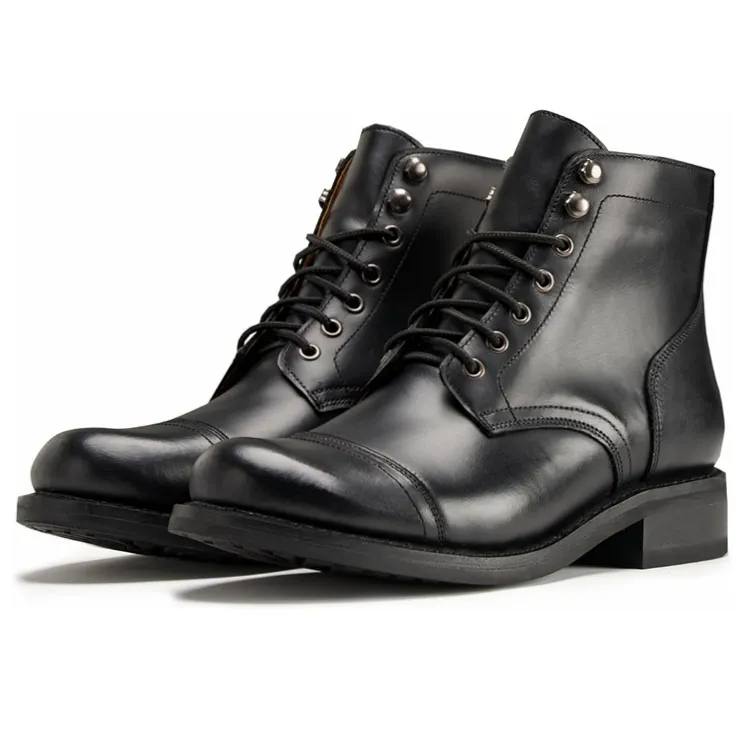
2. Sureway Chelsea Composite Toe Slip-On
Speed matters in a warehouse or on a service call. This Chelsea-style boot eliminates laces entirely. Elastic side panels let you pull on and off in seconds, and the non-metallic ASTM safety cap means no alarms at security gates.
The EVA midsole absorbs impact across long shifts on concrete. Workers logging 20,000 steps a day report noticeably less leg fatigue compared to heavier lace-up alternatives.
If your shift involves passing security checkpoints and covering ground fast, this composite toe slip on delivers rapid utility with zero metal alarms.
Best for: Warehouse workers, electricians, delivery drivers, facilities technicians.
Composite vs. Steel: Is Protection Compromised?
No. Both composite and steel toe boots must pass identical ASTM F2413 tests to earn certification. That means surviving a 75-pound impact drop (I/75) and withstanding 2,500 pounds of static compression (C/75). The protection standard is exactly the same.
The one real trade-off is cap wall thickness. To achieve equivalent hardness, composite shells run roughly 1–2mm thicker than steel. That costs a small amount of interior toe room. What you gain is approximately 30% less cap weight and far better thermal performance.
For a detailed breakdown of how these materials compare in real worksite conditions, read the full guide on steel vs composite toe specifications.
Key Buying Checklist for Maximum Comfort
Before you order, run through these four checks:
- Toe box room.Composite caps can be slightly thicker. Confirm the brand offers adequate wiggle room before committing to a size.
- Midsole cushioning.A lighter cap reduces front-end load, but high-rebound PU or EVA in the midsole is still essential for all-day anti-fatigue performance.
- Puncture protection.Look for a Kevlar (aramid fiber) puncture plate if your site has nail or sharp debris hazards. Aramid keeps the boot 100% non-metallic.
- Fit at end of day.Feet swell. Size for late-afternoon foot volume, not morning.
Frequently Asked Questions
Q1: Are composite toe work boots OSHA approved?
Yes. OSHA mandates compliance with ASTM F2413 standards. Any certified composite toe boot meeting I/75 and C/75 criteria is legally approved for construction and industrial worksites.
Q2: Do composite toe boots bend or crack when dropped on?
While steel toes can dent or curl inward under extreme crushing force, composite caps are engineered to absorb impact and then fracture safely or rebound, preventing toes from being trapped inside a crushed cap.
Q3: How much lighter are composite boots than steel boots?
Composite safety caps are typically 30% lighter than standard carbon steel caps. Over an 8-hour shift and 10,000 steps, this weight reduction removes hundreds of cumulative pounds lifted by your legs.
Q4: Can electricians wear composite toe boots?
Yes. Composite toe boots are the premier choice for electricians. Because they contain zero conductive metals, they naturally satisfy Electrical Hazard (EH) safety protocols against secondary live circuits.
Q5: Can I wear composite toe boots through airport security?
Yes, provided the rest of the boot contains no steel shanks or metal eyelets. 100% non-metallic composite boots pass through metal detector wands and airport scanners without setting off alarms.
Comment
.webp?w=748&h=748)