
Best Work Boots for Electricians: EH Ratings, Safety & Comfort
Sep 22,2026 | Nancy Sureway
For electricians, the right footwear is more than a comfort choice — it's the last line of defense against electrical shock. Whether you're pulling wire through a new build or working near live panels, your boots need to meet strict safety standards. This guide covers what sets quality electrician work boots apart and highlights the top picks for every job type.
The Non-Negotiable Safety Checklist for Electrical Work
Before buying any pair, check these three non-negotiables.
ASTM F2413 EH Certification
EH stands for Electrical Hazard. To earn this rating, a boot must withstand 18,000 volts at 60Hz for one full minute in dry conditions. Leakage current cannot exceed 1.0 milliampere. Without this certification, your boots offer zero guaranteed protection against live circuits.
100% Non-Metallic Construction
Steel toe boots can technically meet EH standards when fully encased in rubber — but many experienced electricians avoid them entirely. Composite toe boots, made from carbon fiber or fiberglass, contain no conductive metal at all. They're also lighter and don't conduct cold in freezing temperatures.
Non-Conductive Fiberglass Shank
Traditional steel shanks introduce a hidden metal path through the midsole. A fiberglass shank keeps the entire boot construction metal-free from toe to heel. To know the full laboratory testing process, check our breakdown on eh rated safety shoes and how they're certified.

Trade-Specific Demands: Ladders, Crawlspaces & Concrete Floors
Electricians work in environments that push footwear hard. knowing those demands helps you match the right sole to the right job.
Ladder Rung Climbing
Climbing ladders dozens of times a day puts serious stress on the mid-foot. A boot with strong torsional rigidity prevents the arch from folding painfully over narrow rungs. Linemen and high-rise electricians should also prioritize a defined heel that locks securely into ladder rungs.
Crawlspaces and Conduit Work
Tight attic spaces and conduit bending require a flexible forefoot. If the toe box is too stiff, it presses against your toes every time you kneel or crouch. Look for boots that flex naturally at the ball of the foot without losing structural support in the arch.
Concrete and Flat Floors
Commercial electricians spending full days on hard floors need cushioning just as much as grip. A PU foam midsole absorbs impact over long shifts, and wedge soles spread weight evenly to reduce fatigue. For a full comparison of outsole types and all-day fit, read our boots for electricians guide.
Top Rated Picks: Best Electrician Work Boots
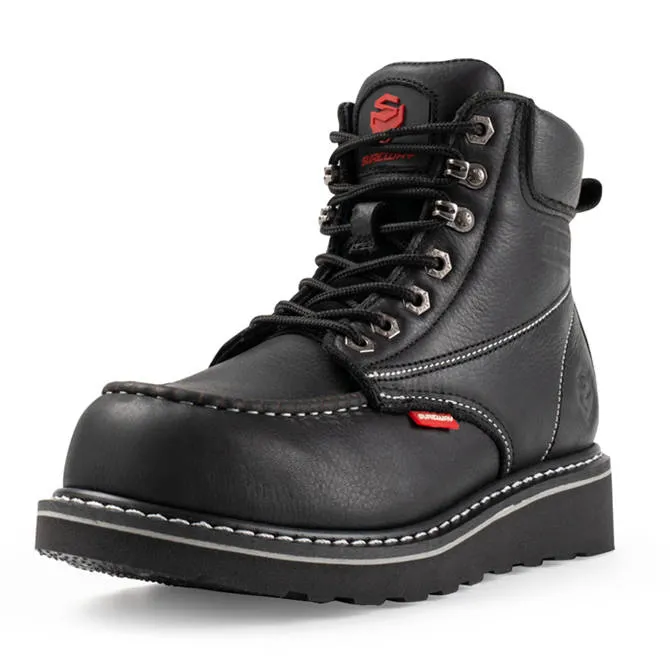
1. Sureway 6-Inch Composite Toe Wedge: Best for Commercial & Residential Electricians
Residential wiremen and facility technicians spend most of their day on flat subfloors, in mechanical rooms, or inside panel enclosures. The Sureway 6-Inch Wedge is built for exactly that environment.
The ASTM-certified composite toe is fully non-metallic — no steel, no conductivity risk. The PU foam wedge outsole absorbs shock across long concrete shifts, and the wider toe box reduces pressure during crouched work. These composite toe work boots keep you protected and comfortable without the extra weight of a heavy lug sole.
Best for: indoor wiring, panel installs, factory automation, commercial build-outs.
2. Sureway 8-Inch Waterproof Composite Boot: Best for Linemen & Industrial High-Voltage
Utility linemen and substation crews face a different set of challenges. They work outdoors in mud, rain, and extreme temperatures — sometimes all at once. A standard boot won't hold up.
The Sureway 8-Inch pairs a full waterproof membrane with an 8-inch upper that locks the ankle on uneven terrain. The deep-lug rubber outsole bites into wet ground and resists petroleum. Because the composite toe contains zero metal, EH protection remains fully intact even after hours of outdoor exposure. These waterproof composite toe boots are the go-to for electricians working in harsh outdoor conditions.
Best for: utility linemen, outdoor substations, transformer work, storm repair.
Maintenance Tips for EH Rated Footwear: Moisture & Sole Wear
Even the best boots fail without proper care.
Watch the Soles
EH protection depends on an intact outsole. Once tread wears smooth, the insulating barrier thins out. Inspect soles monthly and replace boots when the tread is gone — don't wait for a near miss.
Remove Metal Debris
Cutting copper wire and EMT conduit leaves behind metal filings. If a fragment embeds in the rubber outsole and bridges from the ground to your foot, it creates a conductive path regardless of the EH rating. Remove embedded debris with tweezers immediately after each shift.
Keep Them Dry
Wet boots conduct electricity. Waterproof liners help, but they're not invincible. Never stand in pooling water while working near live circuits, and let boots dry fully between shifts to preserve insulation integrity.
Frequently Asked Questions
- What does an EH rating mean on electrician boots?
EH stands for Electrical Hazard. Certified boots feature non-conductive, shock-resistant soles and heels capable of withstanding 18,000 volts at 60Hz for one minute without exceeding 1 milliampere of leakage current in dry conditions. - Why do electricians choose composite toe boots over steel toe?
While steel toes covered by rubber outsoles can meet EH standards, composite toes are made from non-metallic carbon fiber or fiberglass, eliminating any internal conductive metal and offering superior thermal insulation in freezing weather. - Are EH boots still safe if they get wet?
Wet conditions drastically diminish electrical resistance. While waterproof membranes help keep internal linings dry, walking in standing water significantly reduces EH effectiveness because water provides an external path to ground. - Can electricians wear wedge sole boots?
Yes, wedge soles are ideal for commercial electricians walking on flat concrete floors. However, for linemen or electricians spending hours climbing rung ladders, boots with defined 90-degree heels provide superior ladder lock. - When should an electrician replace their work boots?
Replace EH boots immediately if the outsole tread has worn completely smooth, if the safety toe is exposed through the leather, or if nails, screws, or wire filings have permanently embedded into the sole.
Comment
.webp?w=748&h=748)