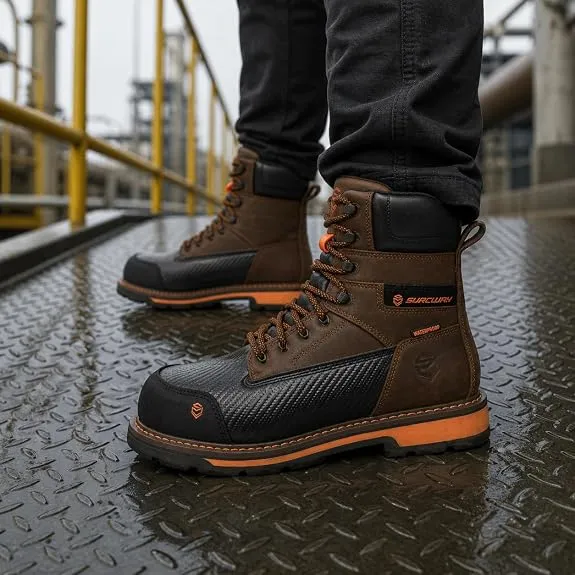
Arborist Climbing Boots: How to Choose
Nov 17,2026 | Nancy Sureway
Climbing into a tree canopy is nothing like walking a logging trail. When an arborist straps on climbing spurs and ascends 60 feet into the crown, every piece of gear must perform precisely — including the boots. Standard work boots flex, collapse, and slip under a spur's stirrup. Genuine arborist climbing boots are engineered to do the opposite: lock into the spur assembly, support the arch under concentrated body weight, and keep you stable for hours at height. This guide breaks down exactly what separates true tree climbing boots from look-alike logger and lineman options, so you can choose with confidence.
The Distinct Demands of Tree Canopy Work
Ground loggers deal with mud, slash, and rolling logs. Arborists face an entirely different set of forces: downward body weight channeled through two metal spurs pressed into bark, plus constant ankle flexion as they reposition on curved trunk surfaces. A boot that works brilliantly on the forest floor can cause arch collapse, spur slippage, or severe bruising the moment it goes vertical. Knowing those unique stresses is the first step toward picking footwear that's actually safe aloft.
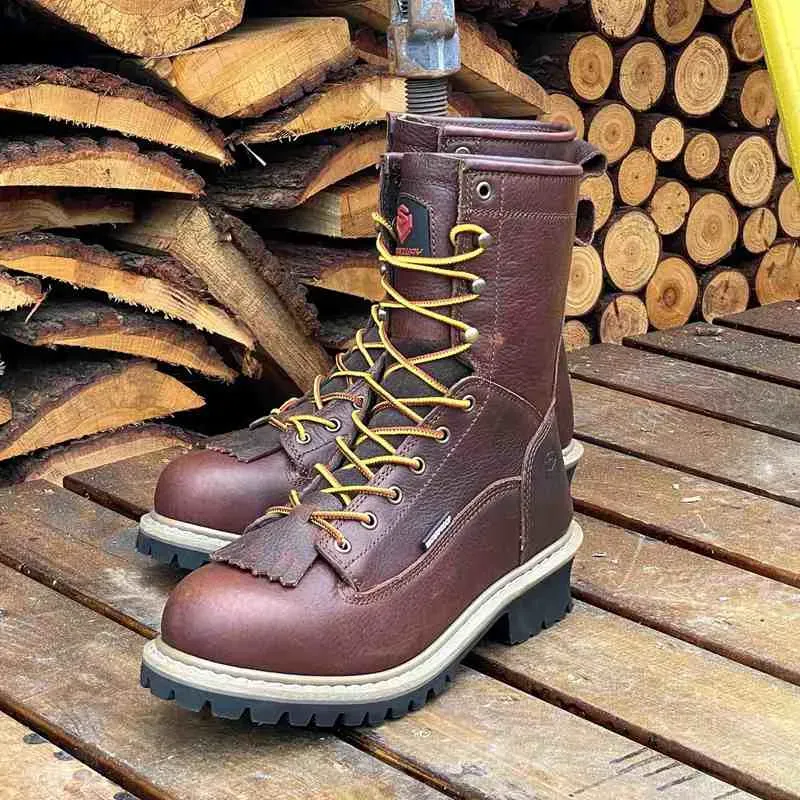
What Makes a Boot an Arborist Climbing Boot?
Climbing Spur Compatibility and Forward-Canted Heel
Arborist climbing boots feature a tall, forward-canted heel — typically 1¾ to 2 inches — that slots cleanly into a spur's stirrup and holds the gaff at the correct attack angle. Without that defined heel geometry, the spur rotates or slides, creating a fall risk. Knowing the logger heel purpose helps clarify why heel shape is non-negotiable for any climbing platform.
Rigid Steel Shanks for Arch Protection Under Spurs
A full-length rigid steel shank runs between the insole and outsole, distributing spur pressure across the entire foot rather than concentrating it at one painful point. Without it, the sole folds over the spur edge during long ascents, bruising the arch and destabilizing your stance. This is the single most important difference between climbing arborist boots and ordinary work boots.
Safety Toe Options: ASTM Steel vs. Composite Protection
Both steel and composite toes meet ASTM F2413 impact and compression standards. Steel toe logging boots offer maximum crush resistance for heavy chainsaw work at the base of the tree. Composite toe logger boots weigh noticeably less — an advantage when you're lifting your legs hundreds of times per climb.
Chainsaw Cut Protection and Deep Lug Traction
Class 1 or Class 2 chainsaw cut protection is optional on tree climbing boots but strongly recommended for climbers who also fell or buck at ground level. Deep lug outsoles grip bark during ascent and provide traction on wet roots and slash after descent. For chainsaw-heavy operations, browse our safety toe logger boots collection for cut-rated options.
Arborist vs. Logger vs. Lineman Boots
Heel Geometry, Shank Rigidity, and Spur Fit Compared
|
Feature |
Arborist Boots |
Logger Boots |
Lineman Boots |
|
Heel |
Tall, forward-canted |
Tall logger heel |
Tall + spur ridge |
|
Shank |
Rigid steel (spur support) |
Rigid steel |
Rigid steel |
|
Safety Toe |
Steel / Composite |
Steel / Composite |
Steel / Composite |
|
Spur Compatibility |
Core requirement |
Compatible |
Compatible |
|
Outsole Pattern |
Deep lug + climb groove |
Deep lug (mud) |
Pole-climb pattern |
Weight, Waterproofing, and Protection
|
Factor |
Arborist |
Logger |
Lineman |
|
Chainsaw Protection |
Optional Class 1/2 |
Common |
Less common |
|
Waterproofing |
Standard |
Standard |
Standard |
|
Weight |
Medium |
Medium–Heavy |
Medium–Heavy |
Logger boots — like the steel toe logging boots — can serve as a capable substitute when a dedicated arborist model isn't available, provided the heel height and shank rigidity are verified. For everything ground-based, see how to choose logger work boots separately, as the selection criteria differ significantly.

Matching Boots to Tree Work Trades
Spur Climbing in the Canopy vs. Ground Logging and Bucking
|
Work Type |
Recommended Boot |
Key Need |
|
Spur climbing |
Arborist climbing boots |
High heel + rigid shank |
|
Ground felling / bucking |
Logger boots |
Deep lug + chainsaw protection |
|
Utility pole climbing |
Lineman boots |
Pole-grip outsole |
For spur climbing, arborist boots are the only safe choice. For ground logging and bucking, a heavy-duty logger boot with cut protection handles the job without the climbing-specific heel.
Utility Line Tree Trimming and Wet-Weather Forest Operations
Utility arborists who trim branches near power lines often work in wet conditions at first light. Waterproof membranes and sealed seams are essential. For crews who don't need a protective toe cap, our soft toe work boots keep feet dry through morning dew and light rain. For full wet-canopy protection with a safety toe, the composite toe logger boots deliver waterproofing without the extra weight of steel.
How to Choose the Right Pair of Arborist Climbing Boots
Heel Height and Spur Shank Verification Checklist
Before buying, run through these checkpoints:
- Heel height:Minimum 1¾ inches, forward-canted profile to seat the spur stirrup
- Shank:Confirm full-length rigid steel — not fiberglass or partial
- Ankle height:8-inch minimum for lateral support during spur ascent
- Fit:Snug heel with no lift; a loose heel multiplies spur slippage risk
Steel vs. Composite Toe Selection for Climbers
Choose steel if you operate a chainsaw at the base of the tree and need maximum crush protection. Choose composite if prolonged canopy climbs are your primary task — lighter toes reduce cumulative leg fatigue across a full workday. Both options meet the same ASTM F2413 impact standards, so neither compromises your safety rating.
Frequently Asked Questions
Q1: Are arborist climbing boots the same as logger boots? No. Standard logger boots are built for ground traction and mud stability, while arborist climbing boots feature a forward-canted climbing heel and a rigid steel shank specifically engineered to lock securely into climbing spurs without slipping.
Q2: Do arborist boots need a steel shank? Yes. A rigid steel shank is essential because it supports the arch and prevents the sole of the boot from folding over the spur under concentrated body weight during long climbs.
Q3: Can I climb with spurs in any work boot? Not safely. Climbing spurs require a defined heel and a stiff sole to lock the stirrup and gaff in place. Flexible or soft boots can slip out of the spurs or cause severe arch bruising.
Q4: Steel toe or composite toe for tree climbing? Both meet ASTM safety standards. Composite toes are lighter and reduce leg fatigue on prolonged climbs, while steel toes offer maximum puncture and crush protection during heavy chainsaw cutting.
Q5: Are arborist climbing boots waterproof? Most quality arborist boots feature integrated waterproof membranes and sealed seams to keep feet dry when climbing wet tree canopies or working through morning dew.
Comment