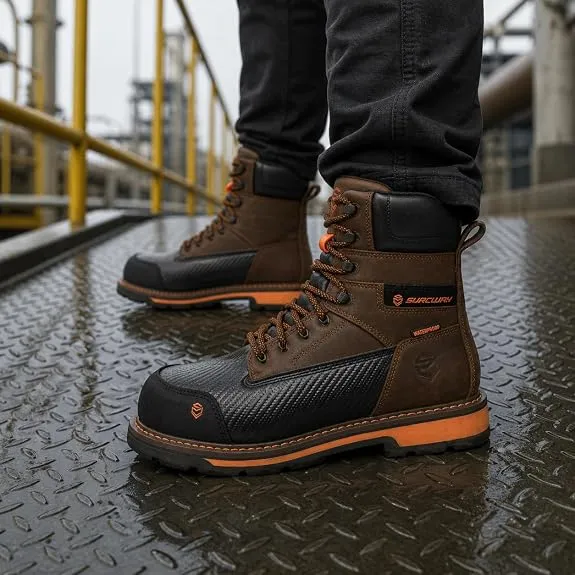
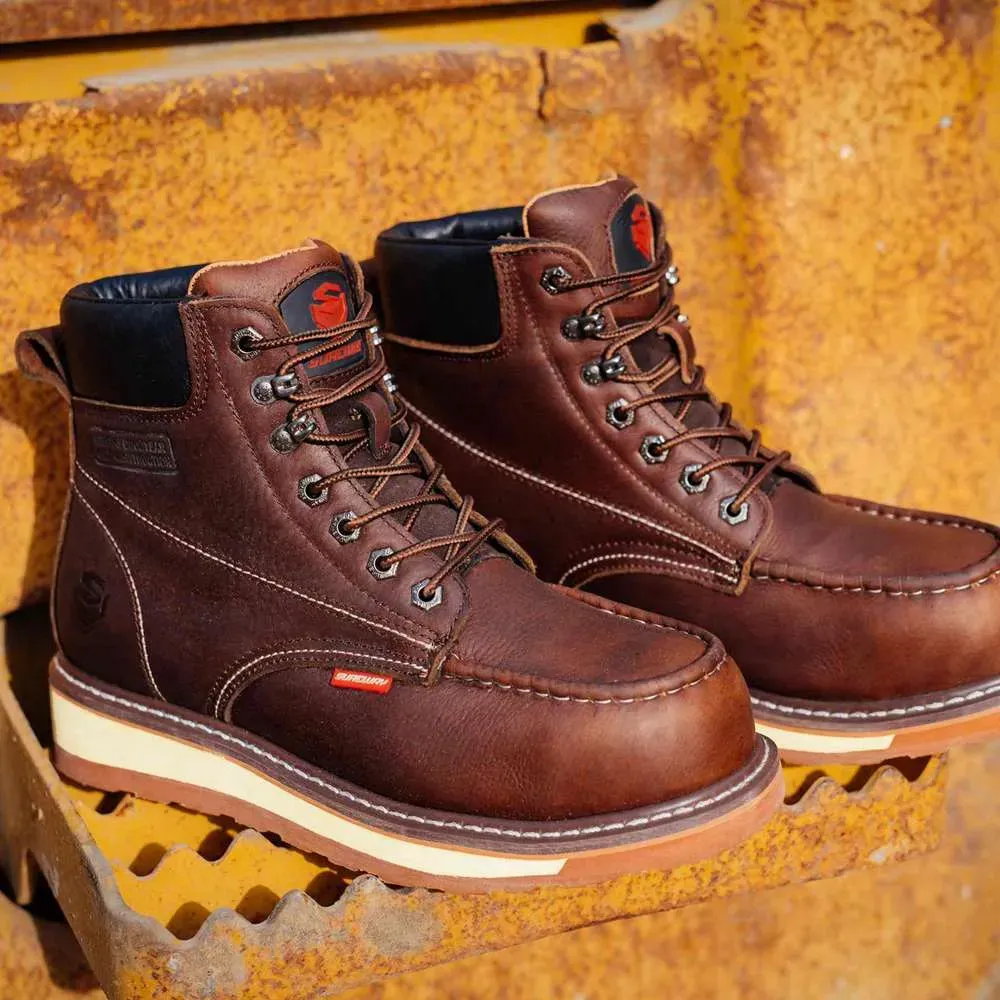
A Guide to Waterproof Composite Toe Work Boots
Nov 21,2026 | Nancy Sureway
Working in wet conditions demands footwear that delivers on two fronts: certified toe protection and all-day waterproofing. Steel toe boots have long been the default, but they come with real trade-offs — added weight that builds fatigue, metal that conducts cold in winter, and caps that trigger security scanners. Waterproof composite toe boots solve all three problems in a single build. The non-metallic cap meets the same ASTM F2413 safety standard, weighs noticeably less, stays thermally neutral in freezing temperatures, and passes through metal detectors without issue. This guide walks you through the composite vs. steel vs. soft toe comparison, the waterproofing technologies that actually matter, a job-site selection table, and a quick checklist so you can buy with confidence.

Composite Toe vs. Steel Toe vs. Soft Toe
Weight Differences and Anti-Fatigue Benefits
Composite caps are measurably lighter than steel caps — a difference you feel over a 10-hour shift. Less weight per step adds up to reduced lower-leg fatigue and fewer aches at the end of the day, which is a genuine productivity and comfort advantage for workers who are on their feet all day.
Cold Weather and Security Checkpoints
Steel conducts both heat and electricity. In cold weather, a steel cap pulls warmth away from your toes; in electrical work, a metal cap is a liability. Composite materials are non-conductive and thermally inert, making waterproof composite toe boots the preferred choice for electricians and workers at airports or secure facilities where metal detectors are in use. Where safety-toe certification isn't required, soft toe work boots offer maximum comfort at a lower weight.
|
Feature |
Composite Toe |
Steel Toe |
Soft Toe |
|
ASTM F2413 Certified |
Yes (I/C) |
Yes (I/C) |
No |
|
Weight |
Lightest |
Heavier |
Lightest |
|
Electrical Conductivity |
Non-conductive |
Conductive |
Non-conductive |
|
Cold-Weather Performance |
Low thermal transfer |
Conducts cold |
Neutral |
|
Metal Detector Safe |
Yes |
No |
Yes |
|
Price Range |
Mid |
Mid–Low |
Low |
What Makes a Work Boot Truly Waterproof?
Internal Waterproof Membranes vs. Water-Resistant Coatings
Waterproofing comes from the boot's construction, not from the toe cap material. A truly waterproof boot uses an internal membrane — a thin, bonded layer laminated inside the upper that blocks water molecules while allowing some vapor to escape. Water-resistant boots, by contrast, rely only on a surface coating or treated leather that repels light splashes but fails under prolonged exposure or submersion. For all-weather jobs, start with our dedicated waterproof work boots collection.
Seam-Sealed Construction and Breathability Trade-offs
Even the best membrane is undermined by an unsealed seam. Quality waterproof composite toe work boots use seam-sealed or cement construction so water cannot enter through stitch holes or welt gaps. The trade-off is breathability: fully sealed boots trap more moisture vapor inside. If you work in wet but not fully submerged conditions, a boot with a membrane rated for breathability (measured in grams of vapor per square meter per day) gives you a better balance of dryness and comfort.
How to Choose by Job Site
Electrical and Utility Work in Wet Environments
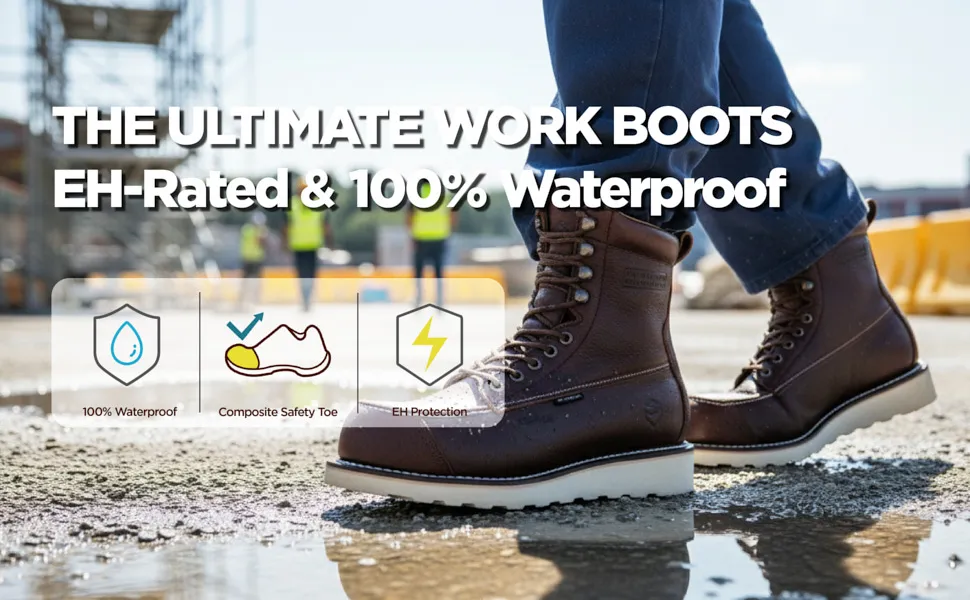
Electricians and utility workers need a toe cap that will not conduct electricity and a boot that keeps feet dry near water sources. Waterproof composite toe work boots check both boxes: the non-metallic cap satisfies EH (electrical hazard) requirements, and an internal membrane handles standing puddles or rain. Our best composite toe boots combine a moc toe with a waterproof upper for year-round site work.
Muddy Construction Sites, Warehouses, and Cold Outdoor Conditions
Construction crews, warehouse workers, and outdoor laborers face different demands, but all benefit from composite toe protection paired with waterproofing.
|
Job Site |
Key Need |
Recommended Toe |
Waterproofing Priority |
|
Electrical / Utility |
Non-conductive, light |
Composite |
Membrane + EH rating |
|
Muddy Construction |
All-day waterproof, impact |
Composite or Steel |
Full membrane + sealed seams |
|
Warehouse / Logistics |
Lightweight, long standing hours |
Composite or Soft |
Water-resistant is sufficient |
|
Cold Outdoor Work |
Warmth, low thermal transfer |
Composite |
Waterproof + insulated lining |
Step-by-Step Selection Checklist
Verifying Safety Ratings, Shaft Height, and Membrane Build
Use this checklist before you buy:
- Safety rating— Confirm the boot carries ASTM F2413 with I/C markings if toe protection is required on your site.
- Toe type— Choose composite for electrical work, cold weather, or security-checkpoint environments; steel if your site mandates it.
- Waterproof grade— Look for "waterproof" with an internal membrane and sealed seams, not just "water-resistant."
- Shaft height— Ankle boots suit most warehouse use; 6-inch or taller shafts add ankle support and mud protection on construction sites.
- Membrane quality— Check whether the membrane is breathable, especially for high-output physical work.
Sizing Considerations for Thick Work Socks and Boot Width
Follow the brand's size chart and add half a size if you wear thick wool or cushioned work socks. Check width options — many waterproof composite toe work boots come in medium (D) and wide (EE) fittings. Try boots on in the afternoon, when your feet are at their largest after a day of activity. A proper fit should leave about a thumb-width of space at the toe and no heel slippage when walking.
Frequently Asked Questions
Q1: Are composite toe boots as safe as steel toe boots? Yes. Composite toe caps meet the exact same ASTM F2413 impact and compression standards as steel caps, while offering the added benefits of being lighter, non-conductive, and non-magnetic for security checkpoints.
Q2: Can composite toe boots be waterproof? Yes. Waterproofing is determined by internal waterproof membranes, seam-sealed construction, and treated leather uppers rather than the toe material, making composite toes paired with waterproof linings an extremely common build.
Q3: Is "waterproof" the same as "water-resistant"? No. Waterproof boots incorporate internal membranes and fully sealed seams designed for sustained submersion in standing water, whereas water-resistant boots only shed light surface splashes.
Q4: Do composite toe boots set off metal detectors? No. Because composite caps are made from non-metallic materials like carbon fiber, fiberglass, or Kevlar, they do not conduct electricity and will not trigger airport or secure facility metal detectors.
Q5: How do I choose the right size in a waterproof composite toe boot? Follow the brand size chart, account for thicker boot socks, and check width options (medium vs. wide). It is best to try boots on in the afternoon when your feet are naturally at their largest.
Comment