Slip On vs Lace Up Work Boots
Oct 14,2026 | Nancy Sureway
Choosing between slip on vs lace up work boots can make a real difference in your comfort, safety, and productivity on the job. Both styles meet rigorous safety standards, yet they suit different working conditions and personal preferences. Read on to find out which type is the best fit for you.
What Are Slip On Work Boots?
Slip on work boots, also called pull-on work boots, feature no laces at all. You simply pull them on using side loops or a back tab. They typically have a taller shaft that grips the ankle and keeps the boot secure. Many workers love composite toe slip-on boots because they combine fast on-and-off convenience with serious toe protection. Men's pull-on work boots are especially popular in agriculture, oil fields, and general construction.

What Are Lace Up Work Boots?
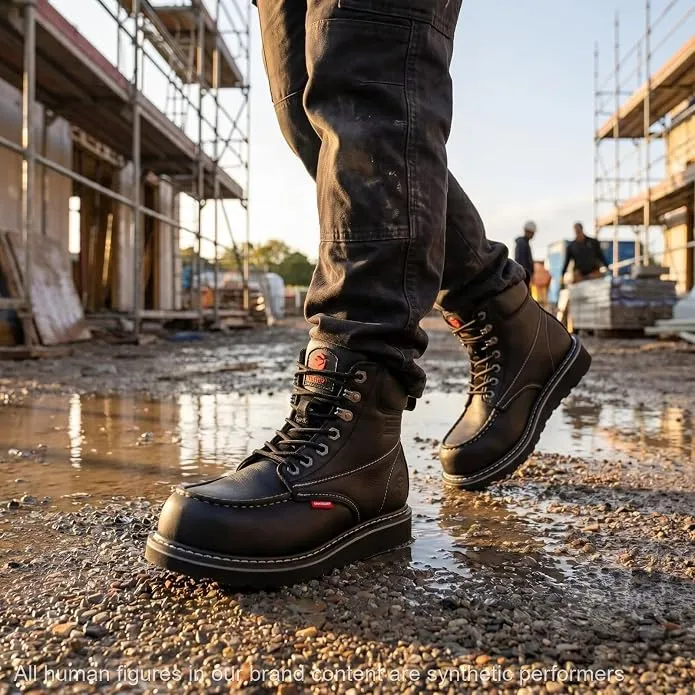
Lace up work boots use traditional eyelets or speed-hooks so you can adjust the fit across the entire foot and ankle. This gives you a personalized level of snugness that pull-on designs cannot match. If you want to explore all the options, our lace up boots guide covers everything from height to sole types. You can also browse our full line of men's lace-up work boots for detailed comparisons.
Slip On vs Lace Up Work Boots — Head-to-Head Comparison
|
Feature |
Slip On |
Lace Up |
|
On/Off speed |
Fast — no lacing needed |
Slower — requires tying |
|
Fit customization |
Limited |
High — laces adjust tightness |
|
Ankle support |
Good (tall shaft) |
Excellent (lace tension) |
|
Safety toe options |
Yes — steel or composite |
Yes — steel or composite |
|
Loose lace hazard |
None |
Possible if not tied properly |
|
Best environment |
Mud, loose terrain, quick changes |
Precision fit jobs, long shifts |
For a deeper side-by-side breakdown, see our dedicated slip on boots vs lace up buying guide.
When Should You Choose Slip On Work Boots?
Slip on safety boots offer clear advantages in specific situations. Choose them when:
- Speed matters.Farmers, ranchers, and workers who remove boots frequently save significant time every day.
- Mud and debris are present.Laces trap dirt and degrade faster in wet conditions. A laceless boot stays cleaner.
- You want less snagging risk.Work with no laces removes one potential hazard around machinery or low clearances.
When Should You Choose Lace Up Work Boots?
Lace up work boots are the better choice when:
- You need a locked-in fit.Workers on uneven terrain or scaffolding benefit from the extra ankle stability laces provide.
- You are on your feet all day.Adjustable laces let you fine-tune pressure points and reduce fatigue over a long shift.
- Your job demands lateral support.Electricians, ironworkers, and roofers generally prefer lace-up designs for this reason.
Key Factors to Consider Before You Decide
Before you buy, think about these points:
- Safety toe type.Both styles come with steel toe work boots and composite toe work boots options — so toe protection alone should not drive your choice.
- Work environment.Wet, muddy sites favor slip-on; dry, technical sites favor lace-up.
- Shift length.All-day wear often rewards the adjustable fit of lace-up boots.
- Personal comfort history.If you have wide feet or high arches, try both styles with your orthotics before deciding.
Top Picks from Sureway
Best Slip On
Our composite toe slip-on boots deliver ASTM-rated composite toe protection, a waterproof leather upper, and a pull-on design that gets you job-ready in seconds. Read the full composite toe boots guide to see all the specs.
Best Lace Up
For maximum protection and support, our 8-inch composite toe boots combine a tall shaft, waterproof construction, and a lace-up closure for a truly dialed-in fit on demanding job sites.
FAQs
- Are slip on work boots as safe as lace up work boots?Yes. Safety ratings depend on the toe cap and sole construction,not the closure style. Both slip-on and lace-up boots are available with ASTM-certified steel or composite toe protection.
- Which work boots are better for warehouse workers,slip on or lace up?Most warehouse workers prefer lace-up boots. Long shifts on hard concrete benefit from the adjustable fit and extra ankle support that laces provide.
- Do slip on work boots provide enough ankle support?They do for most tasks. The tall, stiff shaft of a pull-on boot holds the ankle firmly. However, lace-up boots offer greater support for jobs with heavy lateral movement or uneven ground.
- Can slip on work boots have composite toe or steel toe protection?Absolutely. Many men's pull-on work bootsinclude composite or steel toe caps that meet the same ASTM standards as any lace-up model.
- Which type of work boot lasts longer: slip on or lace up?Durability depends more on materials and construction quality than on the closure style. That said, lace-up boots do have one extra wear point,the laces themselves, which may need replacing over time.
Comment