
Slip On Boots vs. Lace Up Boots: Which Work Boot Fits Your Job Site?
Sep 17,2026 | Nancy Sureway
Every morning, you face the same routine: bending down to tie your boots before heading out the door. It's a small task, but it adds up over a week of early shifts. This is exactly why the debate between slip on boots vs lace up boots keeps growing. Lace-up boots are the classic choice, but slip-ons are quickly winning over construction and warehouse crews. So, which one actually fits your job site? Let's break down the slip on vs lace up work boots decision, factor by factor.
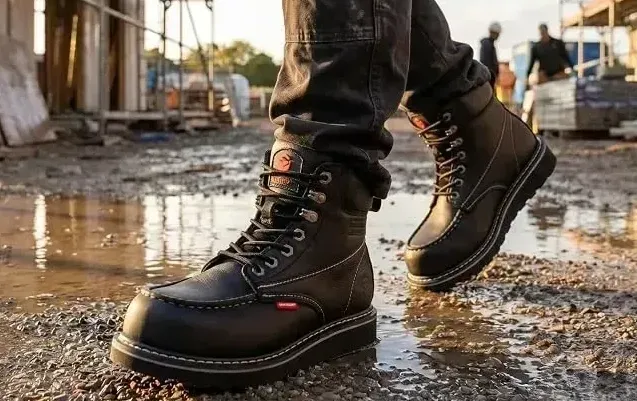
5 Key Factors That Matter
Before choosing a side, compare how each style performs where it counts.
Ankle Support & Lock-down: Laces let you fine-tune tightness across your instep and ankle. Slip-ons rely on elastic gore panels or a snug leather shaft instead.
Convenience & Speed: Slip-ons go on in about three seconds. Laces take longer, and they can stiffen with mud or snap from stray sparks.
Debris & Spark Protection: Without a tongue or lace gaps, slip-ons keep welding slag, dust, and gravel from working their way inside.
Fit Customization: Lace-ups adjust to wider feet and higher insteps. Slip-ons demand a more accurate size from the start.
Long-Term Durability: Both styles hold up well with proper care, though each wears differently over time.
When to Choose Slip-On Work Boots
Slip-ons shine for anyone constantly moving in and out of vehicles, buildings, or job trailers. Site supervisors, warehouse staff, and welders all benefit from the format. Welders, in particular, avoid the fire risk that loose laces create near sparks.
Comfort is another advantage. There's no need to crouch down repeatedly, and the elastic gore flexes gently with your foot all day. If speed and a clean profile matter most to you, explore the full range of slip on work boots built with oil-resistant outsoles for demanding floors.
For jobs involving heavy equipment or falling tools, a rugged steel toe slip on balances quick entry with real crush protection, meeting ASTM safety standards without slowing you down.
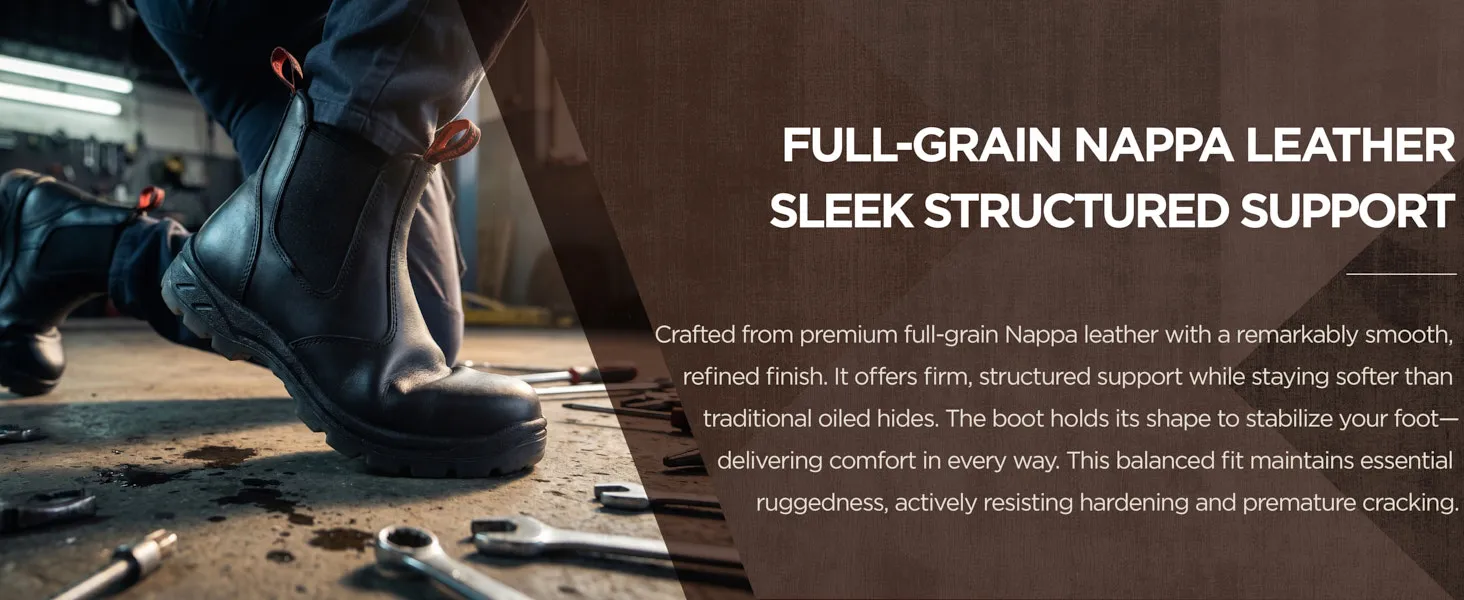
When Lace-Up Work Boots Remain Superior
Lace-ups still lead in certain environments. Roofers, scaffolders, and anyone working on uneven or sloped terrain need the tighter lock-down that only laces provide. That extra hold keeps your foot from sliding forward inside the boot, which reduces toe jamming on descents.
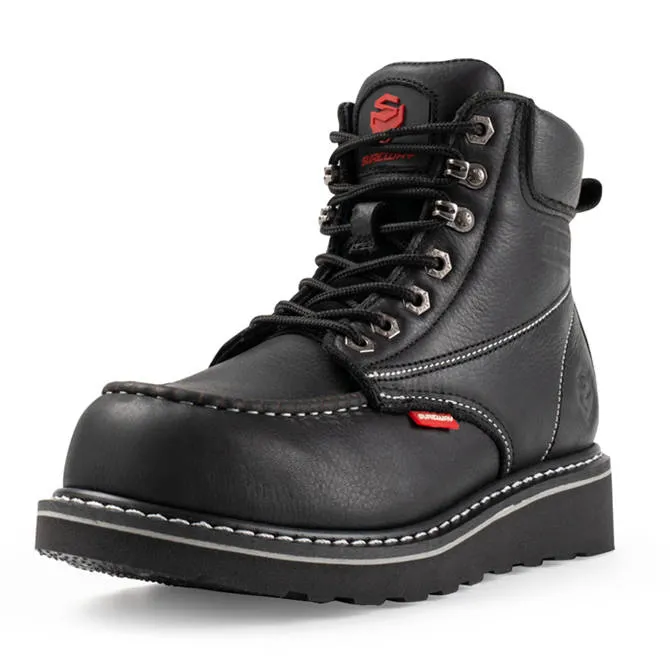
Tradesmen working on rough masonry or shifting surfaces often rely on a classic lace up moc toe for firm ankle bracing throughout the shift. This stability is even more valuable when paired with a stable outsole, as explained in our guide to wedge sole boots built for ironworkers and framers.
Frequently Asked Questions
Q1: Do slip-on boots cause more heel slippage than lace-up boots?
Brand-new slip-on boots normally have a slight 1/4-inch heel lift before breaking in. Once the leather footbed contours to your foot, heel movement stabilizes, though lace-up boots will always allow a tighter lock-down.
Q2: Are slip-on boots safe for climbing ladders?
Yes, provided they feature defined 90-degree heels and ASTM-certified puncture plates. However, for continuous ladder climbing or steep scaffolding, lace-up boots provide superior ankle lock.
Q3: Which lasts longer: slip-on or lace-up boots?
Slip-on boots eliminate broken eyelets and frayed laces, but their elastic side gores can loosen over years. Lace-up boots have replaceable laces, giving both styles comparable overall lifespans with proper leather conditioning.
Q4: Why do welders prefer slip-on work boots?
Welders choose slip-on boots because hot sparks and slag cannot burn through laces or get trapped in the folds of the tongue, significantly reducing burn injuries and boot damage.
Q5: Can you tighten slip-on boots if they stretch out?
You cannot tighten the shaft directly, but adding a thicker ergonomic insole or wearing high-cushion merino wool work socks will quickly restore a snug, comfortable instep fit.
Comment
.webp?w=748&h=748)