Slip On Steel Toe Boots for Warehouse
Sep 16,2026 | Nancy Sureway
Warehouse workers walk 8 to 12 miles per shift. They dodge forklifts, stack heavy pallets, and dash across cold concrete floors. Traditional lace-up boots slow them down and often loosen mid-shift. That's why slip on steel toe boots for warehouse environments have become the new standard. They combine certified crush protection with fast, hassle-free wear. This guide breaks down why they matter and how to choose the right pair.
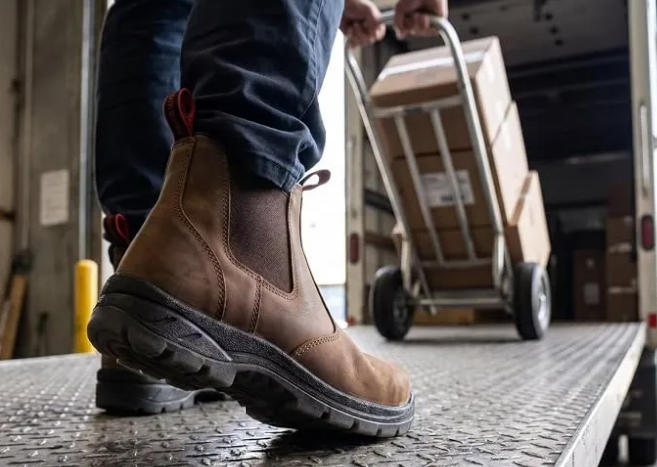
Warehouse Work: Crush Hazards vs. Foot Fatigue
Warehouse floors present two very different threats. The first is impact. Falling pallets, rolling carts, and blind-spot collisions with electric forklifts can crush an unprotected foot instantly. That's why every serious operation requires footwear rated to ASTM F2413 standards.
The second threat is quieter but just as damaging: fatigue. Concrete floors have zero give. Every step sends shock straight into your heels, knees, and lower back. Over a ten-hour shift, this adds up fast.
This is exactly where slip-on design shines. Without exposed laces, there's nothing to snag on conveyor belts or pallet corners. Workers also skip the constant crouching to retie loose laces, which reduces both distraction and injury risk. When browsing certified warehouse work boots, look specifically for models built for continuous concrete pacing, not just occasional wear.
Top Features to Look for in Warehouse Slip-On Steel Toe Footwear
Not every slip-on boot is warehouse-ready. Before buying, check for these four features.
Wide steel toe box. Your toes need room to spread naturally under load. A cramped toe box causes numbness and blisters within hours.
Rebound EVA or PU midsole. This layer absorbs ground impact with every step. It's the difference between finishing your shift fresh or limping to your car.
Reinforced heavy-duty elastic gore. Strong side panels keep the boot locked to your heel during quick turns and fast walking, without needing laces.
Oil and slip-resistant outsole. Forklift leaks, spilled liquids, and wet loading docks make traction non-negotiable. A quality outsole grips even on polished floors.
Together, these features solve the two problems every warehouse worker faces: protection and endurance. Skipping any one of them shortens the useful life of the boot and increases daily strain on your body.
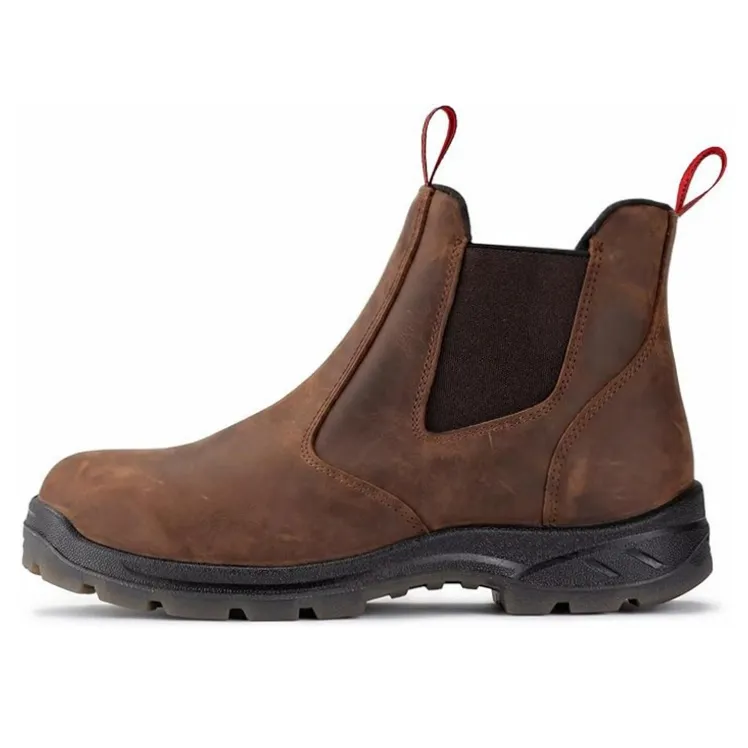
Recommended Warehouse Workhorses: Sureway Slip-On Lineup
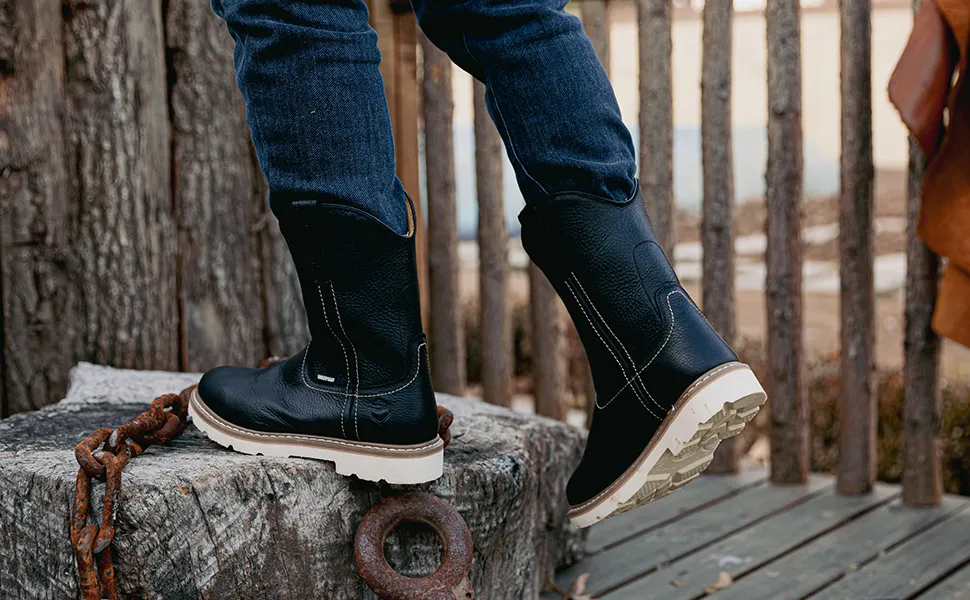
For workers who need maximum crush resistance against heavy pallet jacks, the steel toe slip on boot is built with a reinforced ASTM-rated toe cap, full-grain leather upper, and a thick cushioned footbed designed for heavy-load handling all day long.
If your facility requires passing through metal detectors or loss-prevention scanners daily, the composite toe slip on is the smarter choice. It delivers the same impact protection without triggering security gates, and its lighter build suits cold-storage or fast-pick fulfillment roles.
Not sure which toe cap fits your job? Our detailed comparison of steel vs composite toe options walks through weight, conductivity, and durability differences so you can match the boot to your specific depot conditions.
How to Ensure Proper Fit & Prevent Heel Slip on Concrete
A great slip-on boot only works if it fits correctly. Always try boots on with the same thick work socks you'll wear on shift. Your toes should have slight wiggle room, while the sides of your foot feel evenly supported, not squeezed.
New boots often shift slightly at the heel during the break-in period. This is normal. The elastic gore panels haven't fully molded to your foot yet. To speed this up, add an orthotic or gel heel insert. This creates a custom-level, snug fit and stops slippage before it causes blisters or instability on concrete.
Frequently Asked Questions
Q1: Are slip-on steel toe boots safe enough for forklift-heavy warehouses?
Yes. Certified slip-on steel toe boots meet ASTM F2413 standards for impact and compression, delivering identical crush protection to traditional lace-up boots against rolling machinery and falling cargo.
Q2: Will slip-on boots slow me down during 10-hour walking shifts?
On the contrary, modern slip-on boots featuring lightweight EVA midsoles reduce overall fatigue. Eliminating lace adjustments during fast-paced fulfillment shifts helps maintain consistent speed and comfort.
Q3: Can I wear slip-on steel toe boots through warehouse metal detectors? Steel toe boots will trigger metal detectors at security checkpoints. If your facility enforces daily metal wanding or scan gates, consider ASTM-rated composite toe slip-on boots instead.
Q4: How do I prevent foot blisters during the break-in period?
Wear moisture-wicking merino wool or padded work socks to minimize friction. Apply leather conditioner to the collar and instep to soften the full-grain leather faster.
Q5: What makes an outsole truly slip-resistant on smooth warehouse floors? Look for micro-grooved, flat wedge, or shallow-lug rubber outsoles with oil-resistant compounding that maximize surface contact on polished, sealed concrete.
Comment