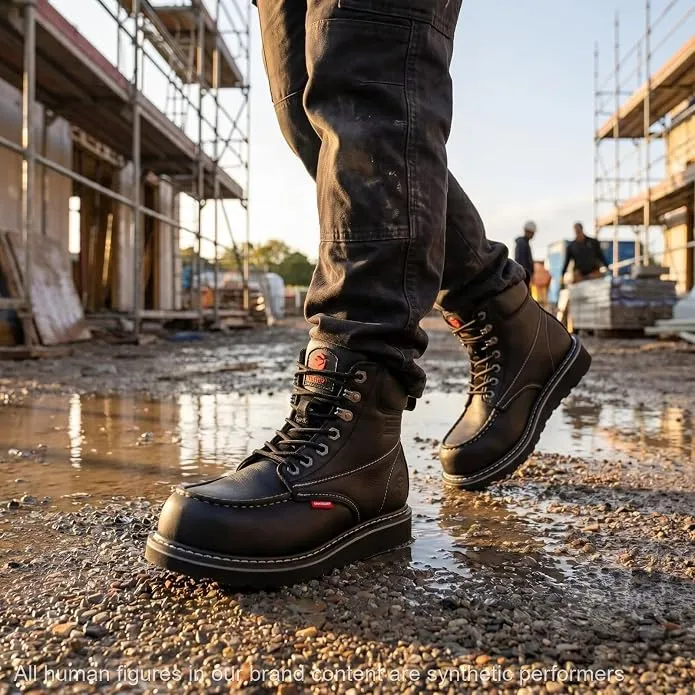
Waterproof Vs Water Resistant Boots
Sep 24,2026 | Nancy Sureway
You have seen both labels on boot boxes. They look nearly identical. However, one structural difference separates boots that keep your feet dry in a flooded trench from boots that fail after five minutes in the rain. Knowing the difference between waterproof vs. water resistant boots is not just technical curiosity — it is the difference between a productive workday and cold, soggy socks by 9 AM. This guide breaks down the internal construction, real-world performance, and the exact conditions that call for each type.
Hydrophobic Coatings vs. Sealed Membranes
The gap between these two boot types starts deep inside the construction — not on the surface.
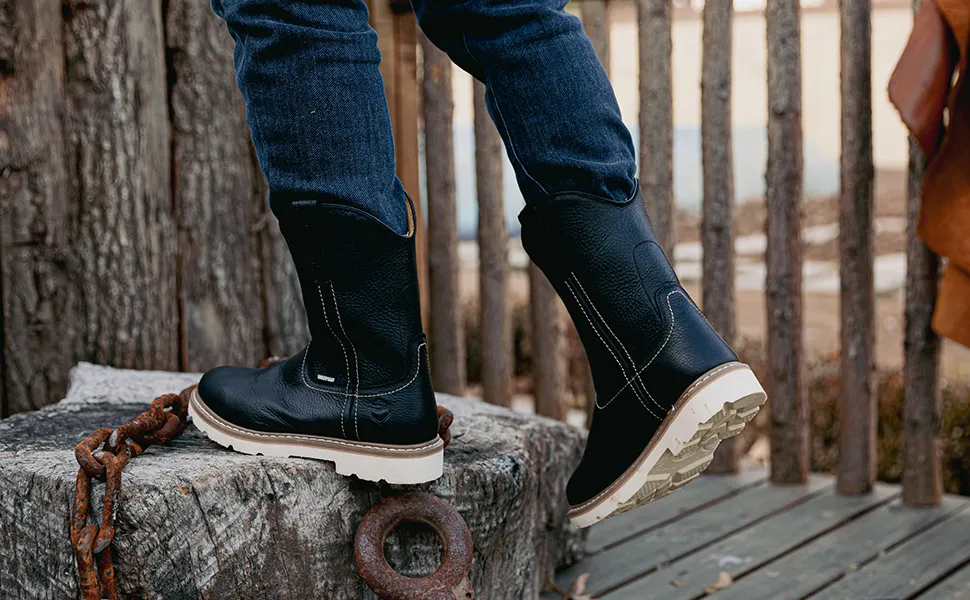
Water-resistant boots depend on a DWR (Durable Water Repellent) chemical coating applied to the outer leather. This coating creates a hydrophobic surface effect — water beads up and rolls off like droplets on a waxed car hood. In light drizzle or a quick splash, this works perfectly well. However, physics sets a hard limit. After roughly 15 minutes of sustained rain or contact with standing water, static water pressure forces moisture through leather pores and needle-stitch holes. The coating cannot stop this. Your feet get wet.
100% waterproof boots are engineered from the inside out. They contain a sealed internal waterproof bootie membrane — a complete sock-like liner bonded within the boot structure. The micropore openings in this membrane are 20,000 times smaller than a single water droplet. Even when the outer leather is completely saturated with mud and water, the inner membrane blocks every drop from reaching your foot. When shopping for true submersion protection, exploring certified waterproof work boots engineered with internal bootie liners is the only reliable guarantee against wet feet on a demanding job site.
Waterproof Vs Water Resistant Boots: Submersion, Breathability & Weight
These four dimensions reveal exactly where each boot type wins — and where it falls short.
|
Feature |
Water-Resistant |
100% Waterproof |
|
Standing Water |
Soaks through within seconds |
Dry for hours, up to shaft height |
|
Breathability |
High — air moves through leather freely |
Lower — sealed membrane limits heat escape |
|
Boot Weight |
Lighter, more flexible upper |
Slightly heavier due to multi-layer construction |
|
Coating Durability |
DWR lasts 2–4 months under abrasion |
Membrane lasts years; outer coat still needs care |
Breathability deserves special attention. Because waterproof membranes create a fully sealed interior, perspiration has fewer escape routes. Many workers report damp feet inside waterproof boots even without any leak — this is almost always trapped sweat, not membrane failure. The fix is simple: replace cotton socks with moisture-wicking merino wool. Cotton absorbs and holds sweat against the skin; wool draws it away. For detailed guidance on pairing membrane boots with cold-weather insulation across multi-hour shifts, consult our waterproof work boots guide built for extreme conditions.
Which Do You Actually Need?
The right answer depends on your worst-case work scenario — not your average day.
Choose 100% waterproof boots if you:
- Work in outdoor construction, plumbing, or excavation
- Regularly walk through deep snow or melting slush
- Stand in puddles, mud, or wet concrete for more than 15 minutes at a time
- Work in car washing, water utilities, or municipal drainage
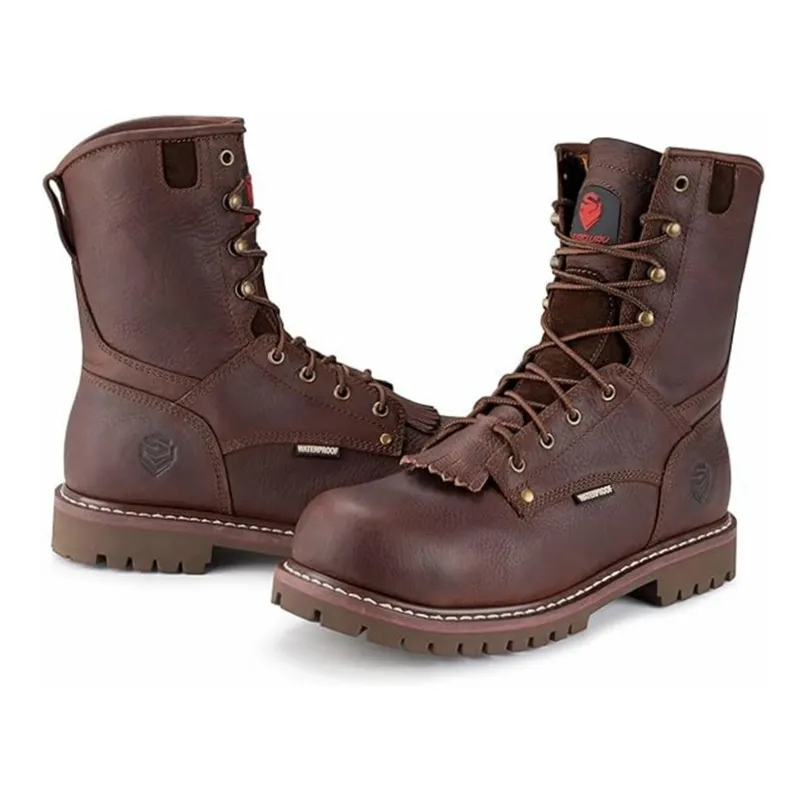
For these environments, tradesmen working in deep excavation trenches or heavy snowmelt must choose heavy-duty waterproof work boots 8 inch shaft models to prevent water entry from above the ankle as well as below.
Choose water-resistant boots if you:
- Work primarily indoors in warehouses, carpentry shops, or logistics facilities
- Commute through occasional light rain or short outdoor exposure
- Sweat heavily and need maximum airflow throughout the day
- Live or work in a dry climate where rain is rare and brief
For indoor utility work and quick walks across drizzly parking lots, oiled leather chelsea boots shed light moisture effectively while maintaining full-day breathability and comfort.
The rule is simple: always match your boot to the worst weather condition you regularly face — not the best.
Frequently Asked Questions
Q1: Can water-resistant boots be used in the snow?
Only for quick walks through dry, light powder. If the snow begins to melt from body heat, moisture will soak through seams within 15 minutes. For deep or melting slush, true waterproof boots are mandatory.
Q2: Does "waterproof" mean I can stand in deep water all day?
Yes, up to the boot's gusseted tongue height or elastic collar seam. As long as water does not crest over the top edge of the boot shaft, internal sealed membrane booties keep your feet bone-dry.
Q3: Why do my feet feel wet in waterproof boots if they aren't leaking?
It is likely trapped sweat. Waterproof membranes restrict air exchange. Wearing cotton socks traps foot perspiration inside the boot liner, creating a clammy, wet sensation. Always wear moisture-wicking wool socks.
Q4: How long does water-resistant coating last?
Factory-applied DWR coatings typically last 2 to 4 months under frequent job site abrasion. You should reapply a waterproofing leather balm or spray whenever water stops beading on the surface.
Q5: Are rubber boots better than waterproof leather boots?
Rubber deck boots are 100% impervious to liquids, muck, and chemicals, but offer minimal breathability and arch support. Waterproof leather boots provide far better ergonomics, breathability, and ankle stability for full-day labor.
Comment