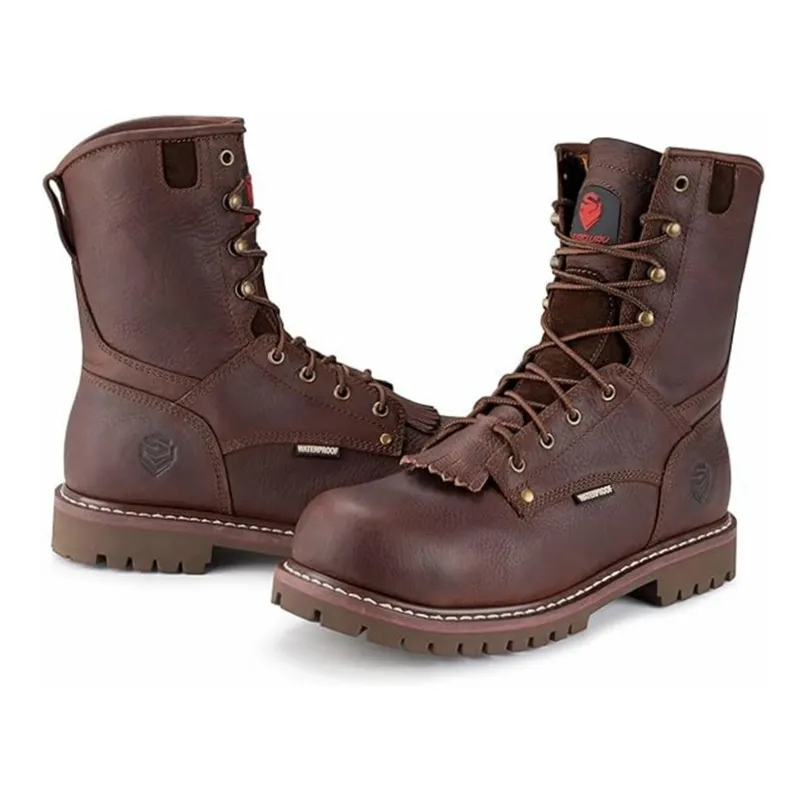
A Guide to Construction Boots for Men
Nov 12,2026 | Nancy Sureway
Foot injuries rank among the most common workplace claims on any job site. The right pair of construction boots for men does far more than cover your feet — it delivers ASTM-certified toe protection, slip resistance, and waterproofing engineered for real hazards. This guide cuts through the noise. It compares all three safety toe types, matches each to real job-site scenarios, and gives you a clear selection checklist before your next purchase.

Safety Toe Comparison: Steel Toe vs. Composite Toe vs. Soft Toe
Choosing the correct toe type is the single most important decision when buying construction boots.
Technical Specification Comparison Matrix
|
Feature |
Steel Toe |
Composite Toe |
Soft Toe |
|
Safety Standard |
ASTM F2413 I/75 |
ASTM F2413 I/75 + EH |
None |
|
Weight |
Heaviest |
30–40% lighter |
Lightest |
|
Metal Detector |
Triggers alarm |
Passes freely |
Passes freely |
|
Conductivity |
Conducts heat/cold |
Non-conductive |
N/A |
|
Best For |
Heavy debris, demolition |
Electrical work, airports |
Comfort-focused, low-risk |
Browse our full range of steel toe work boots or explore composite toe work boots for a lighter alternative with equal ASTM certification.
Job-Site Environment Matching
|
Job Site |
Recommended Toe |
Key Requirement |
|
Concrete / masonry |
Steel toe |
Impact protection, waterproof |
|
Electrical work |
Composite toe (EH) |
Non-conductive |
|
Heavy equipment operation |
Steel toe |
Crush resistance, ankle support |
|
Finish carpentry / framing |
Soft or composite toe |
All-day comfort |
|
Wet or outdoor sites |
Waterproof steel / composite |
Drainage, grip |
Masons on wet pours need alkali-resistant concrete work boots built to survive lime and moisture. When there is no falling-object risk, soft toe work boots deliver unmatched all-day comfort for indoor finish work.
Safety, Weight, and Cost
- Steel toeprovides maximum impact resistance and comes at a lower price point — the go-to choice for demolition and heavy-equipment sites.
- Composite toesaves 30–40% in weight and passes metal detectors freely — a smarter pick for electricians and airport construction crews.
- Soft toesuits indoor or low-hazard roles where comfort matters more than certified impact protection.

Essential Construction Boot Features for the Job Site
Slip-Resistant Outsoles & ASTM F2913 Compliance
A slip-resistant outsole rated to ASTM F2913 is non-negotiable on wet concrete, oily floors, or muddy terrain. Look for deep lug patterns and oil-resistant rubber compounds. No grip rating means no place on a live job site.
Waterproof Membranes vs. Breathability
Waterproof membranes keep feet dry during concrete pours, rain, and mud — but they trap heat in warm conditions. If you work indoors or in a hot climate, a breathable, non-waterproof boot prevents excess sweat and fatigue. For year-round outdoor sites, a pair of waterproof steel toe boots keeps feet dry without dropping your safety rating.
Shank Support, Leather Durability, and Cushioning
A steel or fiberglass shank runs through the midsole to prevent flex fatigue on uneven ground. Full-grain leather uppers resist abrasion and hold their structure after months of heavy use. A cushioned midsole with a removable insole lets you swap in custom orthotics for extra arch support during long shifts. If you want certified protection without added metal weight, our lightweight safety toe boots are worth a close look.
How to Choose the Right Pair and Size
Sizing and Fit Guide
Try boots on in the afternoon, when feet are naturally at their largest. Leave roughly one thumb's width of space between your longest toe and the boot's tip. The heel should feel snug without slipping. The widest part of your foot should sit comfortably across the toe box. If your role involves ladder work or uneven surfaces, prioritize a taller shaft for extra ankle support.
Break-in Period Tips and Replacement Signs
Wear new construction boots for men for one to two hours around the house before your first full shift. Increase wear time gradually over one to two weeks. Watch for these replacement signals:
- Outsole tread worn smooth in key grip zones
- Midsole compressed and no longer absorbing impact
- Upper cracking or separating from the sole
- Safety toe failing a visual inspection
Replace boots at the first sign of compromised protection — never wait until after an incident.
Frequently Asked Questions
Q1: What is the difference between steel toe and composite toe construction boots? Steel toe boots use a heavy-duty metallic core for maximum impact resistance. Composite toe boots use non-metallic materials — carbon fiber, Kevlar, or plastic — that are 30% to 40% lighter, naturally non-conductive, and pass through metal detectors without issue. Both meet ASTM F2413.
Q2: Are construction boots the same as work boots? Construction boots are a specialized subcategory of work boots designed for job-site hazards such as falling debris, punctures, and slippery terrain. The two terms are often used interchangeably, but construction boots place a heavier emphasis on ASTM-certified protective features.
Q3: Do I need waterproof construction boots? It depends on your site. Waterproof membranes are essential for concrete pouring, mud, rain, or snow. Workers in dry indoor or hot outdoor settings benefit more from breathable, non-waterproof models to avoid excess heat and sweat.
Q4: How should construction boots fit, and how do I break them in? Try boots on in the afternoon when your feet are slightly swollen, leaving about a thumb's width of space at the toes. Wear them for short intervals over one to two weeks before committing to a full work shift.
Comment