6 Inch vs 8 Inch Work Boots
Nov 15,2026 | Nancy Sureway
Boot shaft height is one of the most overlooked specs when buying work boots — yet it shapes comfort, ankle safety, and fatigue every single shift. This guide breaks down 6 inch vs 8 inch work boots so you can pick the right height for your trade without second-guessing yourself. 6-inch boots suit indoor, agile trades. 8-inch boots are built for outdoor, rough-terrain, and heavy-duty work.
Why Boot Height Matters for Your Daily Work
The shaft height determines how much of your ankle and lower leg the boot protects. A taller shaft means more coverage and stability — but also more weight and heat. Getting this choice wrong leads to fatigue, sprains, or inadequate protection on the job. That is why understanding 6 inch vs 8 inch work boots before you buy is essential.
6-Inch vs 8-Inch Work Boots: Technical Spec Comparison
|
Feature |
6-Inch |
8-Inch |
|
Ankle support |
Moderate |
High |
|
Weight |
Lighter (10–20%) |
Heavier |
|
Coverage |
Ankle partly exposed |
Full ankle wrap |
|
Break-in time |
Faster |
Slower |
|
Mobility |
High |
Moderate |
The 6-inch shaft sits just above the ankle, leaving the joint partially exposed. The 8-inch shaft fully encloses the ankle, delivering significantly greater lateral stability — essential for uneven terrain and heavy loads.
Which Height for Which Job?
|
Trade |
6-Inch |
8-Inch |
|
Warehouse / Sorting |
√ Best |
Optional |
|
Concrete & Masonry |
√ |
√ |
|
Roofing & Ladders |
√ Best |
Optional |
|
Logging & Brush |
× |
√ Best |
|
Welding & Foundry |
Optional |
√ Best |
|
Heavy Equipment |
Optional |
√ Best |
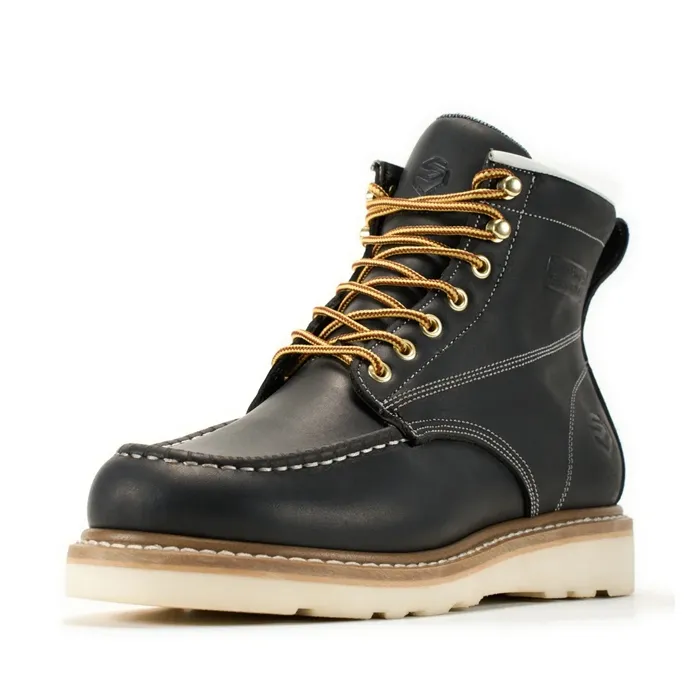
Indoor and agile trades. Warehouse workers, roofers, and concrete finishers benefit from the lighter, more flexible 6-inch profile. Browse our moc toe work boots for a full range of 6-inch flexible-duty options. Our wedge moc toe boots are a go-to for all-day concrete and warehouse work, and our 6 inch moc toe boots (603) blend casual looks with a safety-ready build.
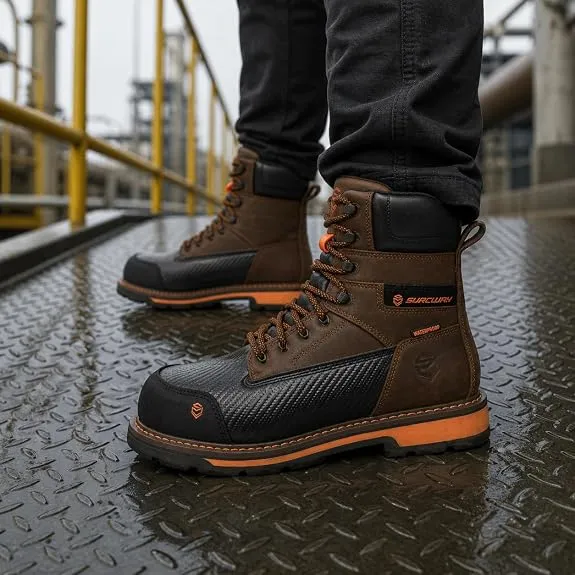
Heavy-duty and outdoor trades. Loggers, welders, and equipment operators need the full ankle wrap and debris protection of an 8-inch shaft. For rough terrain, see the safety toe logger boots built in an 8-inch height. Step up to our 8 inch logger boots when the job demands ankle support and brush protection.

How Boot Height Affects Fit, Support & Break-In
Ankle stability and injury prevention. The 8-inch shaft wraps the entire ankle joint, reducing lateral twisting and sprain risk on uneven ground. Six-inch boots allow greater freedom of movement, making them preferable when you kneel, crouch, or climb ladders repeatedly throughout the day.
Break-in duration and long-term fatigue. Six-inch boots use less leather and have fewer friction points, so they break in faster. Eight-inch boots may cause calf chafing early on and typically need a longer break-in period. Once broken in, however, they provide sustained lateral support that reduces overall joint fatigue over a long shift.
Debris protection vs. heat and breathability. The taller 8-inch shaft blocks mud, water, sparks, and brush debris from entering the boot. The trade-off is added warmth and reduced airflow. For warm indoor environments, a breathable 6-inch boot is the more comfortable choice.
Already set on 8-inch? Learn how to choose logger work boots for the trade.
How to Choose: Step-by-Step Buying Checklist
- Assess your terrain.Hard, flat indoor floors → 6-inch. Soft, muddy, or uneven outdoor ground → 8-inch.
- Evaluate your ankle-hazard level.Frequent climbing or crouching → 6-inch. Heavy loads, steep slopes, or brush → 8-inch.
- Match the right model.Use the 6 inch vs 8 inch work boots spec table above and pick the shaft height that fits your dominant daily task. If your work mixes both environments, consider owning both and rotating by job site.
Frequently Asked Questions
Q1: Are 8-inch work boots more supportive than 6-inch boots? Yes. The 8-inch shaft fully wraps the ankle joint to significantly reduce lateral twisting and sprains, whereas 6-inch boots allow greater freedom of movement but provide moderate ankle support.
Q2: Do 6-inch boots break in faster than 8-inch? Typically, yes. Because 6-inch boots use less leather and have fewer friction points along the calf, they break in faster. Eight-inch boots often require a longer break-in period to avoid chafing the lower leg.
Q3: Which height is better for standing on concrete all day? 6-inch boots are usually better because they are lighter and offer higher mobility. However, if your job requires extra lateral stability, an 8-inch boot with a cushioned midsole is also a viable option.
Q4: Can I wear 6-inch boots for logging or rough-terrain work? It is not recommended. Logging and forestry environments require the superior ankle support and debris protection of an 8-inch boot, as 6-inch boots leave the upper ankle exposed to hazards.
Q5: Are taller 8-inch boots hotter and heavier to wear? Yes. The taller shaft adds 10–20% more weight and retains more heat compared to 6-inch models. For indoor warm-weather work, breathable 6-inch boots are preferable.
Comment