A Guide to ASTM Safety Shoes
Apr 30,2026 | Chad Sureway
Workers face dangers daily. Accidents happen fast on job sites. A heavy hammer falls quickly. A large forklift turns suddenly. A live wire breaks unexpectedly. You cannot predict these accidents. You can prepare for these accidents. You need proper protective gear. Proper footwear protects your body. Organizations test footwear for absolute safety. They use strict ASTM boot standards. You must wear ASTM safety shoes. These items protect your feet from heavy objects. Furthermore, they meet strict ASTM safety standards. Many industries require this equipment. Construction workers wear them constantly. Electricians rely on them daily. Factory employees need them regularly.
What Are ASTM Safety Shoes?
ASTM stands for the American Society for Testing and Materials. This organization creates technical standards for many products. Experts design these strict guidelines. Companies follow the rules closely. ASTM safety shoes undergo rigorous testing. Testers drop heavy weights on the toes. Testers push sharp nails into the soles. The shoes must survive these extreme tests. The footwear protects workers from specific workplace hazards. Employers require ASTM safety shoes in dangerous environments. Specifically, the shoes shield feet from severe impacts. They block deep punctures. They stop high voltage electrical shocks. You stay safe on the job. Without a doubt, ASTM safety shoes provide necessary protection.
Key Features of ASTM Safety Shoes
You must understand the protective elements. We detail the main features below. You compare the specific protections in this table.
|
Feature |
Performance Specification |
Primary Material or Function |
|
Impact Resistance |
Withstands 75 foot-pounds of force |
Steel, aluminum, composite toe caps |
|
Compression Resistance |
Withstands 2,500 pounds of pressure |
Solid toe caps resist rolling objects |
|
Electrical Hazard Protection |
Insulates against 600 volts |
Non-conductive outsoles block current |
|
Static Dissipative Properties |
Discharges static electricity safely |
Conductive materials reduce spark risks |
|
Puncture Resistance |
Stops nails and glass from entering |
Metal or composite midsole plates |
|
Metatarsal Protection |
Shields the upper foot area |
Internal or external impact guards |
1. Impact Resistance
Falling objects crush human toes easily. Impact resistance stops this permanent damage. ASTM safety shoes withstand a force up to 75 foot-pounds. Manufacturers build strong toe caps. They use solid steel materials. They use light aluminum materials. They use durable composite materials. Steel toes offer maximum strength. Aluminum toes reduce total shoe weight. Composite toes block heat transfer. Then, your toes remain intact during terrible accidents.
2. Compression Resistance
Heavy machinery rolls over feet sometimes. Forklifts cause severe crushing injuries. Compression resistance prevents these crushing injuries. The footwear withstands rolling objects up to 2,500 pounds. The toe caps hold their rigid shape. They do not collapse under immense weight. You walk safely around heavy equipment.
3. Electrical Hazard Protection
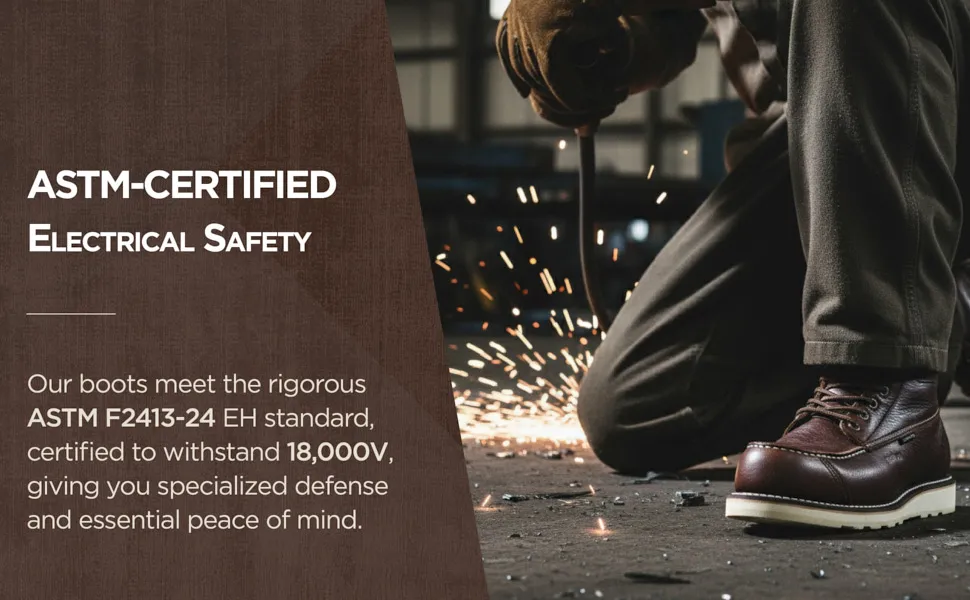
Live wires pose severe threats to workers. Electrical hazard protection saves lives daily. The thick outsoles insulate against open circuits. The shoes protect up to 600 volts. Specifically, this feature works only in dry conditions. Water conducts electricity easily. Wet shoes lose their protective abilities. You avoid dangerous shocks in dry environments.
4. Static Dissipative Properties
Static electricity causes massive explosions. Chemical powders ignite easily. Industrial gases catch fire quickly. Static dissipative properties prevent this dangerous buildup. ASTM safety shoes discharge static electricity directly into the ground. They balance the electrical charge safely. Accordingly, you reduce fatal explosion risks in volatile environments.
5. Puncture Resistance
Construction sites scatter sharp objects everywhere. Workers step on loose nails. Workers step on broken glass. Puncture resistance stops these hidden hazards. The thick soles protect against sharp items. Manufacturers insert strong plates inside the sole. The plates block nails completely. Similarly, the plates block glass pieces. For this reason, you walk confidently on messy job sites.
6. Metatarsal Protection
Heavy impacts damage the top of the foot. Delicate foot bones break easily. Metatarsal protection shields this vulnerable area. The shoes feature special impact guards. Some guards sit outside the shoe. Some guards sit inside the shoe. Heavy objects bounce off the protective guard. Thus, you prevent broken metatarsal bones.
Choosing the Right ASTM Safety Shoes
You need the correct footwear for your specific job. You follow these simple steps.
1. Assess Workplace Hazards
Look around your daily workplace. Identify the specific risks carefully. Note any electrical hazards. Look for sharp objects on the ground. Spot heavy machinery. Determine the heaviest items in your area. Talk to your safety manager. Ask older workers about hidden dangers. Read the company safety manual. Afterward, list your required safety features. You prepare a complete list.
2. Match Features to Job Requirements
Read the physical labels on the footwear. You select shoes with the appropriate ASTM labels. You find codes like I/75. This code indicates impact resistance. You find codes like C/75. This code indicates compression resistance. You find EH labels. This label means electrical hazard protection. By all means, match the shoe label directly to your hazard list.
3. Maintenance Tips
Inspect your footwear regularly. Look for deep cracks. Look for large tears. Check the outsoles for severe wear. Replace worn-out shoes immediately. Damaged shoes fail safety tests. You must treat your gear well. Store the boots in dry places. Extreme heat ruins the leather. Harsh chemicals destroy the rubber parts. Wash chemicals off quickly. Check the laces often. Broken laces cause falls. Buy new laces promptly. Furthermore, clean your boots daily. Remove dirt from the soles. Dry wet shoes naturally. Good maintenance ensures lasting protection.
Common Questions and Answers
- What does ASTM F2413 mean?
ASTM F2413 is a standard that specifies the performance requirements for protective footwear, including impact, compression, and electrical hazard resistance.
- How do I know if my safety shoes are ASTM-certified?
Look for the ASTM label on the shoe, which includes codes like I/75 (impact resistance) and C/75 (compression resistance).
- What is the difference between ASTM F2413 and F2412?
ASTM F2413 defines performance standards, while F2412 outlines the testing methods for safety footwear.
- Are ASTM safety shoes required by OSHA?
Yes, OSHA mandates protective footwear that meets ASTM standards in workplaces with foot injury risks.
- What are static dissipative safety shoes?
These shoes prevent static electricity buildup, reducing the risk of sparks in explosive environments.
Comment