How to Choose the Best Work Shoes Construction
Feb 18,2026 | Chad Sureway
Your feet are your most important tools on a job site. You spend long days standing, walking on uneven ground, and climbing ladders. The right footwear makes a massive difference in how you feel at the end of a shift. Finding the best work shoes construction professionals rely on involves more than just picking a sturdy-looking pair. It requires knowing safety features, materials, and how the shoe fits your specific job. This Sureway guide breaks down exactly what you need to look for. You will learn about crucial safety ratings, comfort features, and durability factors.
Why Choosing the Right Work Shoes for Construction Matters
Construction sites present unique challenges for your feet. You face hazards everywhere you step. Heavy equipment moves constantly. Debris litters the ground. Surfaces change from mud to concrete in seconds. Wearing the wrong footwear leads to injuries, fatigue, and long-term health issues.
Importance of safety and comfort on construction sites
Safety starts from the ground up. Proper footwear provides a stable foundation for every task you perform. If your feet hurt, you lose focus. A distracted worker is a dangerous worker. Comfortable work shoes for construction help you maintain concentration throughout the day.
Fatigue is a real enemy on the job. Heavy boots drag you down. Poor arch support causes back pain. When you wear shoes designed for comfort, you conserve energy. You move more efficiently. This impacts your overall productivity and keeps you safer.
Common hazards on construction sites
You encounter many dangers daily. Slips and falls remain a top cause of injury. Oil, water, and mud make surfaces slick. Shoes without proper traction turn a simple walk into a risk.
Impacts happen unexpectedly. Tools drop. Materials fall. Without toe protection, a dropped hammer breaks bones. Punctures pose another serious threat. Nails and sharp scrap metal hide in debris. A standard sole offers little defense against a rusty nail. You need specialized protection to stop these hazards from causing harm.
Key Features to Look for in Construction Work Shoes
Manufacturers build construction footwear with specific technologies to handle these risks. You should know what these features are before you buy. The best work shoes construction workers use combine several protective elements.
Slip resistance for wet and uneven surfaces
Traction is non-negotiable. Slip resistant work shoes use specialized rubber outsoles. These outsoles channel liquid away from the contact point. This gives you a better grip on wet concrete or muddy ground.
Look for deep tread patterns. These lugs dig into loose dirt and gravel. They provide stability on uneven terrain. A flat sole might work in a warehouse, but it fails on a dirt grade. You want a shoe that grabs the ground firmly with every step.
Waterproofing for all-weather durability
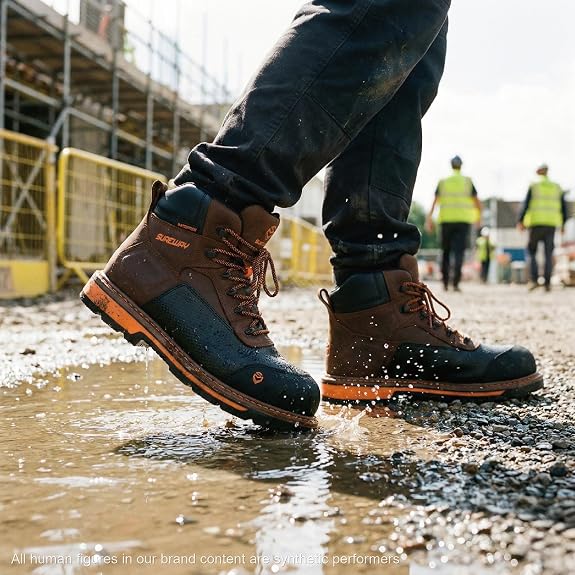
Construction does not stop for rain. Wet feet lead to blisters and cold stress. Waterproof construction boots use membranes to block water while letting sweat escape. Leather treated with water-repelling agents also helps.
Dry feet stay warm and comfortable. If you work outdoors, waterproofing is essential. It protects your skin and keeps the shoe materials from rotting. Wet boots get heavy and degrade faster. Keeping moisture out extends the life of your footwear.
Safety toe options: steel toe, composite toe, and alloy toe
Toe protection saves toes. You have three main choices.
Steel toe: The classic choice. It offers maximum protection against crushing weights. It is heavier than other options. It conducts cold, so it might not be ideal for freezing winters.
Composite toe: These use materials like carbon fiber or plastic. They are lighter than steel. They do not conduct heat or cold. They pass metal detectors easily. They meet the same safety standards as steel.
Alloy toe: These use lightweight metals like aluminum. They are thinner than composite toes. They offer the strength of steel with less weight. They provide a roomy fit for your toes.
Electrical hazard protection
Electricity poses a silent threat. Electrical Hazard (EH) rated shoes provide a secondary source of protection. They stop electricity from flowing through your body to the ground. This is vital if you work near live circuits or wires.
The soles and heels withstand electrical shock. Manufacturers test these shoes to ensure they resist high voltage. Never rely solely on shoes for protection, but EH ratings add a necessary layer of safety.
Lightweight and breathable materials for comfort
Modern construction gear focuses on reducing weight. Durable work boots no longer need to feel like cement blocks. New materials offer strength without bulk. Nylon mesh panels allow air to flow. This keeps your feet cool in hot weather.
Breathable linings wick moisture away from your skin. This prevents fungal infections and odors. Leather remains a top choice for durability, but hybrid designs mix leather with synthetic fabrics. This combination offers the best of both worlds: toughness and breathability.
How to Choose the Best Work Shoes for Your Needs
Every trade demands different things from footwear. A roofer needs different shoes than a concrete finisher. You must match the shoe to your specific daily tasks.
Matching shoes to job requirements
Evaluate your typical day. Do you work in heavy demolition? You need a heavy-duty boot with a steel toe and puncture-resistant plate. Do you do finish carpentry indoors? You might prefer lighter, flexible shoes that allow you to kneel easily.
Consider the ankle height. A 6-inch or 8-inch boot supports your ankles on rough ground. It prevents twists and sprains. A low-cut shoe offers more freedom of movement but less support.
Think about the environment. If you work with chemicals, check if the outsole resists them. If you work on hot asphalt, you need heat-resistant soles. The best work shoes construction environments require depend entirely on the specific hazards present.
|
Feature |
Heavy-Duty Construction |
Light-Duty/Indoor Work |
|
Toe Protection |
Steel or Composite |
Alloy or Soft Toe (if permitted) |
|
Outsole |
Deep Lug, Puncture Resistant |
Flat, Slip Resistant |
|
Material |
Full-grain Leather |
Leather/Mesh Hybrid |
|
Height |
6-inch or 8-inch boot |
Low-cut or Hiking style |
|
Waterproofing |
Essential |
Optional |
Importance of proper fit and sizing
A shoe that fits poorly ruins your day. It causes blisters, corns, and pain. Do not assume your size is the same across all brands. Try boots on in the afternoon. Your feet swell throughout the day. A boot that fits in the morning might feel tight by lunchtime.
Wear the socks you plan to work in. Work socks are thicker than athletic socks. This affects the fit. There should be about half an inch of space in front of your longest toe. Your heel should not slip up and down excessively when you walk.
Width matters too. If your foot feels squeezed, you need a wider size. Many durable work boots come in wide and extra-wide options. A proper fit ensures the safety toe covers your toes correctly without rubbing.
Maintenance tips to extend shoe lifespan
Good boots cost money. You want them to last. Take care of them, and they take care of you.
Clean your boots regularly. Mud and concrete dry out leather. Brush off dirt at the end of the day. If they get wet, let them dry naturally. Do not put them near a heater. Heat cracks leather and melts glues.
Condition leather boots. Apply a leather conditioner or oil every few months. This keeps the material flexible and water-resistant. Inspect the soles. If the tread wears down smooth, the slip resistance is gone. It is time for a new pair.
Check the insides. Worn linings cause friction blisters. Replace insoles if they lose their cushion. Good maintenance keeps your best work shoes construction ready looking and performing well for a long time.
Investing in quality footwear pays off. You protect your body. You work more effectively. You go home with less pain. By knowing safety features and fitting requirements, you ensure your feet have the defense they need against the tough conditions of a construction site.
Common Questions and Answers
- What are the best work shoes for construction?
The best work shoes combine safety features like steel toes, slip resistance, and waterproofing with comfort and durability.
- Are steel toe boots better than composite toe boots?
Steel toes offer superior impact protection, while composite toes are lighter and better for electrical hazard protection.
- How do I choose the right size for construction work shoes?
Measure your feet at the end of the day and consider wearing the same socks you’ll use on-site to ensure a proper fit.
- What is the difference between waterproof and water-resistant work boots?
Waterproof boots provide complete protection against water, while water-resistant boots repel light moisture but may not withstand heavy exposure.
- How can I make my work shoes last longer?
Clean them regularly, apply waterproofing treatments, and store them in a dry, ventilated area.
Comment