What Is a Moc Toe Boot
Sep 19,2026 | Nancy Sureway
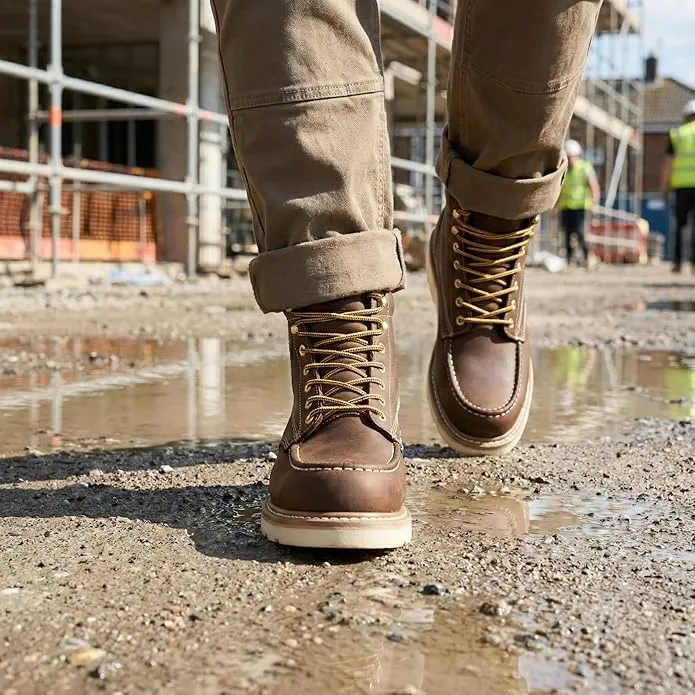
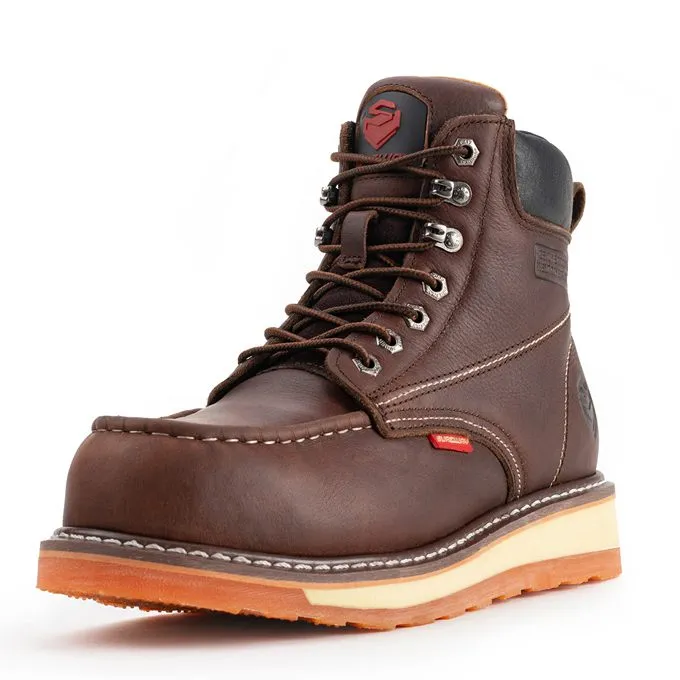
If you have ever browsed work boots and wondered what is a moc toe boot, you are not alone. A moc toe boot features a raised, U-shaped seam that runs across the forefoot, directly inspired by traditional Native American moccasin footwear. This design is not just about heritage looks. Carpenters, ironworkers, and electricians have trusted moc toe boots for generations — and for very practical reasons.
Anatomy of a Moc Toe: The Iconic U-Shaped Seam Explained
The most recognizable feature of a moc toe boot is its U-shaped stitching. This raised seam traces the top of the toe box, joining the vamp to the side panels with a visible, puckered ridge. But what is moc toe construction actually doing for your foot?
First, it creates a boxy, vertical toe box. A traditional round toe boot tapers and presses inward toward the toes. A moc toe, by contrast, joins two leather pieces vertically — giving your toes upward room and sideways freedom. Tradesmen with wider forefeet or high insteps feel the difference right away.
Second, the external seam improves forefoot flexibility. Because the stitching sits on the outside of the upper, the toe box bends naturally as you kneel, squat, or climb a ladder. There is little to no painful break-in period for the front of the boot.
Third, the seam carries structural identity. Moc toe boots meaning goes well beyond retro aesthetics — it signals a purpose-built work boot designed for long shifts on hard, unforgiving surfaces. Tradesmen across heavy construction frequently rely on heavy-duty moc toe work boots to eliminate toe pinch during repetitive kneeling tasks.
Why Are Moc Toe Boots Almost Always Paired with Wedge Soles?
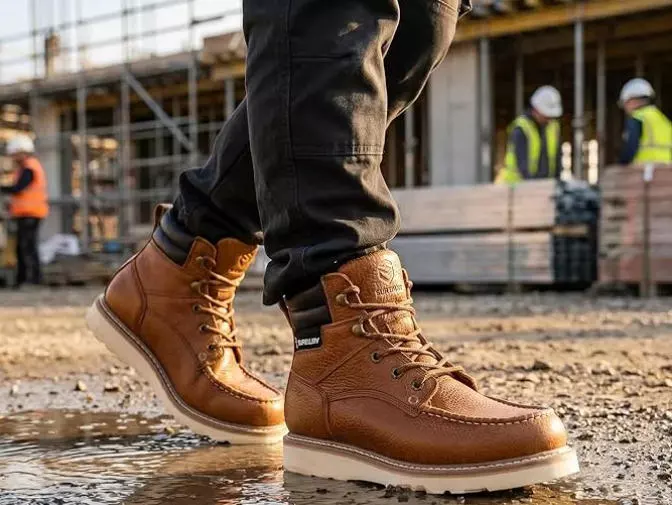
Walk into any work boot store, and you will notice a clear pattern. Nearly every moc toe boot sits on a flat, wedge-style sole. This combination is no coincidence.
Wedge soles distribute weight evenly. On hard concrete floors, a traditional heeled boot concentrates pressure directly under the heel. A flat wedge sole spreads your body weight across the entire footbed. This significantly reduces fatigue during 8- to 10-hour shifts on concrete slabs or metal decking.
Wedge soles eliminate trip hazards. Ironworkers walking steel beams cannot risk a lug heel catching on a rebar or floor grate. A smooth, flat outsole delivers consistent, uninterrupted contact on flat work surfaces.
They also protect your lower back. When the heel sits higher than the forefoot, the pelvis tilts forward over time, placing stress on the lumbar spine. Stepping into a pair of well-cushioned wedge moc toe boots keeps your spine in a neutral position throughout the entire shift.
To know how polyurethane outsoles absorb continuous impact on industrial floors, read our deep dive on wedge sole work boots and why this sole style remains a jobsite favorite.
Moc Toe vs. Round Toe: Key Differences for Job Sites
Still deciding which style fits your work? Here is a side-by-side breakdown:
|
Feature |
Moc Toe |
Round Toe |
|
Toe Room |
Roomy, boxy, vertical space |
Tapered, narrower forefoot |
|
Forefoot Flexibility |
High — seam flexes naturally |
Moderate |
|
Debris Shedding |
Seam groove can trap dirt |
Smooth surface, easy to wipe clean |
|
Aesthetic |
Heritage work boot character |
Low-profile, understated |
|
Best For |
Hard flat surfaces, kneeling work |
Varied terrain, outdoor environments |
For tradesmen who kneel repeatedly — like tile setters, electricians, or plumbers — the extra vertical toe room in a moc toe is a genuine advantage. However, if your job involves muddy terrain or outdoor crawl spaces, a round toe's seamless upper sheds debris faster and with less maintenance.
If you are debating between sleek mud-shedding profiles and roomier toe boxes, explore our detailed moc toe vs round toe comparison for a full side-by-side guide.
Can a Moc Toe Boot Have a Safety Toe? (Steel & Composite)
Many first-time buyers assume moc toe boots are soft, casual pull-ons. That is a common misconception. Modern work boot brands successfully integrate ASTM steel or composite safety caps directly beneath the U-shaped moc seam without sacrificing comfort.
Here is why it works. The wide, boxy moc toe last already provides generous horizontal and vertical space inside the toe box. A steel or composite safety cap fits within that space without pressing against the sides or tops of your toes. You get full crush protection while still enjoying the comfort that makes moc toes so popular.
Composite safety toes are especially common in moc toe styles. They weigh less than steel and do not conduct heat or cold — ideal for outdoor winter work or environments near electrical hazards. Workers handling heavy steel components or materials should look for reinforced steel toe moc boots that combine certified crush resistance with classic moc aesthetics.
Whether you work in construction, manufacturing, or warehousing, a safety-rated moc toe boot delivers the best of both worlds: all-day foot comfort and ASTM-approved protection.
Frequently Asked Questions
Q1: What does "Moc Toe" stand for?
"Moc" is short for "moccasin." The design pays homage to traditional Native American moccasin footwear, which joined two separate pieces of leather with a raised U-shaped puckered seam over the forefoot.
Q2: Are moc toe boots more comfortable than round toe boots?
Generally yes for people with wider forefeet or high insteps. The vertical boxy construction of a moc toe provides more upward wiggle room for your toes, preventing top-of-toe friction and blistering.
Q3: Does water leak through the moc toe stitching?
In quality waterproof work boots, the leather underneath the decorative moc seam is backed by a fully sealed, waterproof membrane bootie, preventing external water and mud from penetrating the interior.
Q4: Who should wear moc toe boots?
Carpenters, electricians, plumbers, HVAC technicians, ironworkers, and warehouse crews working primarily on flat surfaces like plywood decking, smooth concrete, or metal flooring benefit most from moc toe boots.
Q5: Do moc toe boots take longer to clean?
Slightly longer because dirt, drywall dust, and wet cement can collect in the groove along the raised U-stitching. A quick sweep with a stiff nylon or horsehair brush easily dislodges trapped debris.
Comment