Guide to Steel Toe Construction Work Boots
Jan 14,2026 | Chad Sureway
Construction sites are demanding environments. Your safety is the top priority on any job. High-quality personal protective equipment is not just a recommendation; it's a necessity. Among the most critical pieces of gear are your boots. The right pair of steel toe construction work boots provides necessary protection and support throughout the workday. They shield your feet from a variety of hazards common on any site. In this work boots guide, Sureway will discuss their safety features, durability, comfort, and how to choose the right pair for demanding job environments.
Why Steel Toe Construction Work Boots Are necessary
Safety is paramount in construction. Job sites present numerous risks, from falling materials to sharp objects scattered on the ground. Your feet are particularly vulnerable to these dangers.
Heavy objects, tools, and equipment can cause serious foot injuries if dropped. Steel toe caps are specifically designed to withstand significant impact and compression forces. This feature provides a rigid barrier that protects your toes from crush injuries. Similarly, sharp tools, nails, and other debris can easily puncture standard footwear. Heavy-duty boots offer a layer of defense against these puncture hazards.
Furthermore, many job sites require footwear that complies with specific safety standards. In the United States, the ASTM F2413 standard sets the minimum requirements for protective footwear. Boots meeting this standard have been tested for impact resistance, compression resistance, and other safety features. Wearing certified steel toe work boots ensures you meet these important safety regulations.
Key Features of Steel Toe Construction Work Boots
Modern work boots are a blend of safety, durability, and comfort. Manufacturers use advanced materials and designs to create footwear that performs well under tough conditions.
Durability
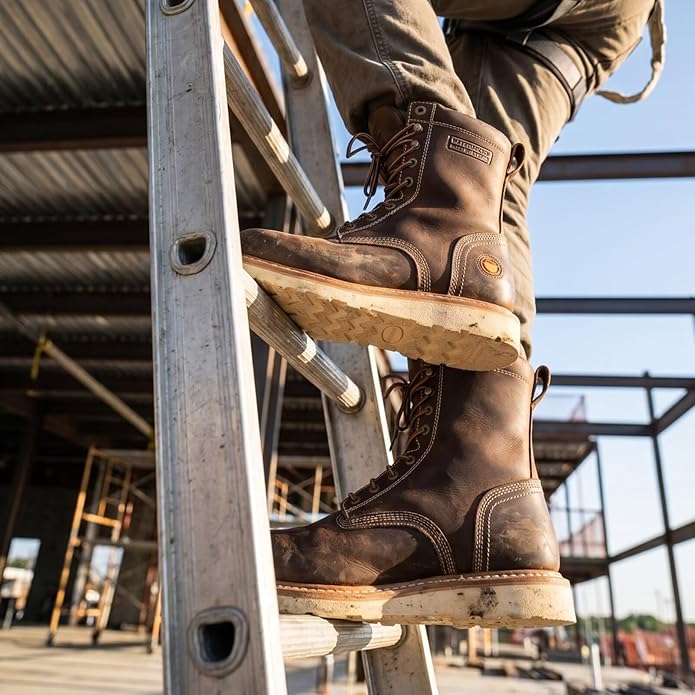
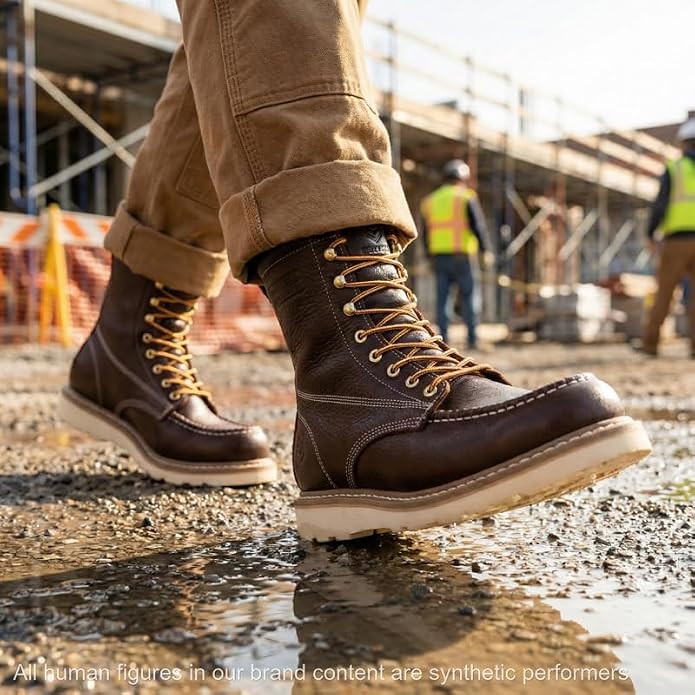
Durability is a hallmark of quality construction work boots. Manufacturers often use full-grain leather because it is tough, breathable, and water-resistant. This material can endure the rough environment of a construction site. Additionally, reinforced stitching at key stress points enhances the boot's longevity. This prevents seams from splitting under strain.
Comfort
Comfort is equally important, especially during long shifts. Modern boots integrate several features to keep your feet comfortable. Cushioned insoles absorb shock and provide support. Moisture-wicking linings help keep your feet dry by drawing sweat away from the skin. Moreover, ergonomic designs support the natural shape of your foot.
Safety Features
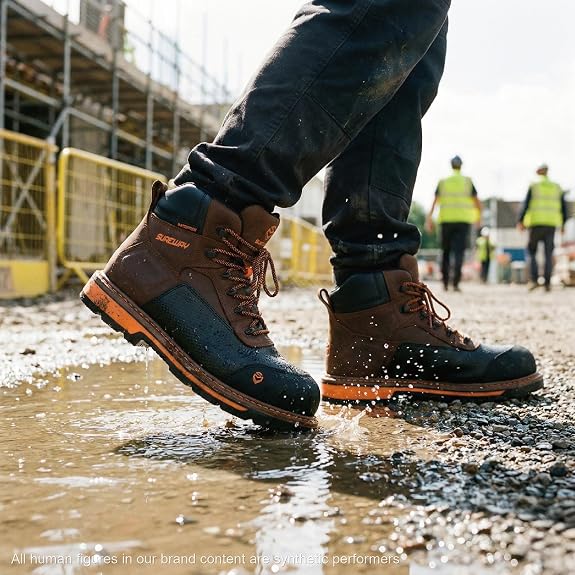
Beyond the steel toe cap, these boots include other critical safety elements. Electrical hazard (EH) protection is a important feature for anyone working near live electrical circuits. It provides a secondary source of protection against electrocution. Slip-resistant outsoles are another key feature. They offer superior traction on wet, oily, or uneven surfaces. Many models also come with waterproof membranes or treatments to keep your feet dry in wet conditions. For cold environments, insulated options provide warmth without adding excessive bulk.
Steel vs. Composite vs. Soft Toe
Choosing the right toe type depends on your specific job requirements and personal preference. Each type offers distinct advantages.
|
Feature |
Steel Toe |
Composite Toe |
Soft Toe |
|
Material |
Heavy-duty steel |
Non-metal materials (Kevlar, carbon fiber, plastic) |
Leather, rubber, or synthetic materials |
|
Protection |
Maximum impact and compression resistance |
Meets ASTM standards but is lighter than steel |
No impact or compression protection |
|
Weight |
Heaviest option |
Lighter than steel toe boots |
Lightest option |
|
Conductivity |
Conducts electricity and temperature |
Non-conductive, does not transfer cold/heat |
Non-conductive |
|
Security |
May trigger metal detectors |
Does not trigger metal detectors |
Does not trigger metal detectors |
|
Best For |
Heavy construction, manufacturing, high-risk environments |
Electricians, security personnel, jobs requiring lighter boots |
Low-risk environments, warehousing, light-duty work |
Top Benefits of Work Boots for Heavy Duty Tasks
Investing in quality work boots for heavy duty tasks offers several long-term benefits. These boots provide enhanced foot and ankle support. This support helps prevent sprains and other injuries.
They are also built to resist harsh weather and demanding job site conditions. Whether you face rain, snow, or extreme heat, a good pair of boots will protect your feet. This resilience contributes to their longevity. While the initial cost may be higher, durable boots last longer.
How to Choose the Right Steel Toe Construction Work Boots
Selecting the perfect pair of boots involves considering fit, comfort, and the specific demands of your job.
Fit and Comfort
A proper fit is necessary for all-day comfort and safety. Ill-fitting boots can cause blisters, foot pain, and even long-term posture problems. When trying on boots, make sure there is enough room to wiggle your toes, but not so much that your foot slides around. It is also a good idea to shop for boots at the end of the day, when your feet are slightly swollen. Many brands offer different width options to accommodate various foot shapes.
Job-Specific Needs
Your work environment dictates the features you need. If you frequently work in wet conditions, waterproof boots are a must. They will keep your feet dry and comfortable. For those working in cold climates, insulated boots provide necessary warmth to prevent frostbite and maintain comfort. If your job involves a lot of walking or climbing, lightweight options can reduce fatigue and improve mobility without sacrificing protection.
Frequently Asked Questions
Are steel toe work boots comfortable for all-day wear?
Yes, modern designs include cushioned insoles and ergonomic features for comfort.
What’s the difference between steel toe and composite toe boots?
Steel toe offers maximum protection, while composite toe is lighter and non-conductive.
Can steel toe boots be waterproof?
Yes, many models include waterproof membranes or treatments.
How often should I replace my work boots?
Replace them when the soles wear out or safety features are compromised.
Comment