Men's Moc Toe Work Boots: Comfort and Durability Choice
Jan 16,2026 | Chad Sureway
You stand on your feet for hours every day. Your choice of footwear impacts your health and your productivity. Many professionals choose mens moc toe work boots for their daily grind. These boots provide a unique blend of protection and ease. You need gear that withstands tough conditions. In this post, Sureway will explore the specific advantages of this classic boot style.
Key Features of High-Quality Mens Moc Toe Work Boots
You should check specific details before you buy. Quality materials determine the boot's lifespan.
Premium Leather Materials
Top-tier boots use full-grain leather. This layer of the hide resists moisture and abrasion naturally. It maintains its strength over time. Durable leather work boots protect against sharp objects. The leather molds to your foot shape eventually. This custom fit improves comfort. Some brands use oil-tanned leather. This process repels water effectively.
Advanced Comfort Systems
Comfort goes beyond the leather. Look for cushioned insoles. Memory foam or polyurethane footbeds absorb shock. Your knees and lower back benefit from this absorption. Breathable linings also matter. They wick moisture away from your skin. Your feet stay dry and cool. This prevents blisters and fungal infections.
Safety Components
Job sites pose various hazards. Many moc toe work boots for men include safety toes. Steel toes offer maximum crush protection. Composite toe boots resist cold temperatures and conduct no electricity. Slip-resistant moc toe boots provide traction on slick floors. Oil-resistant outsoles prevent deterioration from chemicals.
Weather Protection
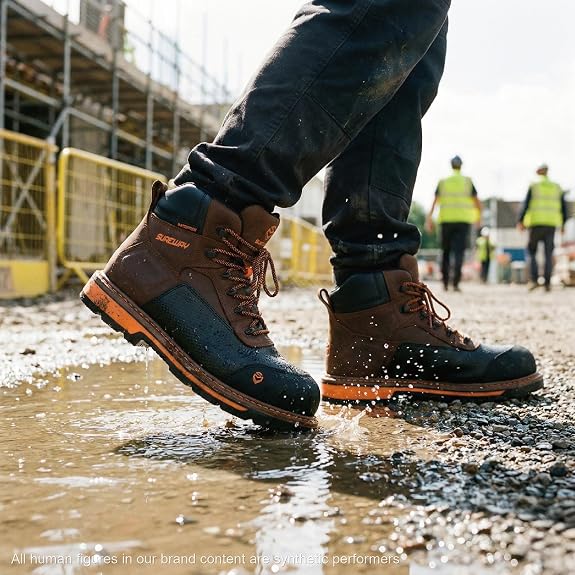
Outdoor work requires waterproofing. Manufacturers use waterproof membranes inside the leather. These barriers stop water entry. They still allow sweat vapor to escape. Seam-sealed construction adds another layer of defense. Your feet remain dry during rain storms or in muddy trenches.
Top Benefits of Wearing Mens Moc Toe Work Boots
You gain distinct advantages with this specific boot style. The design serves functional purposes.
Enhanced Comfort for Long Shifts
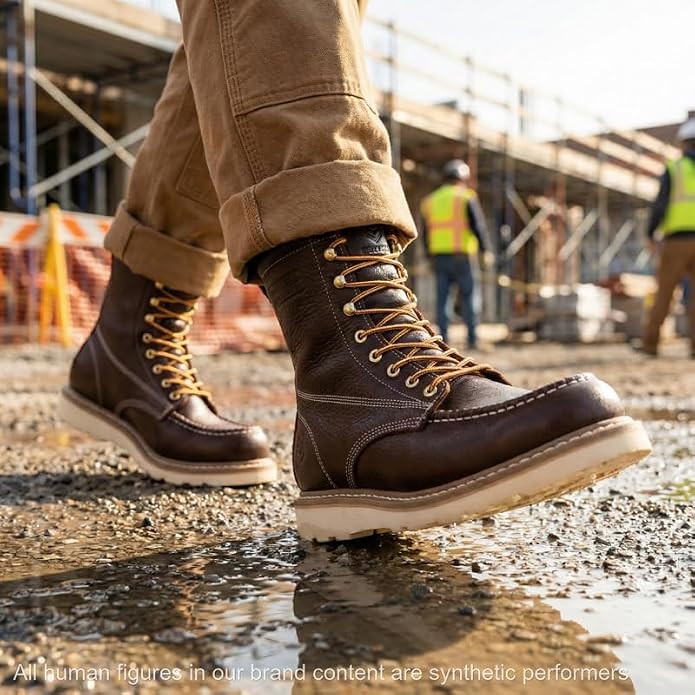
The wedge sole defines the comfort level. Traditional heeled boots focus pressure on the heel and the ball of the foot. The wedge sole spreads this impact across the entire foot. You feel less fatigue at the end of the day. Concrete floors feel less unforgiving. Warehouse workers walk miles daily on hard surfaces. They often report less back pain with wedge soles.
Versatile Style Applications
These boots function well in various settings. They handle the rigors of a construction site. They also look good in casual settings. The classic leather aesthetic pairs well with jeans. You do not need to change shoes after work. You can go straight to social events. The timeless design fits many environments.
Durability and Repairability
A good pair lasts for years. The moc toe stitching adds structure to the toe box. It prevents the leather from collapsing.
Choosing the Right Pair for Your Job
Your specific job dictates your boot choice. Analyze your daily tasks.
Assess Your Work Environment
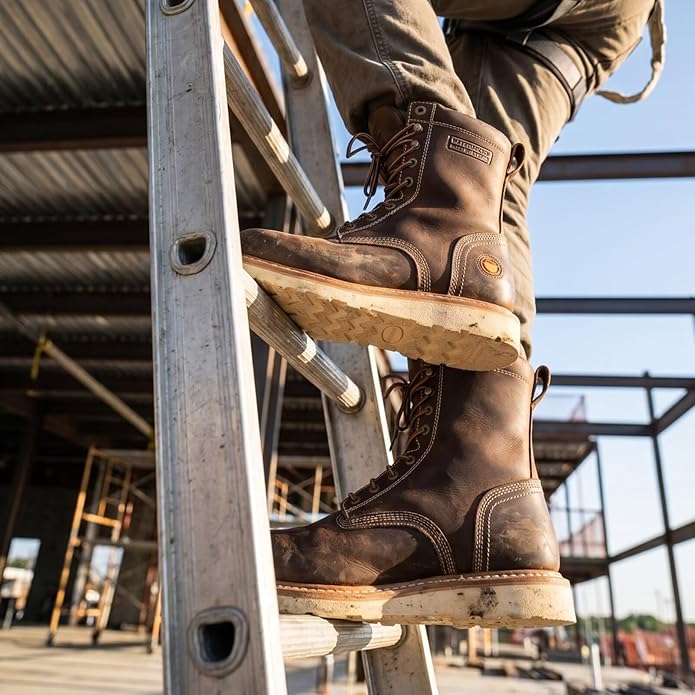
Ironworkers need heeled boots for ladder rungs. The heel catches the rung securely. Wedge soles might slip on ladders. Conversely, pavers walk on asphalt all day. Flat soles prevent tread marks in fresh surfaces. Electricians require non-conductive footwear. They should choose composite toes and electrical hazard (EH) rated soles.
Consider Weather Conditions
Do you work in the snow? Insulated boots keep heat inside. Thinsulate linings provide warmth without bulk. Do you work in hot summers? Unlined leather breathes better. Waterproofing helps in wet climates. However, waterproof membranes can trap heat. Choose unlined boots for dry, hot regions.
Proper Sizing Techniques
Fit affects performance. Wear your work socks when you try on boots. Your feet swell during the day. Try on boots in the afternoon. Ensure you have space in the toe box. Your heel should not slip excessively. A snug fit prevents blisters.
Comparison of Safety Toe Options
You must select the correct safety toe for your industry. Use this table to compare specifications.
|
Feature |
Steel Toe |
Composite Toe |
Soft Toe |
|
Material |
Heavy-duty Steel |
Carbon Fiber / Plastic |
None (Leather/Fabric) |
|
Protection Level |
Maximum Impact/Compression |
High Impact/Compression |
Minimal (Scratches only) |
|
Weight |
Heavy |
Lightweight |
Lightest |
|
Temperature |
Conducts Cold/Heat |
Neutral to Temp |
Neutral to Temp |
|
Electricity |
Conductive |
Non-Conductive |
Non-Conductive |
|
Best For |
Heavy Machinery, Warehousing |
Electrical Work, Security |
Carpentry, Casual Wear |
|
Airport Friendly |
No (Sets off metal detectors) |
Yes |
Yes |
You can find comfortable work boots for men in all three categories. Ensure the safety rating meets ASTM standards.
Frequently Asked Questions
What tasks suit moc toe work boots best?
These boots work best for jobs on flat, hard surfaces. Carpenters, ironworkers, and warehouse staff benefit from the stability. They also serve well for general outdoor maintenance.
Do these boots provide all-day comfort?
Yes. The flat wedge sole distributes weight evenly. This reduces strain on your back and knees. Cushioned insoles further enhance the comfort level for long shifts.
How do steel toe and composite toe boots differ?
Steel toe boots use metal for maximum crush resistance but weigh more. Composite toes use plastic or carbon fiber. They weigh less and do not conduct electricity or temperature.
How should I maintain my leather boots?
Remove dirt regularly with a brush. Apply a leather conditioner to prevent cracking. Use a waterproofing spray for weather protection. Let them air dry away from direct heat sources.
Comment