Best Uses for Composite Toe Work Boots
Feb 23,2026 | Chad Sureway
Choosing the right safety shoes is very important for any worker. Your boots protect you from workplace hazards and provide comfort for long days on your feet. While steel toe boots have been a traditional choice, modern materials offer excellent alternatives. Many workers now prefer comp toe work boots for their unique blend of safety, comfort, and lightweight design. These boots provide robust protection without the extra weight and conductivity of steel.
Composite Toe Boots vs. Steel Toe Boots
Choosing between composite toe and steel toe boots often comes down to your specific job requirements and personal preferences. Both types of safety footwear are designed to protect your feet from impact and compression. In fact, both must meet the same American Society for Testing and Materials (ASTM) safety standards. However, key differences exist in their material, weight, and performance in certain environments.
Steel toe caps are made from heavy-duty steel. They offer maximum protection against extreme impact and compression. On the other hand, composite toe caps are crafted from non-metal materials. These materials include carbon fiber, Kevlar, plastic, or fiberglass.
Here is a detailed comparison:
|
Feature |
Composite Toe Boots |
Steel Toe Boots |
|
Material |
Carbon fiber, Kevlar, plastic, fiberglass |
Heavy-duty steel |
|
Weight |
Lighter, reducing foot fatigue |
Heavier, can cause fatigue over long shifts |
|
Conductivity |
Non-conductive of electricity |
Conductive of electricity |
|
Temperature |
Does not transfer heat or cold |
Conducts heat and cold, less comfortable in extreme temperatures |
|
Security |
Does not set off metal detectors |
Will set off metal detectors |
|
ASTM Standards |
Meets ASTM F2413 standards for impact and compression |
Meets ASTM F2413 standards for impact and compression |
|
Thickness |
Can be slightly bulkier to meet safety standards |
Can be thinner while still providing high protection |
In essence, composite toe work shoes provide a modern solution that prioritizes both safety and all-day comfort.
Best Uses for Comp Toe Work Boots
The versatility of composite materials makes these boots ideal for a wide range of professions. Their lightweight and non-conductive properties offer distinct advantages in specific work environments.
Construction
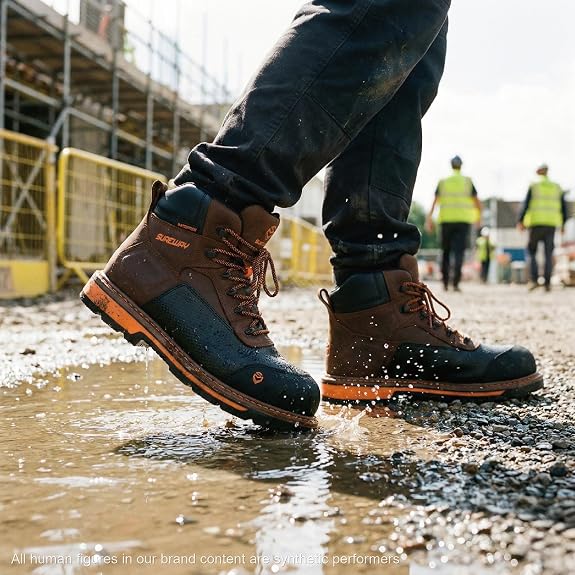
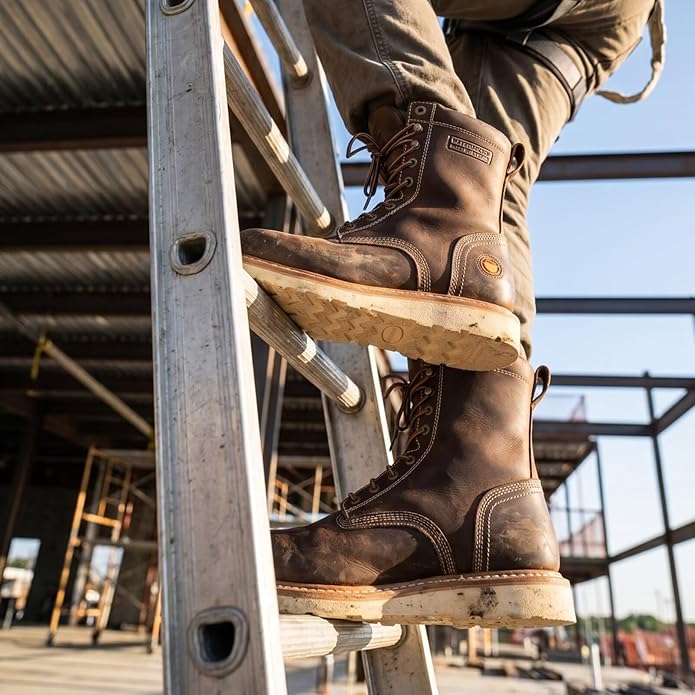
Construction sites are filled with potential hazards. Workers need protection from falling objects like tools and building materials. Comp toe work boots meet the necessary safety standards to shield feet from serious impact. Furthermore, their lighter weight reduces strain during long days spent walking. Many composite work boots also feature puncture-resistant plates.
Warehouse and Logistics
Warehouse and logistics employees spend most of their shifts on their feet, often walking miles on hard concrete floors. Comfort is paramount to prevent foot fatigue and improve productivity. Composite toe boots are significantly lighter than their steel counterparts. This difference becomes very noticeable over an eight or ten-hour shift. The reduced weight helps minimize stress on the feet, legs, and back.
Manufacturing and Industrial Settings
In manufacturing or industrial environments with heavy machinery, foot protection is non-negotiable. These settings also frequently have electrical hazards. Since composite materials are non-metallic, they do not conduct electricity. This feature provides a necessary layer of protection for electricians, engineers, and factory workers who may be exposed to live circuits. Accordingly, composite toe boots are an excellent choice for ensuring safety around high-voltage equipment.
Landscaping and Gardening
Landscapers and gardeners work on varied and often uneven terrains. They require boots that offer stability, protection, and comfort. Composite work boots provide the necessary toe protection from dropped tools or equipment like lawnmowers. Many models, such as waterproof composite toe work boots, also keep feet dry in wet grass or mud. Their lighter construction allows for greater agility and comfort while navigating slopes, gardens, and other outdoor spaces.
Transportation and Delivery
For professionals in transportation and delivery, mobility is key. Drivers are constantly getting in and out of their vehicles. The lightweight nature of comp toe work boots makes this constant movement much easier. Additionally, for drivers and personnel who must pass through security checkpoints or use metal detectors, composite toe footwear eliminates the inconvenience of having to remove their boots.
Hot-selling Comp Toe Work Boots at Sureway
At Sureway, we offer a range of high-quality boots designed for safety and comfort. Here are some of our top-selling models:
- Sureway Men's Composite Toe Slip on Work Boots: These boots offer the perfect combination of convenience and protection. The slip-on design allows for quick and easy wear, while the composite toe ensures your feet stay safe. They are ideal for workers who need reliable protection without the hassle of laces.
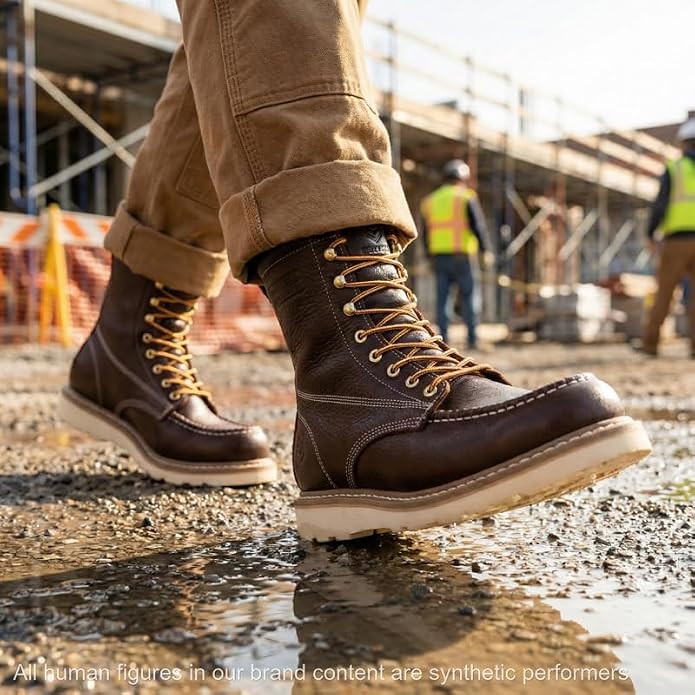
- Sureway Men's Composite Toe Soft Moc Toe Work Boots: This style combines the classic look of a moc toe boot with modern safety features. The soft toe design provides a comfortable fit, while the underlying composite cap delivers ASTM-certified protection. It is a great option for supervisors and workers who want a blend of style, comfort, and safety.
- Sureway Men's Composite Toe Waterproof Work Boot: Built for the toughest conditions, this boot keeps your feet dry and protected. The waterproof membrane ensures you can work comfortably in rain, mud, or snow. Paired with a sturdy composite toe, this boot is the ultimate choice for outdoor work in unpredictable weather.
Frequently Asked Questions
- Are composite toe boots as safe as steel toe boots?
Yes, they meet the same ASTM standards for impact and compression resistance.
- Can composite toe boots be used in extreme temperatures?
Yes, they are non-conductive and suitable for both hot and cold environments.
- How do I know if my boots meet safety standards?
Look for ASTM or OSHA certification labels inside the boots.
- Are composite toe boots waterproof?
Many models offer waterproof options, but always check the product specifications.
- How long do composite toe boots last?
With proper care, they can last 1-3 years depending on usage and quality.
Comment