
Moc Toe vs. Round Toe Boots
Sep 20,2026 | Nancy Sureway
When choosing between moc toe vs round toe work boots, most buyers focus on looks first. But the toe shape does far more than define the silhouette. It controls how much room your toes have, how quickly mud slides off the leather, and how comfortable you feel after eight hours on your feet. This guide breaks down both styles so you can match the right round toe vs moc toe profile to your actual job.

The Core Difference: Boxy Construction vs. Seamless Contour
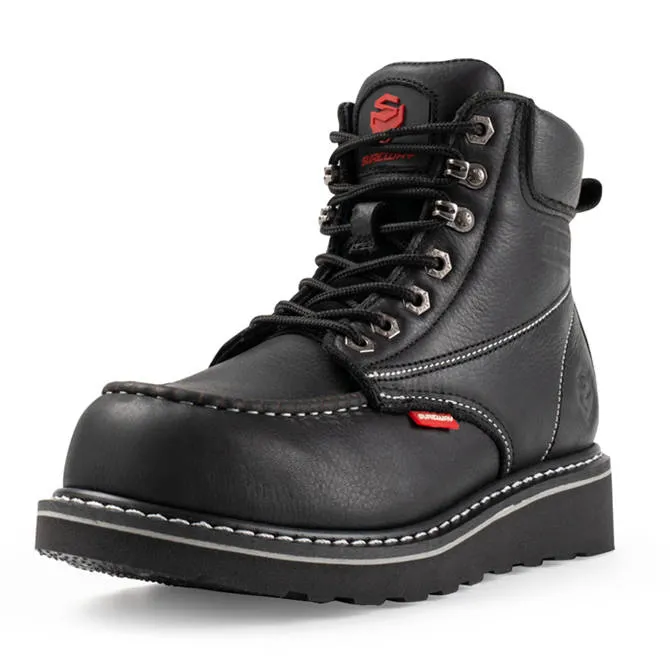
The moc toe boot traces its stitching back to Native American moccasin construction. Two separate leather panels are joined by a raised U-shaped seam running across the top of the foot. That seam creates a squared-off, boxy toe box with generous vertical height. Your toes have real room to spread, which is why workers with wide feet or bunions often favor this build.
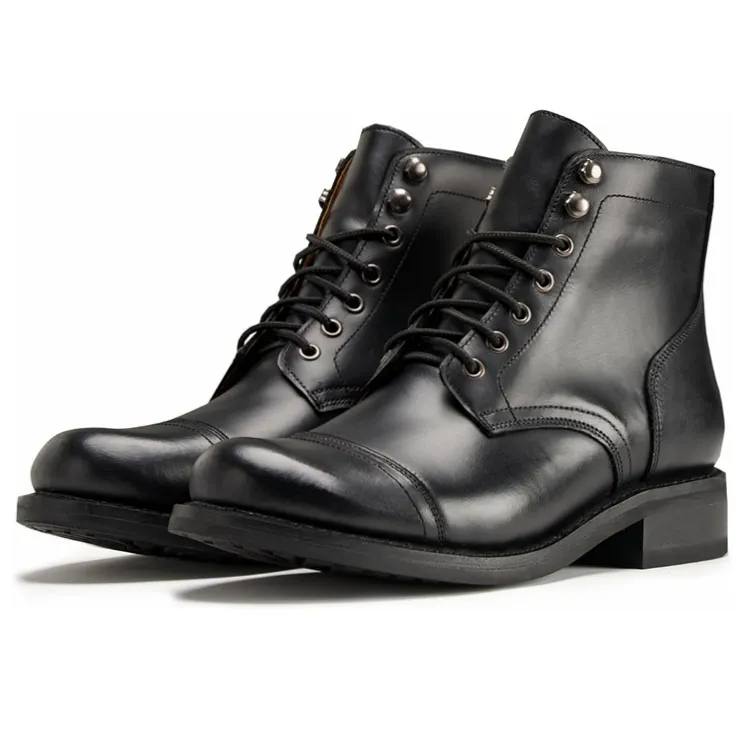
A round toe boot — sometimes called a plain toe — is cut from a single seamless leather vamp that curves smoothly down to the welt. There are no raised stitches, no ridges, and no crevices to trap debris. The profile tapers slightly at the front for a cleaner, more streamlined look.
When you browse moc toe work boots alongside round-toe options, the elevated upper seam is the first thing that sets them apart. To know why that stitch was originally designed for hunters and carpenters, read our guide on what does moc toe mean in boot construction.
|
Feature |
Moc Toe |
Round Toe |
|
Toe box shape |
Boxy, squared-off |
Rounded, tapered |
|
Upper construction |
Two-panel with raised U-seam |
Single seamless vamp |
|
Vertical toe height |
High |
Moderate |
|
Forefoot flexibility |
High |
Moderate |
|
Mud / debris trapping |
Higher (seam crevice) |
Lower (no exposed seam) |
Why Choose Moc Toe Boots? (Comfort & Flat-Floor Mastery)
Moc toe boots perform best on flat, hard surfaces. Carpenters, electricians, and plumbers who spend long shifts kneeling or squatting benefit most. The flexible forefoot folds easily when you drop to one knee, so there is no pressure on the big toe joint. That same flexibility makes a full day on concrete slabs noticeably less tiring.
Wide-footed workers also appreciate the extra toe box volume. The boxy chamber reduces friction along the pinky toe and prevents the hot spots that build up inside a narrow profile by lunchtime. Pair the roomy toe box with a flat wedge sole, and the boot distributes weight across the entire footbed rather than concentrating it at the heel.
For long shifts on hard slabs, step into cushioned wedge moc toe boots designed to spread load across flat surfaces. The style also wears naturally with jeans off the job site, which explains why this silhouette evolved into enduring industry icon boots that ironworkers and craftsmen have trusted for generations.

Why Choose Round Toe Boots?
Round toe boots were built for punishment. The seamless vamp has no stitching exposed on top, so mud, wet concrete, and construction slurry bead straight off. A quick wipe and the boot looks clean. If you work on fresh pours, in trenches, or anywhere slop accumulates, this design saves real cleanup time every day.
Durability is the other major advantage. In abrasive conditions — rocky soil, masonry, gravel pits — the upper takes constant punishment. On a moc toe boot, the raised seams can catch on sharp edges and fray over months. A round toe boot has no exposed toe stitching, so there is nothing to snag or sever.
Round toe designs also pair naturally with deep lug or logger heels. That 90-degree heel gives solid purchase on ladders and uneven terrain, making this the stronger choice for jobs involving climbing or broken ground.
Tradesmen working in outdoor mud, gravel pits, and trenching should choose heavy-duty round toe work boots to prevent debris accumulation in seam areas. The clean profile also makes waterproofing treatments more effective and longer-lasting.
Which One Should You Buy?
The decision comes down to your work environment.
Choose moc toe if you work on flat concrete floors, warehouse surfaces, or indoor finishing. It is also the right call if you kneel often, have wide feet, or want a classic workwear look that holds up off the job site.
Choose round toe if your days involve wet concrete, muddy job sites, rocky terrain, or frequent ladder work. The clean profile sheds grime faster, resists abrasion better, and pairs with aggressive outsoles built for unstable ground.
Both styles accept ASTM-certified safety toes, so protection level is not a deciding factor here — your environment is.
Frequently Asked Questions
- Do moc toe boots give more room for wide feet than round toe?
The vertical U-stitch seam creates a squared-off toe chamber with greater vertical height and forefoot width, reducing friction on the pinky toe compared to tapered round-toe boots. - Are round toe boots easier to clean than moc toe boots?
Much easier. Round-toe boots feature a smooth, seamless leather vamp that can be wiped clean in seconds, whereas wet concrete and dried mud often lodge inside the crevices of a moc-toe seam. - Which toe style is better for concrete workers?
Round-toe boots are better for pouring wet concrete because they shed slurry easily. However, for dry concrete finishing and all-day walking on cured slabs, moc-toe boots with wedge soles offer superior fatigue relief. - Can both moc toe and round toe boots have steel safety toes?
Both styles can house ASTM F2413-certified steel or composite safety toe caps without altering their distinctive exterior silhouette. - Which boot style lasts longer under abrasive conditions?
Round-toe boots generally hold up longer in abrasive work like masonry or trenching, as they have no exposed top-stitching that can be worn down or severed by sharp rocks.
Comment
.webp?w=748&h=748)