How to Buy Safety Shoes Meet Your Workplace Needs
May 13,2026 | Chad Sureway
You need the proper protective gear for your job. Proper footwear protects your feet from heavy objects and sharp hazards. Many workers ask how to buy safety shoes for daily tasks. This guide from Sureway gives you direct answers. You will learn about different safety shoes types and specific workplace requirements. Learning how to buy safety shoes ensures your daily protection on the job.
What Are the Different Safety Shoe Standards?
The Occupational Safety and Health Administration (OSHA) sets strict rules for workplace safety. OSHA requires employers to provide protective footwear in dangerous environments. Workers must wear shoes with impact and compression protection. These basic rules are the first step in learning how to buy safety shoes.
The American Society for Testing and Materials (ASTM) provides specific testing methods for footwear. ASTM F2413 represents the standard specification for performance requirements. Manufacturers test shoes through rigorous processes to meet ASTM standards. You must check the label inside the tongue of the shoe. The label displays the specific safety ratings. It shows impact resistance and electrical hazard ratings. For example, a rating of I/75 means the toe cap withstands a 75-foot-pound impact. A C/75 rating indicates the shoe withstands 2500 pounds of compression. Furthermore, the label lists metatarsal protection and static dissipative properties. Knowing how to buy safety shoes means reading these labels correctly.
Steel Toe vs Composite Toe: Which One Should You Choose?
Buyers often compare different protective materials. Steel toe boots offer maximum protection against heavy impacts. They cost less than other market options. Steel toe boots provide the traditional defense against falling tools. However, steel conducts cold and heat rapidly. It also triggers metal detectors at security checkpoints.
Composite toe shoes use non-metal materials like Kevlar, fiberglass, or carbon fiber. They weigh less than traditional steel. They do not conduct electricity. Additionally, composite materials resist extreme temperatures. Workers in cold climates prefer composite materials for this reason. You must review your daily environment. Ask your manager about metal detector checkpoints. Choose the material that solves your daily challenges.
Specifications and Comparison
|
Specification |
||
|
Primary Material |
Steel metal alloy |
Kevlar, plastic, carbon fiber |
|
Overall Weight |
Heavy |
Lightweight |
|
Protection Level |
Maximum impact resistance |
High impact resistance |
|
Heat Transfer |
High conductivity |
Low conductivity |
|
Cold Transfer |
High conductivity |
Low conductivity |
|
Electrical Properties |
Conductive |
Non-conductive |
|
Security Checkpoints |
Triggers metal detectors |
Passes through metal detectors |
|
Toe Box Profile |
Thinner profile |
Thicker profile |
|
Price Range |
Lower cost |
Higher cost |
How to Select Safety Shoes Based on Industry Needs
Different jobs require different footwear features. You must match your footwear to your specific environment. Construction workers face sharp objects and heavy machinery daily. Therefore, they need puncture-resistant soles and strong toe caps. Steel toe boots work perfectly for general construction sites.
Electricians handle live wires and high voltage constantly. They require electrical hazard (EH) rated footwear. These workers must select non-conductive composite toe shoes. Food service workers walk on wet and greasy floors. Accordingly, kitchen staff must wear outsoles with high slip resistance.
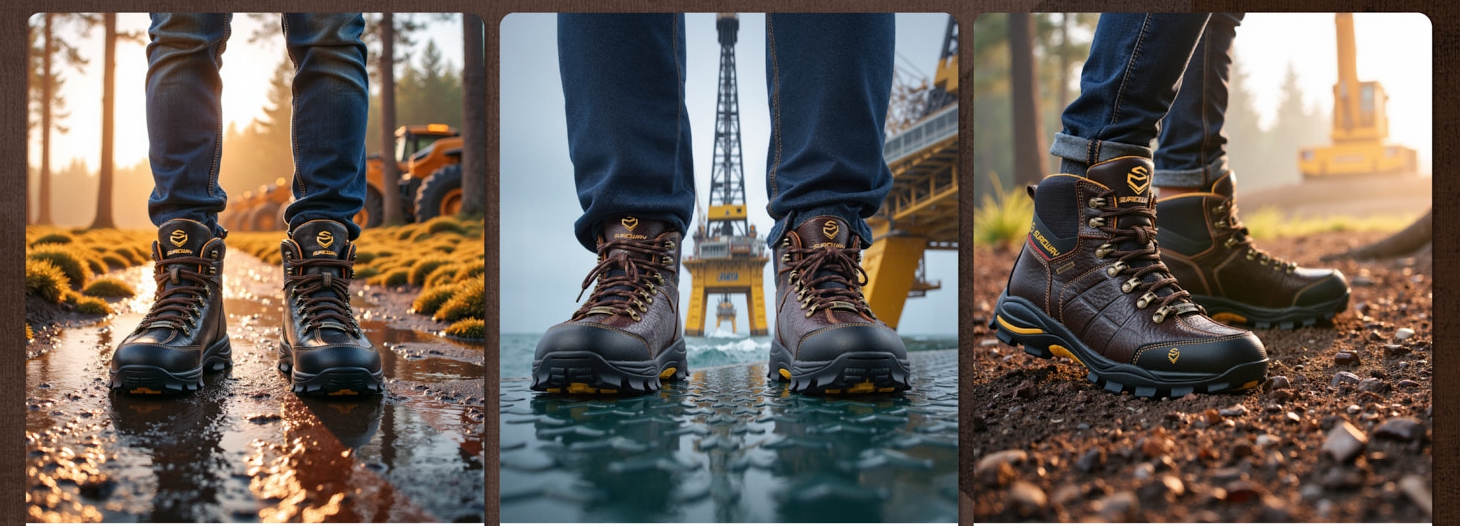
Manufacturing plants expose workers to caustic chemicals and heavy oils. Factory workers need chemical-resistant leather exteriors. Loggers work on steep and muddy terrain. They require aggressive traction outsoles and tall boot shafts. Welders encounter flying sparks and hot metal pieces. They need heat-resistant soles and Kevlar stitching. First, identify your main workplace hazards. Then, select the specific safety shoes types to prevent injuries. Knowing how to buy safety shoes for your industry prevents severe workplace accidents.
Tips for Ensuring the Perfect Fit
Fit dictates your daily comfort and overall safety. You spend long hours standing on hard surfaces. A bad fit causes blisters and severe muscle fatigue. Many people learning how to buy safety shoes ignore the sizing process. First, measure both feet at the end of the day. Feet naturally swell during long work shifts. Try on new boots with your regular thick work socks.
Walk around the store for several minutes. Check the empty space in the front toe box. Your toes must never touch the front hard cap. The heel must fit snugly against the back material. Furthermore, a loose heel causes friction and severe pain. Check the arch support inside the footbed. You can add custom insoles for better arch support. Ensure the boots bend naturally at the ball of your foot. Break in your new shoes at home before a full shift. Walk on carpeted surfaces to soften the leather materials.
Frequently Asked Questions
- What are the key features to look for in safety shoes?
Look for features like steel or composite toe caps, slip-resistant soles, puncture resistance, and electrical hazard protection.
- How do I choose between steel toe and composite toe shoes?
Steel toe shoes offer maximum protection but are heavier, while composite toe shoes are lighter and non-conductive, ideal for electricians.
- What industries require safety shoes?
Industries like construction, manufacturing, food service, and electrical work often require safety shoes to protect against specific hazards.
- How do I ensure a proper fit for safety shoes?
Measure your foot size, try on both shoes, and ensure there’s enough room in the toe box while the heel fits snugly.
- How often should safety shoes be replaced?
Replace safety shoes when they show signs of wear, such as cracks, worn soles, or compromised protective features.
Comment